
Bank of England faces a rate cut headache as Budget costs hammer jobs market
The Pressure on the Jobs Market

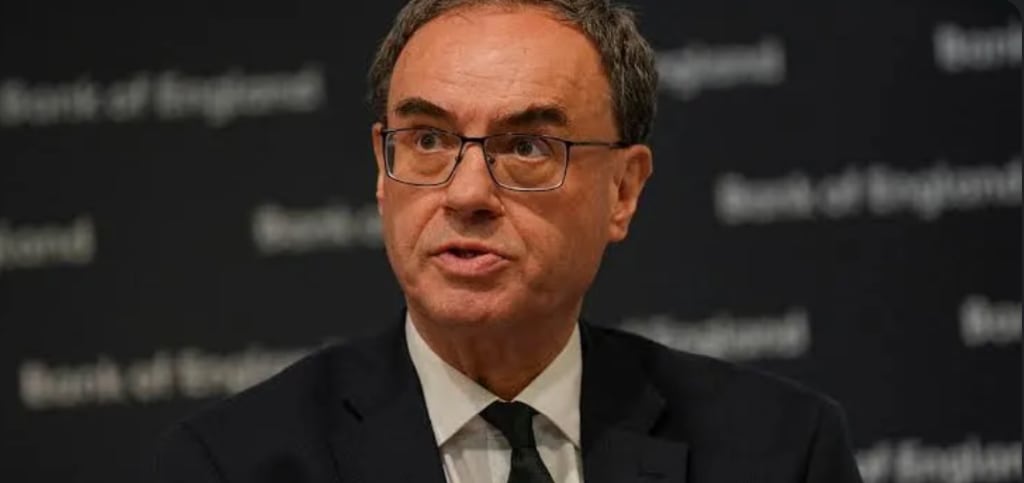
**The Bank of England Struggles with Rate Cuts as Budget Costs Hurt the Job Market** The Bank of England (BoE) must strike a delicate balance between the difficulties of controlling inflation and the rapidly shifting dynamics of the job market. Recent economic indicators suggest that the UK’s labour market is under significant strain, particularly as the government’s budget commitments add pressure on an already fragile economy. A rate cut, which could traditionally stimulate growth, is now under intense scrutiny, given the mounting pressures on jobs and long-term fiscal stability.
### The Pressure on the Jobs Market
The UK jobs market has been showing signs of weakness, with unemployment rates creeping up and a notable slowdown in job vacancies. While the nation has avoided a full-blown economic recession in recent months, the broader economic picture remains far from rosy. One of the key challenges is the government’s escalating budgetary demands, particularly with increased public spending in areas such as healthcare, defence, and social support services.
These rising costs have prompted the government to borrow more, creating fiscal concerns that may not only affect the economy in the short term but also dampen growth prospects over the long term. The Bank of England is under pressure to strike a balance between meeting the demands of the labor market, which is beginning to show signs of strain, and maintaining monetary policy that can control inflation. ### The Case for a Rate Cut
A key tool the BoE uses to stimulate economic growth and reduce unemployment is its monetary policy. By cutting interest rates, the BoE hopes to make borrowing cheaper, thus encouraging investment and consumer spending. Historically, rate cuts have been used as a way to boost economic activity in times of slow growth or rising unemployment.
However, the idea of cutting rates becomes more complicated in light of the current inflation situation. Inflation has remained stubbornly high, driven by a combination of supply chain issues, rising energy costs, and a post-pandemic recovery that continues to put pressure on prices. If interest rates were to be lowered, more money could be pumped into the economy and inflation could rise even more, which could make the situation worse rather than better. In spite of these dangers, a growing amount of economic pressure is being exerted to ease monetary conditions. The high cost of borrowing has exacerbated concerns about rising costs and decreased consumer spending among many businesses, particularly those in consumer-facing sectors. A rate cut, they argue, would provide much-needed relief and potentially stave off further job losses in these vulnerable sectors.
### The Role of the Budget and Government Spending
The government's recent budget, designed to address immediate fiscal challenges, has increased public spending in areas like education, social care, and public infrastructure. These investments have significant short-term costs, despite their long-term goals of stimulating growth and creating public sector jobs. The added spending has led to higher borrowing requirements, which in turn places additional strain on the UK’s finances.
The Bank of England faces a dilemma as a result of this. Higher public spending can, on the one hand, encourage the creation of new jobs, particularly in labor-intensive fields like education and healthcare. However, the BoE may find it more challenging to reduce interest rates without further stoking price increases due to the rising budget deficit and increased demand for public services. The BoE must also take into account the possibility that wage inflation could lower wages' purchasing power, particularly for lower-income households that already face reduced standards of living. The economic strain on households will unavoidably have an effect on the overall employment market as wages struggle to keep up with rising costs. The challenge for the BoE is to strike a balance between fostering an environment where businesses can thrive and ensuring that inflation remains under control.
### The Prospects for the Future The future of the UK jobs market largely depends on how the Bank of England navigates these competing pressures. If the BoE opts for a rate cut, it will need to carefully monitor the potential effects on inflation, as well as the broader economy. On the other hand, if it decides to keep raising interest rates to control inflation, there is a chance that this will slow down job creation even more, especially in industries that rely on consumer spending. Furthermore, with the government’s budgetary demands placing increased pressure on public finances, there is a possibility that fiscal policy may need to adjust to address long-term growth prospects. This could involve reevaluating the sustainability of current public spending or exploring new revenue sources to ensure that the country’s debt remains manageable.
In conclusion, the Bank of England is in a difficult position because the decisions it makes regarding interest rates could have significant effects on the UK's labor market. A reduction in interest rates may provide short-term relief, but it must be carefully weighed against the risks posed by rising inflation and demands from the government's budget. Ultimately, the future trajectory of the UK economy will depend on how well the BoE can balance these conflicting forces while maintaining stability in the jobs market.
About the Creator
GLOBAL NEWS
World News Updated
Short News upload
Technology News
Keep reading
More stories from GLOBAL NEWS and writers in Trader and other communities.
Donald Trump says Elon Musk has 'lost his mind' as public feud escalates
Start writing... Trump's feud with Elon Musk, a billionaire businessman, has reached new heights, with Trump publicly claiming that Musk has "lost his mind." This statement was made following a series of increasingly heated exchanges between the two prominent figures, who were previously regarded as allies. The conflict demonstrates the widening divide in the United States between political power and technological influence. Musk's open criticism of Trump's proposed economic policies, particularly the "One Big Beautiful Bill," a massive tax and spending package designed to reshape the American economy, sparked the public outcry. Musk warned that the bill would damage long-term economic stability and increase the national debt, describing it as irresponsible and dangerous. Musk was accused of betrayal and instability by Trump, who responded by declaring that the Tesla and SpaceX CEO had "lost his mind." The argument quickly became personal. On social media, Musk responded by suggesting that Trump's leadership was seriously flawed and that the former president might be involved in scandals related to the notorious Jeffrey Epstein case. Even though Musk didn't provide any evidence, his rumors drew a lot of attention and criticism. Trump, on the other hand, called Musk "unhinged" and "erratic" in his defense of the allegations, calling them baseless and defamatory. This dispute has not been confined solely to words. Additionally, there have been financial repercussions. Tesla's stock value plummeted significantly following the public exchanges, reportedly erasing tens of billions in market capitalization in a matter of days. In the midst of the controversy, Trump's own media company also saw its stock value decrease. The unpredictability of both men and their growing hostility were cited as causes for investors' concern. Business leaders were concerned about Trump's hints that the federal government might reconsider contracts with Musk's companies if he were reelected, which raised concerns about political interference in private business. Musk responded by suggesting that he might lend his support to third-party political endeavors and even floated the concept of establishing a brand-new center-right political movement known as "The America Party." Political analysts believe that dissatisfied voters looking for alternatives to the two-party system could adopt the concept, despite the fact that it is still speculative. The increasing overlap of politics, business, and the media in American society is exemplified by Trump and Musk's conflict. Both men have large followings, control media cycles, and have an impact on millions of social media followers. Their conflict, which is marked by dramatic insults and pointed accusations, has been compared to rivalries on reality television or in schoolyards. The spectacle has been derided by critics from both the political right and the left. The conflict was characterized as immature by prominent television personalities, and lawmakers expressed concern about the nation's global image as a result of such behavior. Republican strategists warned that infighting among conservative figures could weaken the party's unity prior to the elections in 2026, while Democratic Representative Alexandria Ocasio-Cortez stated that the conflict was "inevitable" due to the egos involved. Trump and Musk appear unwilling to back down despite the heated exchanges of words. Trump maintains that Musk uses his platform irresponsibly and is out of touch with political reality. Musk, on the other hand, insists that he is opposing corrupt leadership and flawed policies and standing up for American values. The feud continues to be a topic of national conversation as both figures continue to mobilize their respective bases. It is still unknown whether the conflict will cause long-term harm to the political or economic systems. A new type of power struggle in which traditional political figures and tech billionaires compete for influence over the future of the United States is exemplified by the feud between Trump and Musk. Although it is yet to be determined whether or not this conflict will become a defining feature of the upcoming political cycle, it is currently one of the most talked-about stories in the country.
By GLOBAL NEWS8 months ago in Trader
South Korea Cryptocurrency Market: Trends, Growth Factors, and Future Outlook
South Korea Cryptocurrency Market Overview South Korea cryptocurrency market size is projected to exhibit a growth rate (CAGR) of 2.94% during 2025-2033. The increasing growth and adoption of decentralized finance platforms and applications that can influence the demand for specific cryptocurrencies, is driving the market.
By Kim Soo hyunabout 21 hours ago in Trader
NASA Conducts First-Ever Medical Evacuation From ISS, Bringing Crew-11 Astronauts Back to Earth Early
NASA and SpaceX successfully carried out the first medical evacuation from the International Space Station (ISS), bringing four astronauts safely back to Earth earlier than planned following a medical issue aboard the orbital lab. This was a historic moment for human spaceflight. The Crew-11 mission, which had been operating on the ISS for more than five months, abruptly came to an end when one of the astronauts developed a medical condition that couldn't be fully diagnosed or treated in space. This forced NASA to bring the entire crew back to Earth for comprehensive care.
By Raviha Imran4 days ago in Trader
The Devil's Cut
“Comrade, finally you’re awake.” The voice was smooth, sensual. A flickering incandescent bar was all that lit the white, sterile room. All Vladimir remembered was everything going black. He tried to move his arms and found them strapped to the gurney.
By Matthew J. Fromm6 days ago in Fiction



Comments
There are no comments for this story
Be the first to respond and start the conversation.