
Australia’s Luxury Footwear Market: Style, Status & Steady Growth Ahead
Why rising incomes, shifting fashion preferences and sustainability are fueling demand for premium shoes in Australia

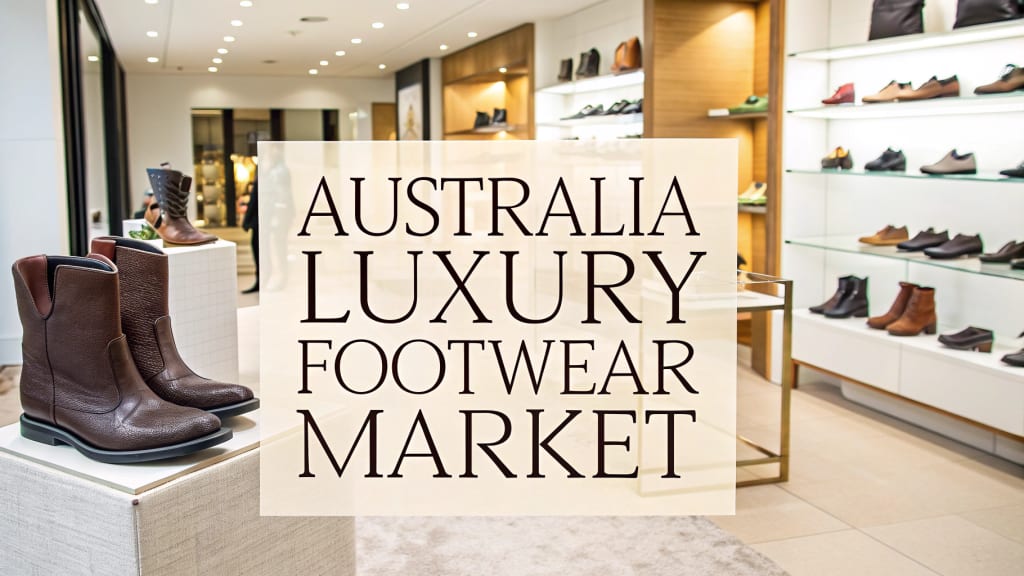
Australia Luxury Footwear Market
Australia’s luxury footwear market is showing solid and consistent growth, driven by evolving consumer tastes, higher disposable incomes and a growing demand for style, comfort, and ethical fashion. The Australia luxury footwear market size reached USD 915.1 Million in 2025. The market expected to reach USD 1,205.5 Million by 2034, exhibiting a growth rate (CAGR) of 3.11% during 2026-2034.
This reflects both a shift in consumer preferences toward high-end footwear and the influence of broader social, economic and sustainability trends shaping modern purchasing behaviour.
What’s fueling the growth
1. Changing fashion preferences and lifestyle shifts
Consumers in Australia are increasingly seeking footwear that blends luxury, comfort, versatility and premium aesthetics. IMARC highlights a rising demand for “versatile, stylish footwear that offers both comfort and performance,” including sneakers, designer loafers, high-end sandals and leather shoes that double up as fashion statements.
As remote work, flexible dress codes and more casual work environments become common, demand for luxury casual and “smart-casual” shoes is rising — shifting away from strictly formal footwear and widening the buyer base.
2. Higher disposable incomes & growing luxury retail ecosystem
With rising affluence and increased discretionary spending, more Australians are willing to invest in premium footwear — driven by quality, brand, exclusivity, and longevity. This is reinforced by growth in luxury retail: a report by CBRE noted that luxury retail trade in Australia reached a record AUD 6.2 billion in 2023, supported by a rising high-net-worth population, inbound migration, and resilient domestic tourism.
3. Sustainability and ethical fashion trends
Increasingly, luxury footwear brands are responding to consumer demand for environmentally responsible products: sustainable materials, ethical manufacturing practices, transparent supply chains and high-quality craftsmanship. IMARC identifies sustainability and ethical practices as a primary growth driver in the luxury footwear segment.
Many luxury consumers now view shoes not just as a disposable product, but as an investment in durability, style and environmental responsibility — adding value beyond mere aesthetics.
4. Shift toward luxury casual & athleisure footwear
Luxury sneakers, designer casual shoes and “sports-luxe” footwear are seeing rising demand as consumers prioritise comfort without compromising on style. This shift mirrors global trends where formal shoes are being replaced with versatile, lifestyle-oriented footwear — a trend established in Australia too.
Request a Sample Report with the Latest 2026 Data & Forecasts
What the Opportunities Are
The Australian luxury footwear market offers several promising opportunities for retailers, brands, investors and entrepreneurs:
• Expansion of luxury-casual and athleisure footwear: As lifestyle changes continue (remote or hybrid work, more casual dress codes), demand for high-end sneakers, luxe casual shoes and designer flats will grow. Brands focusing on comfort, versatility and fashion-forward design stand to capture strong share.
• Sustainable luxury and ethical footwear: Consumers increasingly value eco-friendly materials, transparent sourcing and ethical manufacturing. Footwear brands that offer sustainable leather alternatives, recycled materials or high-quality craftsmanship with eco-conscious credentials can differentiate themselves.
• Direct-to-consumer digital retail & subscription/limited-edition drops: Online luxury footwear retail, exclusive capsule collections, custom orders and limited drops can attract affluent consumers seeking exclusivity, convenience and novel experiences — especially younger, fashion-aware audiences.
• Niche market: bespoke, handcrafted, artisan footwear: There’s demand for artisanal, limited-run or custom-fit shoes among buyers who value craftsmanship, heritage and uniqueness. Such niche offerings can command premium margins and build loyal, high-value customer bases.
• Regional expansion & retail footprint beyond major metros: As wealth and demand spread beyond major cities (Sydney, Melbourne), there is room for luxury footwear retailers and boutiques to expand into growing regional centers — especially with online delivery and realistic shipping solutions reducing urban-centric limitations.
Recent News & Developments in Australia Luxury Footwear Market
• Jul 2024: According to a report by CBRE, luxury retail trade in Australia hit a record AUD 6.2 billion in 2023, with about 483 luxury retailers operating nationwide — including footwear, apparel, accessories and jewellery. This expansion reflects a post-pandemic rebound, stronger tourism and increased high-net-worth consumer presence.
• 2025 (ongoing): Luxury brands are extending presence beyond traditional strongholds (Sydney & Melbourne) — new store openings and pop-ups have been announced in cities like Brisbane, Perth, Adelaide and the Gold Coast, signalling growing regional demand and market confidence.
• 2025: Consumer shifts toward casual-style luxury and “accessible” premium footwear have strengthened, as many buyers — especially Millennials and Gen Z — prioritize comfort, brand ethics and versatility over formal or status-driven purchases. This has helped sustain growth even amid economic headwinds.
Why Should You Know About Australia Luxury Footwear Market?
Because this market highlights how fashion, lifestyle, economic prosperity and social shifts converge — offering a window into consumer behaviour, discretionary spending, and luxury-goods investment in a modern economy.
For investors and entrepreneurs, luxury footwear presents a sector with stable demand and growth potential: a growing affluent and aspirational consumer base, rising comfort and lifestyle trends, and evolving retail infrastructure that supports both premium and digital-first sales.
For brands and retailers, it’s a market where innovation, sustainability and flexibility pay off: designer sneakers, limited editions, ethical materials, bespoke options and omni-channel retail provide paths to differentiate, command higher margins and build loyal audiences.
About the Creator
Amyra Singh
Market research analyst who loves spotting patterns, digging into data, and turning insights into strategies that help brands grow and stay ahead of the curve.
Keep reading
More stories from Amyra Singh and writers in Trader and other communities.
Australia’s Power Market: Growing Demand, Clean Energy Shift & Grid Evolution
Australia Power Market The Australia power market is experiencing steady growth driven by rising electricity demand, expanding generation capacity and a significant shift toward renewable energy. According to the Australia power market delivered 277.10 TWh of electricity in 2024, and is forecast to reach 374.38 TWh by 2033, reflecting a CAGR of 3.10% over 2025–2033.
By Amyra Singhabout a month ago in Trader
78% of People Live Paycheck to Paycheck. Does This Include You?
A 2023 survey conducted by Payroll.org found that 78% of Americans live paycheck to paycheck, a 6% increase from the year before. According to reporting by Forbes, this means more than three-quarters of people struggle to save or invest after covering monthly expenses.
By Destiny S. Harris4 days ago in Trader


Comments
There are no comments for this story
Be the first to respond and start the conversation.