
Australia Meat and Poultry Market Is Feeding a Nation — And the World
From Grass-Fed Beef on Asian Dinner Tables to Free-Range Chicken in Australian Supermarkets, a 4.85 Million Ton Market Is Being Shaped by Health, Ethics, and Global Appetite

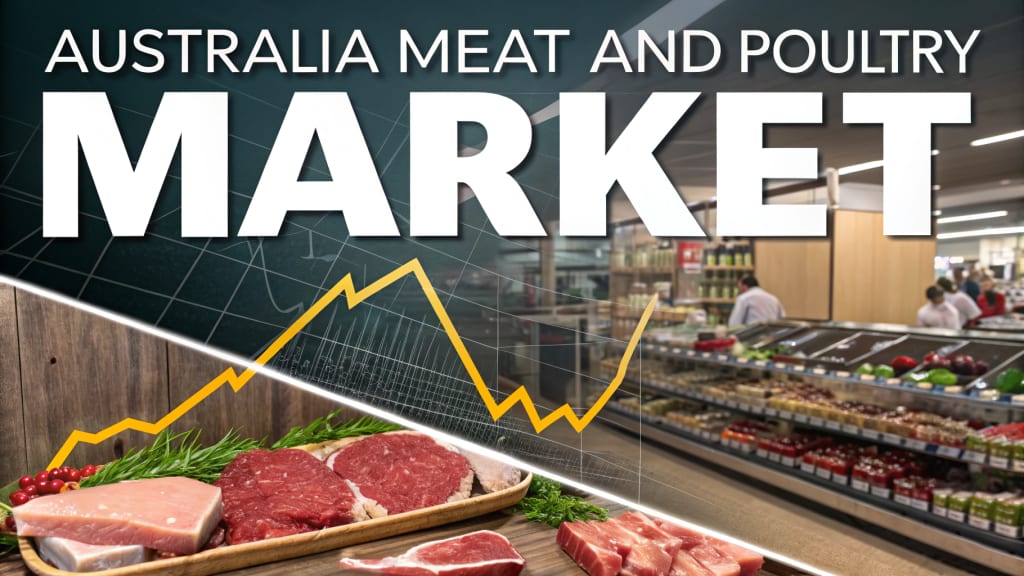
Ask most Australians what sits at the centre of a great meal and the answer tends to be consistent — quality meat. Whether it is a perfectly charred lamb chop at a backyard barbecue, a slow-roasted free-range chicken on a Sunday evening, or a grass-fed beef steak served at one of Sydney's acclaimed restaurants, meat and poultry occupy a place in Australian food culture that is simultaneously deeply traditional and actively evolving. It is a market that has fed a nation for generations — and is now feeding the world in growing volumes, while simultaneously responding to a generation of consumers demanding that their food be produced with greater care for health, animals, and the environment.
According to IMARC Group, the Australia meat and poultry market size reached 3.35 Million Tons in 2024. Looking forward, the market is projected to reach 4.85 Million Tons by 2033, exhibiting a growth rate (CAGR) of 3.80% during 2025–2033. This is not incremental growth — it is an additional 1.5 million tons of annual production capacity being brought online over a decade, representing a fundamental expansion of one of Australia's most economically and culturally significant industries. Behind those numbers lies a story of changing consumer preferences, surging export demand, infrastructure investment, and a food sector actively reinventing itself to meet the standards of a more discerning and more globally connected marketplace.
Why the Market Is Growing So Rapidly
Poultry Has Become Australia's Protein of Choice
Of all the shifts reshaping Australia's meat market, none is more consequential than the rise of poultry — and specifically chicken — as the nation's dominant protein. According to the Australian Department of Agriculture, Fisheries and Forestry, poultry is now the most consumed meat in Australia, with consumption exceeding 40 kilograms per person per year. The drivers are well understood: chicken is perceived as leaner and lower in fat than red meat, it is considerably more affordable than beef or lamb on a per-kilogram basis, and its culinary versatility makes it a genuinely useful ingredient across the full spectrum of Australian cooking styles — from weeknight stir-fries to celebration roasts. The government's promotional activities aligning with balanced diet messaging have reinforced poultry's healthy protein credentials, while growing consumer interest in free-range and organic chicken has created an expanding premium segment that sits above the commodity market and commands meaningfully higher margins for producers who can meet its sourcing and certification standards.
Export Demand Is Making Australia a Global Meat Powerhouse
Australia's meat industry does not simply feed Australians — it feeds a significant portion of the world, and its export credentials are formidable. Australia ranked as the fourth largest beef exporter globally as recently as 2022, with projections indicating it could reach second position. The primary export markets — China, Japan, and the United States — are not casual customers. They are sophisticated, high-volume purchasers who have built enduring supply relationships with Australian producers precisely because of the country's reputation for producing premium, grass-fed beef and lamb that meets the most demanding quality and food safety standards in the world. Free trade agreements with major trading partners have materially expanded export pathway access, allowing Australian meat producers to penetrate markets that were previously constrained by tariff barriers. Government support through export grants, marketing campaigns, and trade facilitation programs has maintained Australia's competitive positioning in a global meat trade that is fiercely contested. Every container of premium Australian beef or lamb that departs through a major port is not just revenue — it is a reaffirmation of Australia's brand promise as a producer of the world's finest natural protein.
Health and Nutrition Trends Are Driving Premiumisation
The health and wellness movement is not diminishing the role of meat in Australian diets — it is refining it. As more Australians adopt active lifestyles, pursue performance-oriented nutrition, and engage with dietary frameworks like paleo, keto, and high-protein eating plans, demand for quality natural meat products is rising, not falling. Consumers are making more deliberate choices: seeking out grass-fed beef for its superior omega-3 fatty acid profile, choosing hormone-free chicken for clean-label confidence, and selecting free-range lamb as a statement of both nutritional and ethical values. This shift is being met by producers and retailers who have diversified their offerings to include portion-controlled packs with clear nutritional labeling, premium certified cuts, and health-oriented product lines that translate nutritional science into accessible consumer benefits. The result is a market where the overall volume is growing and the average value per kilogram is rising simultaneously — a double growth dynamic that strengthens the economics of the entire supply chain from paddock to plate.
Cold Chain and Processing Infrastructure Investment Is Unlocking Capacity
The physical infrastructure underpinning Australia's meat and poultry market is undergoing its most significant modernisation in decades. Investment in refrigeration systems, climate-controlled logistics networks, modern slaughterhouse facilities equipped with automated processing technology, and high-standard food safety control systems is simultaneously increasing production capacity, improving product quality consistency, and reducing food waste across the supply chain. Advanced packaging technologies — including vacuum-sealed and modified atmosphere packaging — are extending shelf life in ways that enable more efficient retail distribution and reduce the volume of product lost to spoilage between processor and consumer. This infrastructure investment is not simply an operational improvement story — it is a strategic enabler that allows the industry to satisfy both growing domestic demand and the stringent quality requirements of Australia's most valuable export markets without compromising on the food safety and traceability standards that underpin Australian meat's global reputation.
Government Incentives Are Providing the Industry With a Competitive Foundation
The Australian government's role in supporting the meat and poultry sector extends well beyond trade facilitation. Agricultural subsidies, targeted grants for livestock health research, funding for sustainability initiatives in meat processing, and regulatory frameworks that enforce food safety, animal welfare, and traceability standards are all contributing to an industry that is simultaneously competitive, credible, and capable of continuous improvement. Policies supporting ethical farming practices, the reduction of antibiotic use in livestock production, and the adoption of environmentally responsible land management practices are aligning the industry with the direction of global consumer demand and international regulatory standards. Government-backed industry modernisation programs are accelerating the adoption of precision agriculture technologies, genetic improvement programs, and processing innovations that enhance both productivity and product quality — ensuring that Australian meat remains at the premium end of the global competitive spectrum.
What the Opportunities Are
1. Free-Range and Organic Certification — The Premium Growth Lane Consumer demand for free-range and certified organic meat and poultry is growing at a rate significantly above the overall market average, creating a premium product tier that commands higher retail prices, stronger brand loyalty, and more stable margin profiles than commodity product lines. For producers willing to invest in the certification processes, animal welfare infrastructure, and transparent supply chain documentation that premium certification requires, this segment represents one of the most commercially rewarding growth opportunities in the entire market. Retailers and foodservice operators are increasingly seeking certified premium product to satisfy their own sustainability commitments and meet the expectations of their most valuable customers.
2. Value-Added and Ready-to-Cook Products — Convenience as a Growth Driver Australia's fast-paced urban lifestyle is generating powerful and sustained demand for meat and poultry products that reduce kitchen preparation time without sacrificing flavour or quality. Pre-marinated cuts, seasoned portion packs, meal kit-ready proteins, and heat-and-serve preparations are all growing rapidly across both retail and foodservice channels. For processors and brand owners, value-added products offer a pathway to higher margin capture on the same raw material base, creating opportunities to differentiate on flavour profile, cuisine inspiration, nutritional positioning, and packaging innovation. The urban professional and young family demographics are the primary drivers of this trend, and their purchasing power is substantial.
3. Asia-Pacific Export Market Deepening While China, Japan, and the United States are established pillars of Australia's meat export business, significant growth opportunities exist in markets across Southeast Asia, South Korea, and the Middle East — regions where rising middle-class incomes are translating into increased consumption of premium imported protein. Australian meat producers that invest in market development, build direct relationships with regional importers and food service distributors, and tailor their product specifications to local culinary preferences and halal certification requirements are well-positioned to capture a disproportionate share of the growth in these developing export markets over the next decade.
4. Cultivated and Alternative Protein Integration Australia's regulatory environment took a landmark step forward in April 2025 when Food Standards Australia New Zealand (FSANZ) approved its first cultivated meat product — quail meat — following a thorough scientific evaluation and public consultation process. This milestone signals that Australia is entering the cultivated protein era, and the implications for the broader meat market are significant. Forward-thinking meat companies that begin exploring how cultivated protein, plant-based complements, and hybrid product formats can extend their existing brand franchises into emerging consumer segments — rather than viewing alternative proteins purely as competitive threats — will be better positioned to capture the full breadth of Australia's evolving protein market.
5. Foodservice and Meal Delivery Channel Expansion The growth of Australia's restaurant sector, fast-casual dining chains, and online meal delivery platforms is creating an increasingly significant and structurally reliable demand channel for quality meat and poultry products. Foodservice operators value consistency of supply, product specifications tailored to their preparation processes, and provenance narratives they can communicate to quality-conscious diners. Meat and poultry suppliers that develop dedicated foodservice product lines, invest in relationships with restaurant groups and meal kit companies, and build the logistical capability to service the foodservice channel efficiently are tapping a demand stream that is growing in both volume and value and is less price-sensitive than mass retail.
6. Sustainable Packaging Innovation As Australia's packaging legislation evolves and consumer pressure on plastic packaging intensifies, meat and poultry producers face a genuine opportunity to lead the market on sustainable packaging innovation. Vacuum-sealed and modified atmosphere packaging already extend shelf life and reduce food waste — important sustainability credentials in their own right. Developing paper-based, compostable, or enhanced recyclable packaging formats that maintain the product integrity requirements of fresh and processed meat while meeting evolving sustainability standards is an area where early innovators can capture meaningful competitive advantage with both retail buyers and sustainability-conscious consumers.
7. Digital Traceability and Provenance Marketing Australian consumers are increasingly curious about where their food comes from — and increasingly willing to pay a premium for verifiable answers. Digital traceability systems that allow consumers to scan a QR code and access information about the farm of origin, the animal welfare standards applied, the feed regime used, and the journey from paddock to processing plant are becoming a genuine point of commercial differentiation. Producers that invest in building transparent digital supply chain infrastructure and translate that transparency into compelling provenance storytelling at the point of sale are converting a growing consumer preference for food integrity into a tangible commercial premium that strengthens both brand equity and margin.
Recent News & Developments in Australia Meat and Poultry Market
• April 2025: In a landmark regulatory decision, Food Standards Australia New Zealand (FSANZ) granted approval for Australia's first cultivated meat product — laboratory-grown quail meat — following an extensive scientific safety evaluation and a comprehensive public consultation process that engaged consumers, industry stakeholders, and independent nutrition and food science experts. The approval represented a watershed moment for Australia's food regulatory framework, positioning the country as one of only a handful of nations globally to have formally approved a cultivated meat product for human consumption. FSANZ's decision opened a 60-day ministerial review window for the country's Food Ministers, after which the product would move closer to commercial market availability. Industry observers noted that the regulatory milestone would accelerate private investment in Australia's nascent cultivated protein sector and would ultimately reshape the competitive landscape of the country's broader meat market as cultivated products move from regulatory approval toward commercial scale over the coming years.
• June 2025: Cargill Inc., one of the world's largest privately held corporations and a major force in global agricultural commodities and food processing, announced its intention to acquire the entire share capital of Teys Investments Pty Ltd, one of Australia's most prominent and well-established beef processing companies with significant processing capacity across multiple Australian states. The proposed acquisition represented one of the largest corporate transactions in Australia's meat industry in recent memory and was interpreted by market participants as a powerful signal of the long-term confidence that global food industry majors have in Australia's beef sector fundamentals. The deal was expected to bring Cargill's global supply chain capabilities, international market relationships, and processing technology investments to bear on Teys' existing Australian operations, potentially accelerating the modernisation of processing infrastructure and enhancing the competitiveness of the combined entity's export offering across key Asian and North American markets.
• July 2025: Ovotrack, a global leader in process automation and traceability solutions for the egg and poultry industry, entered into a Letter of Intent with LocalTeam Australia (LTA), a Queensland-based information and communications technology service provider specialising in precision technology solutions for the poultry sector. The partnership was designed to bring Ovotrack's internationally proven traceability and automation platforms to Australian poultry producers for the first time, enabling end-to-end digital tracking of poultry products from hatching facility through to processing and retail distribution. Industry analysts described the collaboration as a significant step forward for Australia's poultry sector traceability capabilities, noting that improved digital supply chain visibility would strengthen export credentials, support food safety compliance, and provide producers with the granular operational data required to optimise productivity and reduce waste across complex poultry processing operations.
Why Should You Know About the Australia Meat and Poultry Market?
Food is never just about nutrition — it is about culture, identity, economics, and the relationship between a society and the land it inhabits. In Australia, meat and poultry occupy all of these dimensions simultaneously. The industry is a cornerstone of rural economies across Queensland, New South Wales, Victoria, and Western Australia. It is a diplomatic and trade asset, building bilateral relationships with major Asian economies through the consistent delivery of premium product. And it is an intensely personal part of Australian daily life — the protein that appears on dinner tables in every demographic, income bracket, and cultural community across the country.
For investors and businesses, the trajectory from 3.35 million tons in 2024 to 4.85 million tons by 2033 at a 3.80% CAGR tells a story of reliable, structurally supported growth with multiple value-creation levers — export market development, premium product premiumisation, value-added processing, and foodservice channel expansion. The market's diversification across animal types, distribution channels, freshness categories, and packaging formats provides multiple entry points for businesses seeking to participate in its growth at different points along the value chain.
For policymakers, the meat and poultry market represents a test case for how Australia manages the intersection of agricultural productivity, food safety, environmental sustainability, animal welfare, and trade competitiveness simultaneously. Getting this balance right — maintaining Australia's premium export reputation while meeting domestic consumer demand for ethical production and supporting the livelihoods of rural communities that depend on the industry — is one of the most complex and consequential policy challenges in the country's agricultural sector.
For consumers and food lovers, the Australia meat and poultry market's evolution toward greater transparency, ethical sourcing, and product quality is genuinely good news. The Australia of 2033 — where 4.85 million tons of carefully produced, digitally traceable, ethically certified protein feeds a growing nation and fuels a thriving export industry — will be a place where the food on your plate tells a story worth knowing. And in the best Australian tradition, that story will be told around a table, with great company, over a meal worth remembering.
About the Creator
Amélie Belle
Hi, I’m Amélie Belle—27, New York writer, lover of quiet moments and honest words. I share poetry and reflections on love, healing, and life’s small miracles. If my writing makes you feel seen, I’m exactly where I’m meant to be.
Keep reading
More stories from Amélie Belle and writers in Trader and other communities.
Australia Microgrid Market: Building Resilience and Renewable Power for Tomorrow
The Australia microgrid market is gaining strategic importance as Australia strengthens its energy infrastructure, responds to climate challenges, and empowers remote communities. In 2025, the market was valued at approximately USD 765.7 million and is projected to grow to USD 1,573.5 million by 2034, expanding at a compound annual growth rate (CAGR) of 8.08 percent from 2026 to 2034.
By Amélie Bellea day ago in Trader
Cerumen Removal Market Size and Forecast 2025–2033
Global Cerumen Removal Market: An Industry Gaining Attention The global cerumen removal market is steadily transforming from a niche healthcare segment into a widely discussed and commercially significant industry. According to Renub Research, the cerumen removal market was valued at US$ 2.31 billion in 2024 and is expected to reach US$ 4.23 billion by 2033, growing at a CAGR of 6.95% from 2025 to 2033. This consistent growth reflects a broader shift in how consumers and healthcare systems approach ear health, preventive care, and non-invasive treatment solutions.
By Sakshi Sharma6 days ago in Trader


Comments
There are no comments for this story
Be the first to respond and start the conversation.