
Australia Lubricants Market: Automotive Demand, Industrial Growth & the Rising Importance of High-Performance Lubrication
How machinery upgrades, mobility trends and advanced formulations are shaping Australia’s lubricants industry
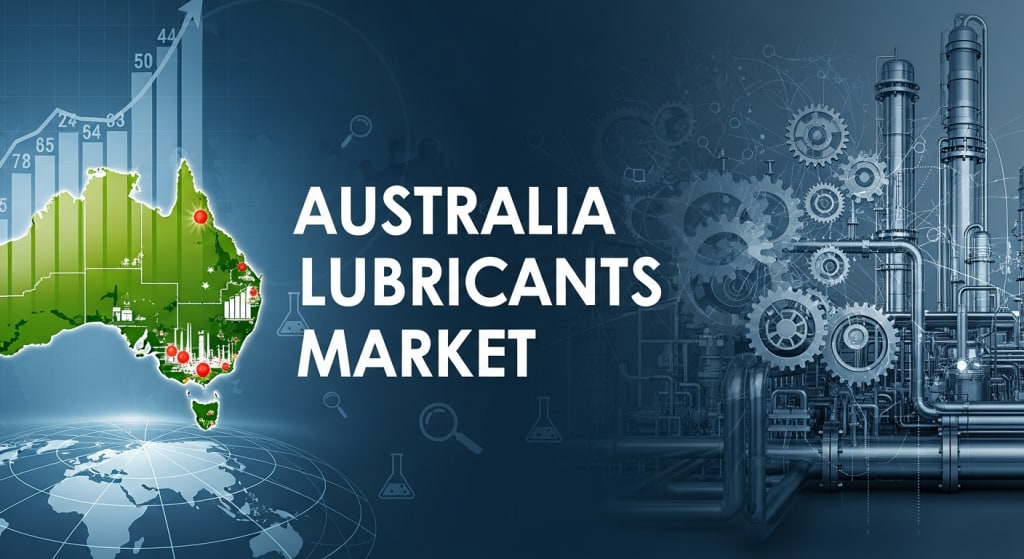
In 2024, the Australia lubricants market reached USD 2,834.0 Million, and is projected to reach USD 4,211.6 Million by 2033, growing at a steady CAGR of 4.50% during 2025–2033 by IMARC group. This growth reflects Australia’s expanding automotive sector, rising industrial output and increasing dependence on high-performance lubrication solutions for machinery, transport fleets, construction, mining and marine operations. As equipment becomes more advanced, energy efficient and digitally monitored, demand is shifting toward synthetic and semi-synthetic lubricants, extended-drain interval oils and application-specific formulations designed to improve performance, reduce wear and support long-term operational reliability.
What is the Australia Lubricants Market Key Growth Drivers?
Expanding Automotive Fleet & Rising Maintenance Requirements
Australia’s growing passenger and commercial vehicle fleets are driving consistent demand for engine oils, transmission fluids and gear lubricants. Regular maintenance cycles, longer commuting distances and the rise of utility vehicles support steady lubricant consumption across dealerships, independent garages and fast-service chains.
Industrial Growth Across Mining, Manufacturing & Construction
Mining remains one of Australia’s largest industrial sectors, and heavy machinery such as excavators, haul trucks and hydraulic equipment rely heavily on lubricants. Likewise, manufacturing and construction sectors use industrial oils for compressors, turbines, metalworking systems and factory machinery—ensuring long-term industrial demand.
Shift Toward High-Performance Synthetic & Low-Emission Lubricants
Environmental standards, fuel-efficiency regulations and OEM (Original Equipment Manufacturer) specifications are accelerating demand for advanced lubricants. Synthetic and semi-synthetic solutions offer better oxidation stability, reduced friction and extended equipment life—helping businesses lower operating costs.
Growth of Mobility Services & Commercial Transport Operations
Logistics, e-commerce deliveries and freight operations are expanding nationwide, increasing lubricant consumption in commercial fleets. High-mileage vehicles rely on durable lubricants that support long drain intervals and protect engines under heavy load conditions.
Increasing Adoption of Digital Monitoring & Predictive Maintenance
Industries are increasingly using IoT sensors and AI-powered systems to monitor lubricant condition, temperature and viscosity in real time. This supports preventive maintenance strategies that minimise downtime, reduce equipment failures and extend machinery lifespan—boosting demand for specialised industrial lubricants.
Why Should Smart Investors and Businessmen Know About the Australia Lubricants Market?
The lubricants industry is a mission-critical component of Australia’s automotive and industrial economy, offering stable, long-term demand driven by infrastructure, transport, machinery and energy operations.
A Large, Growing Market with Essential & Recurring Demand
With the market expanding toward USD 4.21 Billion by 2033, lubricants represent a recession-resistant sector—every vehicle and piece of machinery requires ongoing lubrication regardless of economic fluctuations.
Strong Industrial Backbone Supported by Mining & Manufacturing
Lubricants fuel Australia’s heaviest industries, including mining equipment, agricultural machinery, freight transport, metal fabrication and energy production—ensuring consistent B2B demand.
Premiumisation & Advanced Formulations Offer Higher Margins
The shift from mineral oils to synthetic and semi-synthetic lubricants enhances profitability for suppliers and distributors due to superior performance characteristics and longer replacement cycles.
Digital Transformation Creates New Business Models
Predictive maintenance tools, oil-monitoring sensors and cloud-connected lubrication systems open opportunities for subscription models, service-based contracts and performance-guaranteed solutions.
Alignment with Sustainability Trends Strengthens Market Prospects
Growing interest in bio-based lubricants, circular recycling systems and low-carbon industrial operations is attracting new investment in green chemical technologies.
Recent Trends & Developments in the Australia Lubricants Market
May 2025:
Premium synthetic engine oils saw rising adoption as vehicle manufacturers highlighted longer drain intervals and higher fuel efficiency. Service centers reported increased consumer preference for high-performance lubricants approved under new OEM standards.
February 2025:
Mining companies expanded use of heavy-duty hydraulic fluids designed for high-temperature and high-pressure machinery operations. Lubricant suppliers launched new formulations to improve uptime and reduce wear in large mining trucks and excavators.
October 2024:
Sustainability trends accelerated demand for bio-lubricants, particularly in environmentally sensitive zones such as marine ports and forestry sites. Several manufacturers introduced biodegradable hydraulic oils with enhanced oxidation stability and reduced toxicity.
Australia Lubricants Market Vision 2050:
1. Fully Smart Lubrication Ecosystems for Real-Time Equipment Health
By 2050, sensors embedded in machinery will automatically analyse lubricant quality and trigger replenishment or send alerts—creating self-managed lubrication systems.
2. Widespread Adoption of Bio-Based & Carbon-Neutral Lubricants
Sustainable alternatives derived from plant-based oils, biodegradable formulations and ultra-low-emission lubricants will become mainstream due to environmental regulations and ESG-driven procurement.
3. Autonomous Fleets & Electrified Machinery Transforming Lubricant Demand
Electric vehicles and autonomous mining trucks will reshape lubricant requirements, increasing demand for thermal management fluids, EV-specific greases and high-performance cooling formulations.
4. Closed-Loop Recycling & Circular Lubrication Systems
Industrial players will adopt closed-loop oil regeneration systems that recycle used lubricants into high-grade products, reducing waste disposal and lowering environmental impact.
5. Ultra-Long-Life Lubricants Extending Drain Intervals
Advancements in additive chemistry will enable lubricants that last significantly longer, reducing maintenance costs and improving total equipment efficiency across automotive and industrial sectors.
The Australia lubricants market is evolving into a technology-enhanced, sustainability-focused and performance-driven industry, supported by strong automotive usage, expanding industrial activity and the continuous need for machinery reliability. With a robust CAGR of 4.50%, rising demand for synthetic oils, and increasing integration of digital monitoring systems, the sector offers significant opportunities for investors, distributors, chemical innovators and industrial suppliers. As Australia advances toward a more efficient, electrified and sustainable industrial economy, high-performance lubricants will remain essential to keeping engines, factories and machinery running at optimal efficiency.
About the Creator
Keep reading
More stories from Shrestha Roy and writers in Trader and other communities.
Australia Bearings Market: Industrial Machinery, Automotive Growth & the Evolution of Precision Motion Components
In 2024, the Australia bearings market reached a value of USD 1.31 Billion in 2024 and is projected to grow to USD 3.56 Billion by 2033, expanding at a robust CAGR of 10.50% during 2025–2033 by IMARC Group. This strong growth reflects the rising importance of precision motion components across manufacturing, automotive, mining, renewable energy, and heavy industrial machinery. Bearings—critical for reducing friction, supporting loads, and enabling smooth rotational movement—form the mechanical backbone of Australia’s industrial economy. As equipment becomes faster, heavier, and more automated, the demand for high-performance, long-life, and energy-efficient bearings is accelerating across the entire value chain.
By Shrestha Royabout a month ago in Trader
Australia General Insurance Market Poised for Strong Double-Digit Growth Through 2033
The Australia general insurance market is entering a phase of robust expansion driven by rising exposure to natural catastrophes, digital innovation in distribution and underwriting, and shifting consumer risk preferences. According to the latest IMARC Group report, the market was valued at USD 18,148.40 million in 2024 and is expected to reach USD 33,029.83 million by 2033, registering a CAGR of 6.88% over the 2025-2033 period.
By Rashi Sharma6 days ago in Trader
The Sussex Exodus: Behind the Scenes of a Celebrity Empire in Crisis
For a couple who left royal life claiming to escape toxic workplaces, the numbers are impossible to ignore. Eleven senior staff departures in less than two years. Seven months—the longest tenure for their head of public relations. A pattern of professional attrition so intense it can no longer be dismissed as coincidence, media bias, or tabloid exaggeration. What it reveals is a story Meghan Markle and Prince Harry desperately do not want the world to see. For years, the Sussexes promised a new kind of organization. One that would prioritize wellness, mental health, and collaboration. They positioned themselves as ethical employers, contrasting the strict hierarchies of Kensington Palace. But reality has been far different. The Archwell Foundation and their associated lifestyle ventures were supposed to be models of innovation and empathy. Instead, they have become synonymous with chaos and staff burnout. The exodus began almost immediately. Upon joining the royal orbit, Meghan’s arrival triggered a wave of staff requests for transfers. Within months, personal assistants, private secretaries, and communication officers resigned. This was not ordinary turnover—it was a revolving door spinning out of control. When the couple relocated to California, they promised an ethical and collaborative empire. But staff who followed them across continents quickly discovered an impossible work environment. Sources describe relentless late-night demands, constantly shifting priorities, and unpredictable reversals of decisions. Staff report an atmosphere of walking on eggshells, where completed projects are criticized, instructions change multiple times in a day, and employees are blamed for failures they did not cause. One former staffer compared it to building a house while the blueprints constantly change. Another described meetings that left employees in tears—not from constructive feedback, but from impossible standards paired with personal criticism. The pattern of departures is telling. James Holt, the executive director of Archwell, recently announced his departure after years of loyal service. He uprooted his family to support the couple’s American vision, stood by them through controversies, and yet chose to leave. Just before him, Meredith Mains, head of public relations, walked away after only seven months. In high-profile celebrity operations, such short tenures are not normal—they indicate an unsustainable, chaotic environment. The reasons for this professional implosion are manifold. Industry insiders describe mercurial leadership, unclear authority, and unrealistic expectations. The ARRO lifestyle brand launch became emblematic of this dysfunction. Staff who raised concerns about pricing, product quality, or marketing strategy were allegedly ignored, and when problems arose, blame was assigned downward. The launch, instead of building credibility, became a public punchline. Employees who worked tirelessly to execute plans watched their efforts mocked, while leadership remained unaccountable. Prince Harry’s response adds another layer of complexity. Increasingly, he has distanced himself from joint ventures. Solo appearances, independent charitable projects, and public events separate from Meghan indicate discomfort with the mounting staff and operational crises. Sources suggest he is growing frustrated with defending a system that repeatedly fails, a scenario at odds with their public messaging about mental health and ethical leadership. The Monteceto operation now reportedly resembles a paranoid fortress. Remaining staff work under intense scrutiny, and honest feedback has disappeared. The culture of mistrust and constant observation has made recruitment nearly impossible. Industry whispers in Los Angeles and New York describe working for the Sussexes as a career risk. Talented professionals decline even to interview once they learn the operation’s reputation. This story is not just about turnover—it is about the consequences of mismanaged power and the gap between public image and reality. Meghan and Harry’s global platform, immense resources, and celebrity influence are unable to compensate for poor internal management. The fallout affects not only current staff but also future ambitions. A brand that promised ethical leadership and innovation now struggles to attract competent talent, deliver on its promises, and maintain credibility. Ultimately, the Sussexes’ situation is a cautionary tale. Leaving royal life to escape perceived toxicity is one thing. Recreating it in a new context—under your own direction—is quite another. The very vision that once inspired admiration now fuels a revolving door of departures, frustrated professionals, and public scrutiny. While the world continues to watch, Prince Harry and Meghan Markle face a challenge far larger than media narratives: creating a sustainable, functional operation capable of delivering on their promises. Until the pattern of exodus is addressed, the evidence speaks for itself. Eleven departures, relentless turnover, and mounting staff disillusionment tell a story that no celebrity influence can spin away: leadership without accountability can never achieve its vision. In the end, this is a story of ambition, celebrity, and professional failure. The Sussexes may command attention, but the exodus of talent reveals a truth impossible to ignore. Building a legacy requires more than resources, contracts, or charisma—it requires trust, structure, and accountability, qualities that appear in dangerously short supply in their current operation. Image Creation Format for This Story: Subject: Meghan Markle and Prince Harry in a stylized office or estate setting, showing a sense of chaos. Empty desks, scattered papers, and tense staff figures in the background. Mood: Tense, dramatic, chaotic, professional stress. Style: Realistic digital painting, cinematic lighting, slightly dramatic. Background Elements: Monteceto estate or modern office details, staff shadows, overturned chairs or paperwork to imply turmoil. Colors: Muted, dramatic tones—cool shadows with warm highlights on the couple to emphasize focus. Focus: Meghan and Harry central, expressions serious, staff and environment around them conveying stress and departure.
By Behind the Curtain3 days ago in Trader
A Failed Artist, A Disillusioned Poet, An Underpaid Game Show Host
I took my son and niece to Gori, a small town in Georgia where Joseph Stalin was born. They talked me into visiting the Stalin's Museum, the largest in the post-Soviet space. I had resisted going there because I just can't stand the monster and know enough about him, or so I thought.
By Lana V Lynx6 days ago in FYI



Comments
There are no comments for this story
Be the first to respond and start the conversation.