
Asia Pacific Soup Market Size and Forecast 2025–2033
How Urban Lifestyles, Health Trends, and Convenience Foods Are Reshaping the Region’s Soup Industry

Introduction: A Comfort Food Finds a Modern Avatar
Soup has always been more than just food in the Asia Pacific region. From Japan’s humble miso soup to China’s medicinal broths, Thailand’s spicy tom yum, and Korea’s hearty kimchi jjigae, soup is deeply woven into everyday life and cultural identity. Traditionally prepared at home with fresh ingredients, soup has long been associated with comfort, nourishment, and healing.
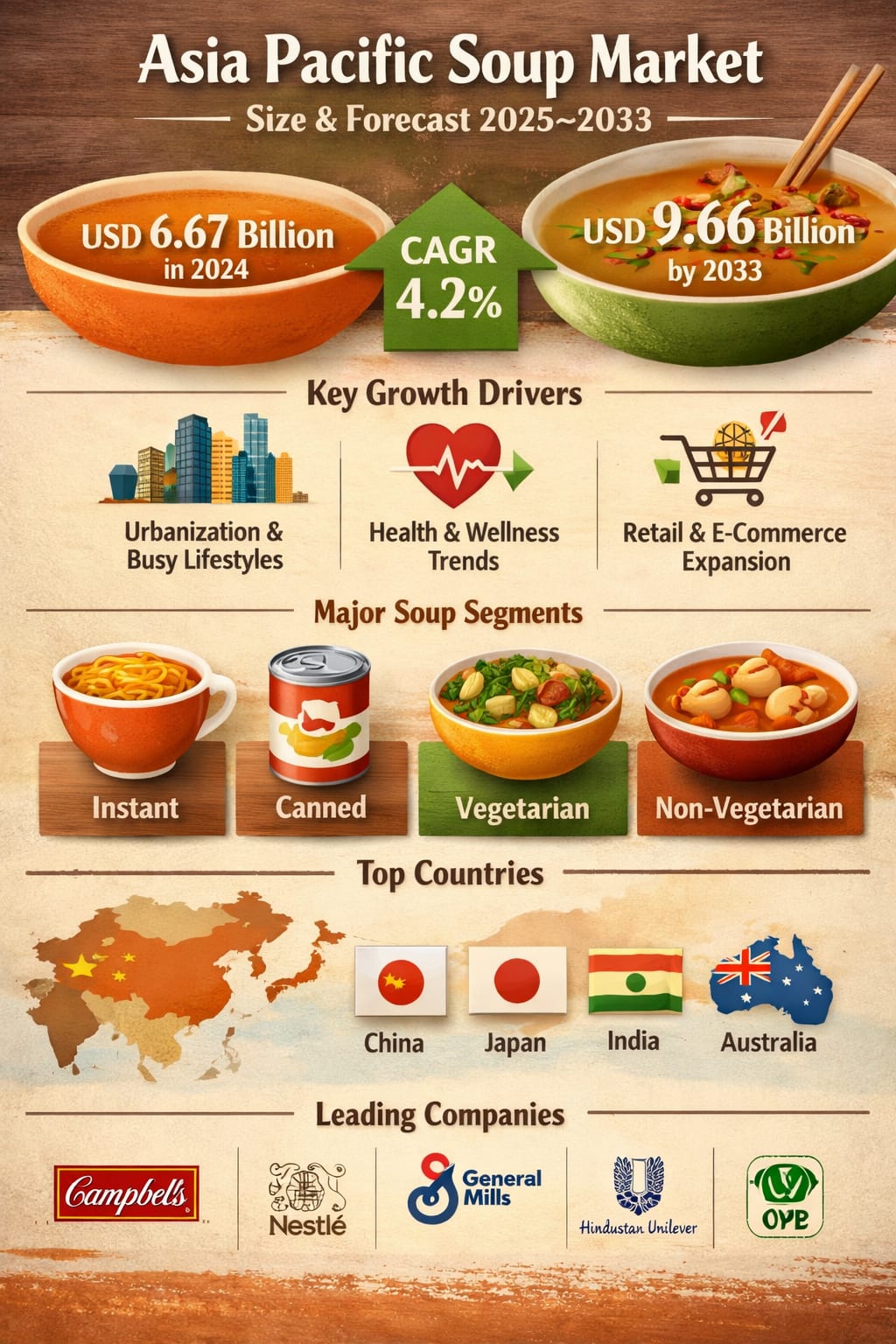
Today, however, this age-old dish is undergoing a modern transformation. According to Renub Research, the Asia Pacific soup market stood at USD 6.67 billion in 2024 and is projected to reach USD 9.66 billion by 2033, growing at a CAGR of 4.2% from 2025 to 2033. This steady expansion reflects changing lifestyles, rising urbanization, and a growing appetite for convenient, ready-to-eat, and nutritious food solutions across the region.
The rise of packaged and instant soups does not signal the decline of traditional cooking. Instead, it highlights how consumer preferences are evolving to balance taste, health, time, and convenience. With busy schedules, increasing health awareness, and expanding retail channels, soup is no longer just a home-cooked comfort—it is fast becoming a strategic segment of the region’s fast-moving consumer goods (FMCG) market.
Asia Pacific Soup Market Overview
Soup is typically defined as a liquid or semi-liquid dish prepared using vegetables, meats, seafood, or legumes, combined with water, broth, or stock. In Asia Pacific, soup plays a dual role: it can be a light appetizer or a filling main course, depending on the recipe and cultural context.
What makes the region unique is the diversity of flavors and traditions. China’s herbal and bone broths, Japan’s miso-based soups, Southeast Asia’s spicy and aromatic varieties, and South Asia’s vegetable-based and spiced soups all contribute to a rich culinary landscape.
In recent years, the market has expanded beyond freshly prepared soups into instant, canned, dehydrated, and chilled formats. This shift is largely driven by urban consumers who seek quick meal options without compromising too much on taste or nutrition. At the same time, rising health awareness is pushing manufacturers to develop low-sodium, organic, plant-based, and functional soups, catering to a broader and more health-conscious audience.
Key Growth Drivers in the Asia Pacific Soup Market
1. Increasing Urbanization and Busy Lifestyles
Urbanization is one of the most powerful forces shaping food consumption patterns in Asia Pacific. Major economies such as China, India, Indonesia, and Vietnam are witnessing rapid city growth, with millions of people moving to urban centers for work and education.
As working hours lengthen and daily routines become more hectic, consumers increasingly look for quick and easy meal solutions. Instant and ready-to-eat soups fit perfectly into this lifestyle shift. They require minimal preparation, are easy to store, and can be consumed at home, in offices, or even while traveling.
With nearly 55% of Asia’s population expected to live in urban areas by 2030, demand for convenient food products like packaged soups is set to rise further, reinforcing long-term market growth.
2. Growing Health Awareness Among Consumers
Health consciousness is no longer a niche trend in Asia Pacific—it is becoming mainstream. Rising cases of lifestyle-related conditions such as obesity, hypertension, and diabetes are encouraging consumers to pay closer attention to what they eat.
Soups, especially those made with vegetables, herbs, and lean proteins, are widely perceived as light, digestible, and nutritious. This perception has fueled demand for low-calorie, low-sodium, and functional soups enriched with vitamins, minerals, or traditional medicinal ingredients.
Post-pandemic, this trend has become even stronger. Surveys across the region show that a significant majority of consumers are now more health-focused than before, pushing food companies to innovate with clean-label, organic, and plant-based soup options.
3. Expansion of Organized Retail and E-Commerce
The rapid growth of supermarkets, hypermarkets, and online grocery platforms has transformed how consumers buy food. Organized retail offers better product visibility, wider choices, and frequent promotional campaigns, making it easier for packaged soup brands to reach new customers.
At the same time, e-commerce platforms have removed geographical barriers, allowing consumers to explore both local and international soup brands from the comfort of their homes. Digital marketing, customer reviews, and subscription models are further strengthening consumer engagement and repeat purchases.
This multi-channel retail expansion is playing a crucial role in boosting market penetration, especially in urban and semi-urban areas.
Challenges Facing the Market
Preference for Traditional Home-Cooked Meals
Despite the convenience of packaged soups, a large segment of Asia Pacific consumers—particularly in rural and semi-urban areas—still prefers freshly prepared home-cooked food. Cultural habits, taste preferences, and trust in traditional cooking methods remain strong.
This mindset can limit the adoption of canned and processed soups in certain markets, slowing growth outside major cities. For many households, packaged soup is still seen as an occasional alternative rather than a daily staple.
Price Sensitivity in Developing Economies
In countries such as India, Indonesia, and Vietnam, price remains a critical factor in purchasing decisions. Premium and imported soup products often struggle to compete with affordable local alternatives or home-cooked meals.
Manufacturers face the ongoing challenge of balancing quality, nutrition, and affordability while catering to consumers with varying income levels across the region.
Segment Insights: How the Market Is Shaping Up
Instant Soup: The Convenience Champion
Instant soup dominates the market thanks to its ease of preparation and portability. Busy professionals, students, and travelers form the core consumer base for this segment. Popular flavors such as chicken, tomato, and mushroom continue to perform well, while regional flavors like miso and tom yum are gaining traction.
Brands are increasingly focusing on improving nutritional profiles and taste, while innovative packaging formats like cups and sachets are boosting on-the-go consumption.
Canned Soup: The Pantry Staple
Canned soups are valued for their long shelf life and variety. Although they are less popular than instant soups in some Asian markets, they are gaining acceptance among health-conscious and elderly consumers seeking convenient meal alternatives.
The introduction of low-sodium, gluten-free, and organic options is helping this segment appeal to modern consumers, even as concerns over preservatives and packaging waste remain.
Vegetarian vs Non-Vegetarian Soups
Vegetarian soups are seeing strong growth, driven by rising interest in plant-based diets and sustainability. Markets such as India and Thailand provide a solid consumer base for vegetable- and legume-based soups, especially when combined with clean-label positioning and local flavors.
Non-vegetarian soups, including chicken, seafood, and bone broths, remain highly popular in countries like China, Japan, and South Korea. Their rich taste and protein content make them suitable as both main meals and side dishes, with premium variants gaining popularity among higher-income consumers.
Distribution Channels: Where Consumers Are Buying
Convenience Stores
Convenience stores play a vital role in urban Asia Pacific, especially in countries like Japan, South Korea, and Taiwan. High foot traffic and demand for quick meals make these outlets ideal for single-serve soup cups and pouches. Strategic partnerships and strong in-store marketing continue to drive sales in this channel.
Online Retail
E-commerce is rapidly reshaping the soup market. With increasing smartphone usage and internet access, consumers are turning to online platforms for variety, convenience, and competitive pricing. Promotions, user reviews, and subscription deliveries are making online channels an increasingly important growth engine for both local and global brands.
Country-Level Market Highlights
China
China represents one of the largest and most diverse soup markets in the region. With a long tradition of herbal and medicinal soups, the country is now witnessing strong growth in packaged and instant formats, particularly among urban youth. Functional soups enriched with traditional ingredients are gaining popularity, supported by strong e-commerce penetration and product innovation.
Japan
Soup is deeply embedded in Japanese food culture, with miso soup being a daily staple. The market is driven by convenience, quality, and health-focused innovation. Low-sodium and additive-free products cater to an aging population that values easy-to-digest meals, while continuous packaging and flavor innovation keeps the market dynamic.
India
India’s soup market is growing steadily, supported by urbanization, rising incomes, and exposure to global cuisine. Tomato, sweet corn, and mixed vegetable soups are among the most popular varieties. While home-cooked food still dominates, instant soups are gaining ground among working professionals and students, especially when priced affordably and adapted to local tastes.
Australia
Australia shows strong demand for organic, low-sodium, and plant-based soups. Consumption is often seasonal, peaking during colder months. Supermarkets and online channels play a major role in distribution, and competition between local and international brands is driving innovation in clean-label and sustainable products.
Competitive Landscape
The Asia Pacific soup market is moderately competitive, with both global giants and regional players vying for market share. Key companies active in the region include:
The Campbell Soup Company
Nestlé S.A.
General Mills Inc.
Baxters Food Group Ltd.
Conagra Brands, Inc.
Hindustan Unilever Group
Premier Foods
Associated British Foods Inc.
These companies compete on the basis of product innovation, pricing, distribution reach, and brand trust, while increasingly focusing on health-oriented and region-specific offerings.
Market Segmentation Snapshot
By Type:
Instant
Canned
Dehydrated
Chilled
Others
By Category:
Vegetarian
Non-Vegetarian
By Distribution Channel:
Supermarkets & Hypermarkets
Convenience Stores
Online
By Country:
China, Japan, India, South Korea, Thailand, Malaysia, Indonesia, Australia, New Zealand, and the Rest of Asia Pacific.
Final Thoughts: A Market Blending Tradition with Modern Convenience
The Asia Pacific soup market is a compelling example of how traditional food habits can successfully adapt to modern lifestyles. With the market projected to grow from USD 6.67 billion in 2024 to USD 9.66 billion by 2033, the future looks steadily promising.
Urbanization, health awareness, and retail expansion are reshaping how consumers perceive and consume soup—transforming it from a home-cooked staple into a versatile, packaged, and on-the-go meal option. While challenges such as price sensitivity and preference for fresh food remain, innovation in flavors, nutrition, and packaging is helping brands bridge the gap between tradition and convenience.
In the years ahead, companies that can balance local tastes, health expectations, and affordability will be best positioned to win in this diverse and fast-evolving Asia Pacific soup market.
About the Creator
Tom Shane
Tom Shane is a content writer specializing in SEO-driven blogs, product descriptions, and thought leadership. He crafts engaging, research-backed content that connects with audiences and drives results.
Diabetic Nephropathy Market to Reach USD 16,750.4 Million by 2035: AI Innovations and Rising Diabetes Cases Fuel 4.65% CAGR Growth
The global diabetic nephropathy market is on a steady upward trajectory, projected to reach USD 16,750.4 million by 2035, growing at a CAGR of 4.65% between 2025 and 2035. The surge is largely driven by the alarming global rise in diabetes cases and the increasing burden of chronic kidney disease (CKD), one of the most serious long-term complications of diabetes.
By Adil Ali Khan2 days ago in Trader
Vanguard FTSE Canadian High Dividend Yield Index ETF: A Smart Way to Grow Income and Build Wealth
Investing doesn’t have to be complicated. The Vanguard FTSE Canadian High Dividend Yield Index ETF is a simple way to earn steady income while growing your savings over time. This ETF focuses on Canadian companies that consistently pay dividends, giving investors a mix of income and long-term growth. In this article, we’ll explain how this ETF works, why it’s popular, and how it can fit into your investment strategy.
By hamza mirza3 days ago in Trader




Comments
There are no comments for this story
Be the first to respond and start the conversation.