
AI in Stock Markets: How Intelligent Systems Are Reshaping Modern Trading
Discover how AI in stock markets is transforming trading, forecasting, and investment decisions through automation, data analysis, and machine learning.

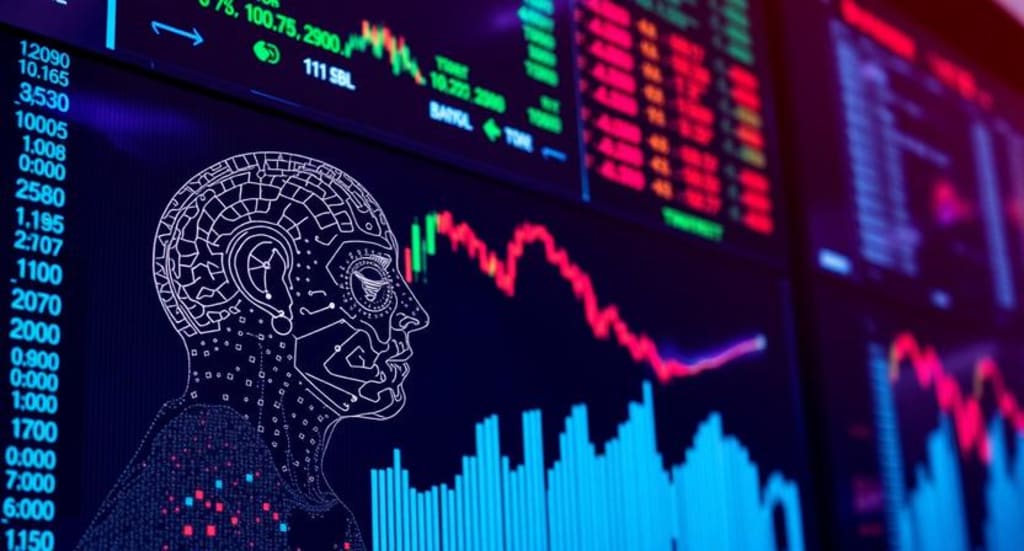
AI in Stock Markets: A Deep Look Into the Future of Trading
Artificial Intelligence has become one of the most influential forces in today’s financial markets. What once required hours of chart reading, manual analysis, and human intuition can now be processed within seconds using advanced AI-driven systems. AI in stock markets is changing the way traders react to price movements, manage portfolios, and predict market trends. Its rapid adoption shows that the future of trading will be powered not only by data, but by intelligent automation capable of learning and adapting in real time.
The growth of AI-based tools allows investors to handle complex tasks that were previously limited to large institutions. Today, retail traders also use machine learning platforms, automated trading bots, and sentiment analysis systems to enhance their investment decisions. This shift marks the beginning of a new era where technology and finance blend seamlessly to deliver more accurate, faster, and smarter trading outcomes.
How AI Processes Market Data
One of the most valuable contributions of AI in stock markets is its ability to analyze massive amounts of data instantly. Markets generate millions of data points per minute—historical prices, company earnings, global news events, and social sentiment. AI systems can read, classify, and interpret this information far more efficiently than any human team.
These systems evaluate patterns that may not be visible through traditional analysis. For example, machine learning can recognize subtle price correlations, seasonal cycles, or repetitive market reactions to specific events. By learning from historical behavior, AI models create predictions that help traders understand the likelihood of future price movement.
This real-time capability empowers investors to respond faster to opportunities or risks. In a market where seconds matter, AI becomes a powerful competitive advantage.
AI-Powered Price Predictions
Forecasting stock prices is one of the most challenging tasks for traders. AI offers an improved approach through predictive analytics that combines historical data with current market conditions. Several types of models contribute to this:
Neural networks detect complex price patterns.
Natural Language Processing (NLP) reads news sentiment and investor reactions.
Time-series algorithms project future movement based on long-term trends.
These models continuously update themselves, improving accuracy over time as new data arrives. While no system can guarantee perfect predictions, AI significantly enhances the reliability of forecasts, giving traders a clearer sense of market direction.
Algorithmic and Automated Trading
AI has also revolutionized algorithmic trading, where trades are executed automatically based on predefined rules or real-time signals. These systems can:
Execute trades within milliseconds
Track hundreds of stocks simultaneously
Remove emotional bias
Adjust strategies instantly
React to changing market conditions
Institutional investors rely heavily on AI-driven trading because it ensures discipline and consistency. Retail traders also benefit from automation through trading bots that work around the clock, analyzing charts and executing trades even when the user is offline.
This blend of speed and precision has made algorithmic trading one of the most effective tools in modern markets.
Risk Management Through AI
Managing risk is a crucial part of investing, and AI enhances this process by identifying threats before they escalate. AI systems evaluate price volatility, track market sentiment shifts, and analyze macroeconomic indicators. This allows traders to understand potential downturns early and adjust their portfolios accordingly.
AI-powered risk models help investors:
Detect weakening trends
Forecast volatility spikes
Set optimal stop-loss levels
Diversify portfolios intelligently
By providing a deeper understanding of potential risks, AI encourages a more balanced and informed investment approach.
The Role of Sentiment Analysis
Market sentiment the emotional state of investors—can influence prices even more than fundamental data. AI tools use NLP to scan thousands of news articles, social media posts, financial reports, and discussion forums to judge whether public sentiment is positive, neutral, or negative.
This insight helps traders anticipate short-term price movement. For example, sudden negative sentiment after an earnings report might signal a drop, while positive buzz around a new product launch can trigger bullish momentum. Sentiment analysis gives traders an advantage by tracking the psychological side of markets.
The Future of AI in Stock Markets
The influence of AI in stock markets will continue to expand. Future developments may include highly accurate predictive engines, fully autonomous investment portfolios, and real-time global sentiment mapping. As models become more intelligent, traders will depend even more on AI for both daily decision-making and long-term planning.
AI will not replace human investors, but it will elevate their capabilities, offering deeper insights and greater efficiency.
About the Creator
Hammad Nawaz
Hammad here, sharing stock market insights, trading strategies, and tips. Helping traders understand trends, risk, and opportunities in equities, forex, and commodities.
Keep reading
More stories from Hammad Nawaz and writers in Trader and other communities.
BTCUSD Technical Analysis Today: Key Levels, Trends, and Market Insights
BTCUSD Technical Analysis Today: Market Snapshot The BTCUSD technical analysis today highlights Bitcoin in a period of cautious consolidation after recent swings in volatility. Traders are closely observing key price zones to identify potential breakout or reversal points. Technical indicators, coupled with global market sentiment, remain critical in predicting short-term and long-term price movements.
By Hammad Nawaz3 months ago in Trader
United States Biometrics Market Size, Growth, Latest Trends and Forecast 2026-2034
United States Biometrics Market Overview The United States Biometrics Market is experiencing significant growth as organizations increasingly adopt advanced identity verification technologies to improve security and authentication processes. Biometrics refers to the use of unique biological characteristics such as fingerprints, facial recognition, iris patterns, and voice recognition to verify an individual’s identity.
By Jackson Watson3 days ago in Trader


Comments
There are no comments for this story
Be the first to respond and start the conversation.