

Affiliate marketing is a type of online marketing where businesses pay affiliates for promoting their products or services. It's a win-win situation for both parties, as the business gains more customers and the affiliates earn a commission for their efforts. This article will delve deeper into what affiliate marketing is, how it works, and some of its benefits and drawbacks.
Affiliates are individuals or companies who promote a business's products or services on their own websites or social media channels. They earn a commission for every sale or referral that they generate for the business.
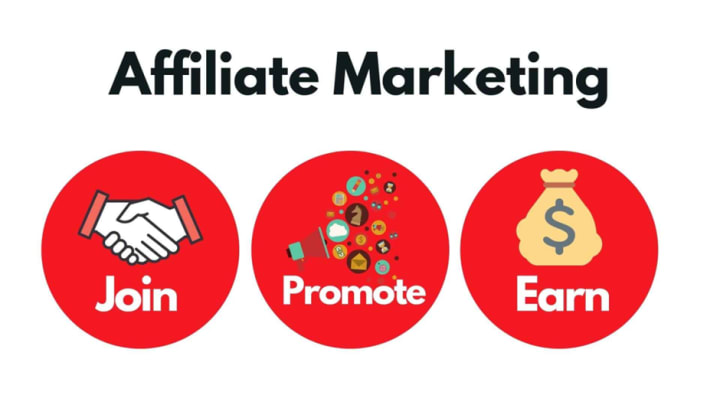
To get started with affiliate marketing, individuals or companies can sign up to become an affiliate with a company that offers an affiliate program. They can then promote the company's products or services through their unique affiliate link, and receive a commission for each sale made through that link.
Some popular affiliate programs include Amazon Associates, eBay Partner Network, and ClickBank.
WHAT IS AFFILIATE MARKETING
Affiliate marketing is a type of performance-based marketing where businesses pay affiliates a commission for promoting their products or services. These affiliates can be individuals, companies, or even other businesses that are willing to promote the product or service. The affiliate's job is to drive traffic and sales to the business's website, and in return, they earn a commission on each sale they generate.
HOW DOES AFFILIATE MARKETING WORK?
Affiliate marketing is a simple process that involves four main players:
• the merchant,
• the affiliate,
• the consumer, and
• the network.
The merchant is the business that owns the product or service being sold, the affiliate is the promoter, the consumer is the person who buys the product or service, and the network is the intermediary between the merchant and the affiliate.
The process works like this: the merchant creates an affiliate program and sets the commission rate. The affiliate signs up for the program and receives a unique link or code to promote the merchant's product or service. The affiliate then shares this link or code with their audience, and if someone clicks on the link and makes a purchase, the affiliate earns a commission on the sale.

BENEFITS OF AFFILIATE MARKETING
Affiliate marketing has many benefits for both businesses and affiliates.
• For businesses, affiliate marketing is a cost-effective way to reach a larger audience and increase sales without spending money on traditional advertising methods. They only pay for the results they get, which means they can save money on marketing costs.
• For affiliates, affiliate marketing is an excellent way to monetize their blog, social media account, or website. They can earn a commission on each sale they generate, which can be a significant source of income if they have a large audience.
DRAWBACKS OF AFFILIATE MARKETING
While affiliate marketing has many benefits, it also has some drawbacks. For one, there's a lot of competition, and it can be a challenge to stand out in a crowded market. Affiliates need to find unique ways to promote the merchant's product or service and make sure their audience trusts their recommendations.
Another potential drawback is the risk of not getting paid. Some merchants may not pay their affiliates, or they may delay payments, which can be frustrating and impact the affiliate's ability to make money.
CONCLUSION
Affiliate marketing is a powerful tool that can help businesses reach a larger audience and increase sales. It's also an excellent way for affiliates to monetize their blog, social media account, or website. However, it's essential to approach affiliate marketing with caution and carefully research the merchant and the product or service being promoted. With the right strategy and approach, it can be a valuable source of income for both businesses and affiliates.
About the Creator
Gold Price Today: Understanding Gold Price Trends, Market Drivers, and What Lies Ahead
Gold Price Today: A Market Snapshot Gold price remains one of the most discussed topics in global financial markets. From individual buyers to institutional investors, everyone closely watches gold price movements to assess economic stability and investment opportunities. In uncertain times, gold price often reflects investor sentiment better than many other assets.
By Hammad Nawaz3 days ago in Trader
Fundus Camera Market Size & Forecast 2026–2034
The global Fundus Camera Market is poised for steady expansion over the next decade. According to Renub Research, the market is projected to grow from US$ 493 Million in 2025 to US$ 828.68 Million by 2034, registering a CAGR of 5.94% during the forecast period 2026–2034.
By Sakshi Sharma6 days ago in Trader
A Knight of the Seven Kingdoms Series Review (Season 1)
As one of the biggest properties in fantasy, A Song of Ice and Fire remains immensely popular with audiences. After reaching far into the past with House of the Dragon, a second spin-off was on the cards. A Knight of the Seven Kingdoms serves up a bite-sized slice of action and drama, but it still claims a spot among the best small-screen titles.
By Robert Cain6 days ago in Geeks


Comments
There are no comments for this story
Be the first to respond and start the conversation.