
A Dominant Force: How Retail Investors Are Reshaping the Stock Market
Once dismissed as "dumb money," these individual traders are now driving major shifts in market structure and investor behavior.

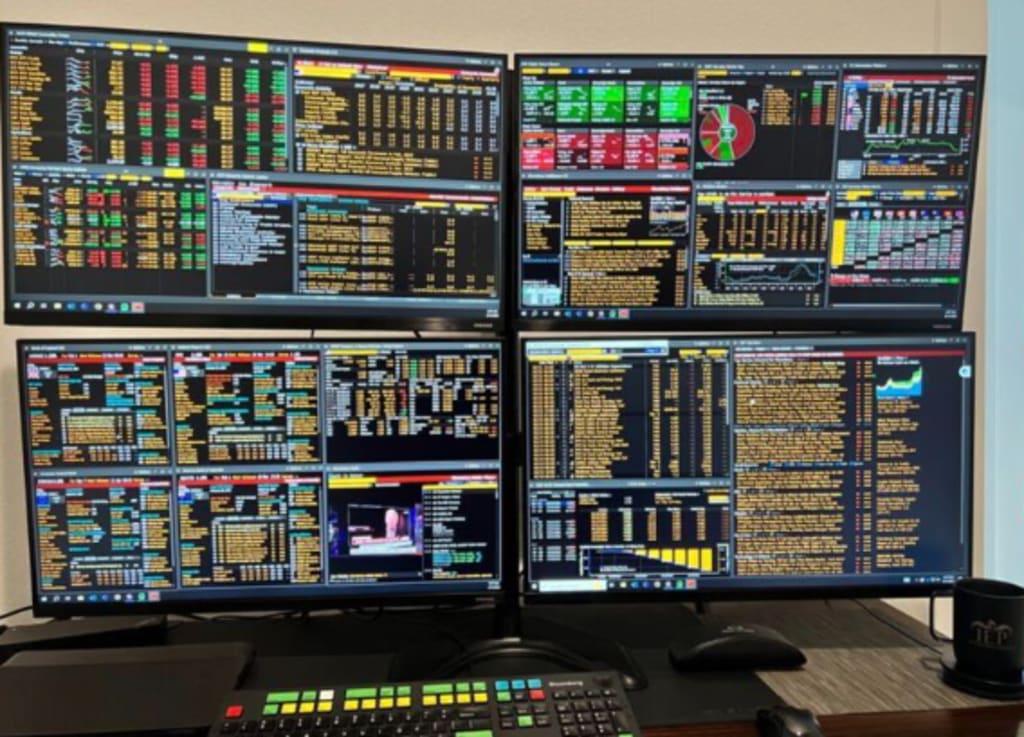
Retail investors have emerged as one of the most powerful forces in today’s financial markets, says Gregory Blotnick. Their rise marks a major shift in how markets operate and who holds the power.
For decades, investing was dominated by large institutions. Hedge funds, pension managers, and mutual fund giants held the capital and the tools to move markets. The average investor, typically focused on long-term retirement accounts like a 401(k), played a passive role and had little impact on day-to-day price movements. That changed in dramatic fashion starting around 2020.
A convergence of factors helped ignite the retail trading boom. Commission-free trading platforms made investing more accessible to everyone. The COVID-19 pandemic kept people at home with time on their hands and stimulus checks in their bank accounts. At the same time, social media platforms turned stock trading into a social and cultural experience. Suddenly, investing was no longer reserved for professionals. It became something your friends talked about, something you could do on your phone during a lunch break.
The most iconic moment of this new era came when GameStop exploded in early 2021. A group of users on Reddit’s r/WallStreetBets forum banded together to buy shares and squeeze short sellers. In a matter of weeks, the stock price soared from around twenty dollars to over three hundred. AMC and other so-called meme stocks followed. Retail traders weren’t just participating anymore—they were moving markets. The financial world watched as hedge funds lost billions, online brokers struggled to keep up with trading volume, and amateur investors took center stage in mainstream media coverage.
What’s even more interesting is how retail investors gather information. Traditional sources like Wall Street research reports and financial news channels have been replaced by YouTube videos, TikTok explainers, viral Twitter threads, and live discussions in Discord communities. These new platforms have democratized access to financial education. In many cases, individual investors are now just as informed and often more agile than the professionals who once underestimated them.
Institutional investors have taken notice. Many now track social sentiment and monitor platforms like Reddit and Twitter for early signals of market momentum. Some hedge funds are even building investment strategies around retail trading behavior, while new exchange-traded funds are being created to follow stocks favored by retail traders. What was once dismissed as noise is now being integrated into sophisticated market models.
Retail investors now make up roughly a quarter of all daily trading volume. This kind of influence has changed the market’s rhythm. Stocks can swing thirty or even fifty percent in a single day, driven not by earnings reports but by viral conversations online. Volatility is more common. Price movements are less predictable. Market psychology now plays an even larger role than before.
This shift is not going away. A new generation of investors has come of age with easy access to trading apps, real-time information, and social communities built around investing. They are not likely to return to the old way of doing things. Regulators are still working to adapt to this new reality, facing questions around how to manage social media-driven investing and how to protect retail participants without stifling innovation.
At the same time, financial platforms are adapting. They are offering more educational content tailored for newer investors, designing tools for a mobile-first audience, and launching products that align with the interests of this growing group.
The stock market of today is no longer a closed system dominated by suits in skyscrapers. It is an open playing field where everyday investors can influence outcomes, create trends, and challenge institutions. This new era is more chaotic and more unpredictable, but it is also more inclusive and more democratic. Investing is no longer a spectator sport. It is something people do together, in real time, with communities that span the globe.
The old model of top-down investing has given way to something entirely different. And in this new landscape, the traders in hoodies and pajamas are not just showing up. They are winning.
About the Creator
Keep reading
More stories from Gregory Blotnick and writers in Trader and other communities.
Why I Stopped Fighting Between Charts and Fundamentals (And Started Making Better Trades)
The Expensive Mistake Most Investors Make Here's the thing nobody tells you when you're starting out: the whole "fundamental vs. technical analysis" debate is complete BS.
By Gregory Blotnick6 months ago in Trader
Australia Cosmetics Market: Beauty Demand, Innovation & Consumer Trends
Australia Cosmetics Market Overview The Australia cosmetics market is experiencing robust growth as consumer interest in beauty, personal grooming and wellness continues to rise. Cosmetics — including makeup, skin care, fragrances, hair care and colour cosmetics products — are essential components of modern personal care routines. The Australia cosmetics market size reached USD 8.40 Billion in 2024. Looking forward, the market is expected to reach USD 12.62 Billion by 2033, exhibiting a growth rate (CAGR) of 4.63% during 2025-2033. This growth reflects increasing beauty awareness, evolving product innovations, strong omni-channel retail presence and a younger population segment that places higher value on appearance, self-care and premium beauty experiences.
By Amyra Singh4 days ago in Trader
Center Stage with Paul Stewart
*** I'm keen to republish the interviews I did for my series with Vocal creators. It's been a few years and I thought it might be nice to revisit these wonderful conversations. I'll be releasing them one at a time for a few weeks/months.
By Heather Hubler4 days ago in Interview




Comments
There are no comments for this story
Be the first to respond and start the conversation.