
5 Things to Know Before the Stock Market Opens
Key Market Movers, Economic Indicators, and Global Events Shaping Today’s Trading Session
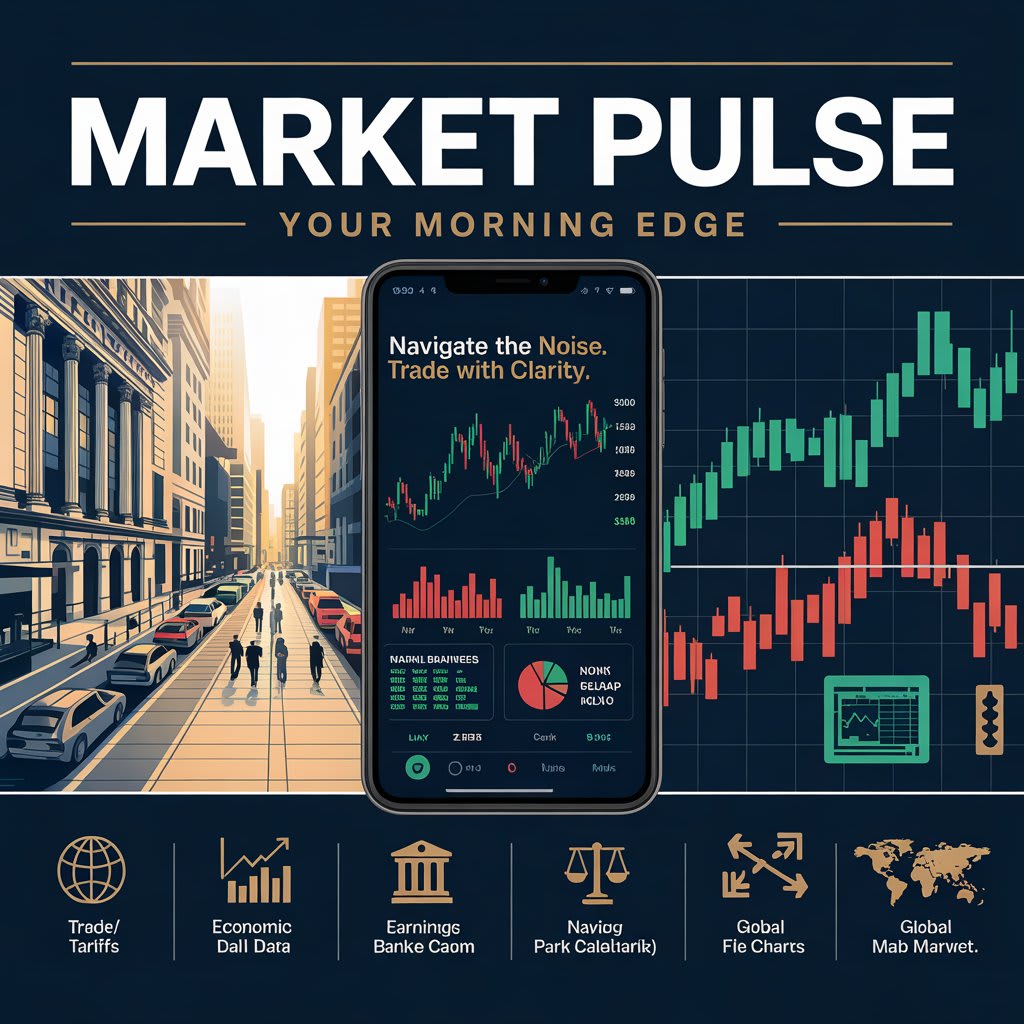
As investors prepare for another day of trading, it's essential to understand the forces that may influence market movements. Whether you're a seasoned trader or a curious observer, the early hours before the market opens can provide key insights that help navigate the volatile waters of global finance. From macroeconomic data to geopolitical developments, the landscape is ever-shifting. Here are the five critical things to know before the stock market opens today.
1. Tariff Tensions Resurface: U.S.-China Trade Frictions Return
In a move that surprised global markets, the U.S. administration announced a new wave of tariffs on Chinese tech products late last night. This decision, citing concerns over national security and intellectual property theft, has drawn swift condemnation from Beijing, which promptly announced reciprocal measures. The renewed tensions have rattled investor confidence, particularly in sectors sensitive to international trade such as technology, manufacturing, and agriculture.
Futures on major U.S. indices, including the S&P 500 and Dow Jones Industrial Average, pointed to a lower open, with tech-heavy Nasdaq futures dropping by more than 1.2% in pre-market trading. Analysts are concerned this could escalate into another prolonged trade war, similar to what we saw in 2018 and 2019, potentially derailing the recovery trajectory many economies are following in the post-pandemic era.
Companies like Apple, NVIDIA, and Boeing, which have significant exposure to China, are already seeing pre-market price fluctuations. Investors should brace for increased volatility in these and related stocks.
2. Economic Indicators: All Eyes on Non-Farm Payrolls and Unemployment Data
Later today, the U.S. Department of Labor is set to release the monthly Non-Farm Payrolls (NFP) report, a closely-watched indicator of the labor market's health. Economists surveyed by Bloomberg expect the U.S. to have added around 240,000 jobs in March, a slowdown from February's 275,000 gain. The unemployment rate is expected to hold steady at 3.9%.
This data is critical, not just as a measure of economic recovery, but also because it could influence future decisions by the Federal Reserve. A strong NFP number could stoke fears of further interest rate hikes, while a disappointing report might suggest the Fed will maintain a dovish stance to avoid stifling growth.
Bond yields have already begun to react, with the 10-year Treasury yield inching up to 4.15%, suggesting investors are pricing in a potentially robust labor market report.
3. Earnings Season Preview: Big Banks Ready to Kick Off Q1 Results
The upcoming earnings season officially begins next week, with major banks like JPMorgan Chase, Wells Fargo, and Citigroup set to report their Q1 2025 earnings. While today's market action won't be directly impacted by these results, forward guidance and analysts' expectations are already influencing investor sentiment.
According to FactSet, S&P 500 companies are expected to post a modest 3.2% year-over-year earnings growth, a sign that corporate America is stabilizing after several quarters of margin pressure from inflation and high interest rates. Financials are under particular scrutiny due to their sensitivity to the interest rate environment and ongoing concerns about regional bank liquidity.
Investors will be watching for commentary on loan growth, credit quality, and cost-cutting measures, all of which can offer a clearer picture of where the broader economy may be headed.
4. Tech Under Pressure: Regulatory Scrutiny Intensifies Globally
Technology stocks, already wobbling from renewed tariff concerns, are facing additional pressure from regulators both in the U.S. and abroad. The European Union has initiated formal antitrust proceedings against several American tech giants, citing violations of the Digital Markets Act.
Simultaneously, the U.S. Department of Justice is ramping up its investigation into monopolistic practices, focusing on advertising models and data privacy concerns. Shares of Alphabet (Google), Meta Platforms (Facebook), and Amazon are particularly vulnerable, with some seeing declines of over 1% in extended trading.
This adds another layer of complexity for investors in the tech space, who must now weigh not only earnings potential and innovation but also legal risks and compliance costs. These issues may also influence broader market sentiment, especially given the tech sector's outsized role in index performance.
5. Global Markets and Commodities: A Mixed Bag
Overseas markets are showing mixed results this morning. Asian markets closed mostly lower, with the Shanghai Composite down 0.8% and the Nikkei 225 falling by 1.1%, reflecting fears over the U.S.-China tariff tit-for-tat. European bourses, however, opened with modest gains, buoyed by stronger-than-expected retail sales in Germany and optimism over ECB policy clarity.
Oil prices have also become a focal point for traders. WTI crude is trading around $83 per barrel, while Brent crude hovers near $87. The recent uptick is attributed to supply cuts from OPEC+ and geopolitical tensions in the Middle East. Rising oil prices typically spell bad news for inflation-sensitive sectors and may reignite concerns over consumer spending and profit margins.
Gold, often seen as a safe haven during turbulent times, has edged higher, now trading at $2,120 per ounce, reflecting cautious sentiment across risk markets.
What This Means for Investors
Today’s market open is expected to be turbulent. The combination of geopolitical instability, economic data releases, and sector-specific news creates a perfect storm for increased volatility. Traders and investors should pay close attention to pre-market indicators, corporate newswires, and economic releases scheduled throughout the day.
Those with long-term horizons might find opportunities in quality stocks that dip during the turmoil, while short-term traders could capitalize on intraday swings. Above all, remaining informed and agile will be key.
As always, diversify your portfolio, assess your risk tolerance, and consult with financial professionals before making investment decisions. In a market that never sleeps, staying one step ahead can make all the difference.
Conclusion
As markets gear up to open, the interplay of policy, data, and global events is setting the tone for what could be a roller-coaster trading day. Keep these five factors in mind to stay informed and prepared. Happy trading!
About the Creator
Ijaz_Khan
I am Ijaz.
Hindustan Zinc Share Price: Market Insights and Investment Perspective
Introduction Hindustan Zinc Limited (HZL) is a leading player in India’s metals and mining sector, specializing in zinc, lead, and silver production. Founded in 1966 and now a subsidiary of Vedanta Limited, HZL has established itself as one of the world’s largest zinc producers.
By Hammad Nawaz3 days ago in Trader
Stanislav Kondrashov on the Gold and Silver Shift: Why 2026 Is a Pivotal Year for Precious Metals
Gold and silver prices have reached historic highs in early 2026, underscoring a shift in global sentiment around risk, stability, and the role of tangible assets in a changing economic landscape.
By Stanislav Kondrashov5 days ago in Trader
One Unchecked Box
"Republished" because it was the only way to add the embed for the newly recorded audio version of this story due to the Top Story badge. Plus it serves as a nice, informal announcement of the podcast's revival for another season (go subscribe!):
By Stephen A. Roddewig4 days ago in Fiction




Comments
There are no comments for this story
Be the first to respond and start the conversation.