
3 Trading Tips for October (A Pro’s Playbook You Can Actually Use)
Tips to improve your trading experience


October has a reputation: it’s the month where quiet summer flows give way to real two-way markets. Liquidity comes back, Q3 earnings begin, macro calendars heat up, and traders who spent September “warming up” suddenly find themselves in a live-fire exercise. The good news? You don’t need 20 indicators or a crystal ball to navigate it. You need a clear plan, tight risk, and a repeatable way to turn volatility into opportunity.
Below are three field-tested tips tailored specifically for October trading—whether you trade FX, indices, gold, or CFDs on single stocks. I’ll give you the why, the how, and the exact steps to plug into your routine this month.
Tip 1 — Build Your October Edge Around the Calendar (Volatility With a Seatbelt)
Why it matters in October
Macro density rises. Expect high-impact prints like employment data, CPI/Inflation updates, PMIs, and central-bank speeches clustered more tightly. Each one can flip intraday bias.
Q3 earnings season ramps up. First waves of bank earnings, then megacaps and sector leaders. Even if you only trade FX or gold, equity risk sentiment during earnings often bleeds into USD, JPY, and high-beta pairs, as well as indices.
Post-summer re-positioning. Asset managers rebalance, hedges roll, and retail returns from holiday mode. That mix creates cleaner moves, but also sharper squeezes if you’re on the wrong side.
What to do about it
1. Map the month in 10 minutes.
Write down the top five events that matter to your instruments (e.g., CPI, NFP, a central bank decision, and two sector-defining earnings dates).
Mark expected volatility windows: 30 minutes before → 60 minutes after.
2. Upgrade from “avoid news” to “use news.”
Don’t just sit out; instead, plan pre- and post-news plays.
Pre-news: If your setup triggers far ahead of the event (e.g., 2–3 hours), take it only if you can secure partial profits before the print and move stop to breakeven.
Post-news: Let the first impulse and fade play out. Then trade the first clean pullback or reclaim in your direction on the 5–15 minute chart (your “confirmation” window).
3. Prepare two scenarios every morning.
Scenario A (Risk-on): What will you buy if equities rip and yields calm? Which FX pairs strengthen (AUD/USD, GBP/USD), which weaken (safe havens)?
Scenario B (Risk-off): What will you buy if equities slide and yields spike? Which FX pairs strengthen (USD/JPY up, USD/CHF firm), and where does gold fit?
Keep the scenarios taped to your screen. When the day declares itself, you execute—no second-guessing.
4. Size specifically for October volatility.
Vol increases → stop distances widen. Don’t fight it with oversized positions. Keep risk % constant, not your fixed pip/$ stop. If your usual stop is 20 pips but the market is swinging 35–40, widen the stop and reduce lot size to keep risk static.
Quick checklist for Tip 1
[ ] Top five October events noted with time windows
[ ] Two scenarios (risk-on vs risk-off) written before London open
[ ] Pre-news rules: partial at +1R, stop to BE before the print
[ ] Post-news trigger defined: break-retest or reclaim pattern on 5–15M
[ ] Position size tied to risk %, not to a fixed stop
Tip 2 — Pair a Higher-Timeframe Bias With a Lower-Timeframe Trigger (Your “Glue” in Choppy Tape)
October can be “fast and jagged.” The traders who thrive are the ones who keep direction simple and entry precise. The formula:
Higher-Timeframe (HTF) bias: Daily/4H
Lower-Timeframe (LTF) trigger: 15M (or 5M if you’re very nimble)
The framework
1. Define the HTF swing.
Uptrend = higher highs / higher lows → you’re a buyer at value.
Downtrend = lower highs / lower lows → you’re a seller at value.
Range = respect extremes → fade edges with tight invalidations.
2. Find value, not the middle.
Value areas: prior demand/supply, range edges, VWAP reversion zones, 200 EMA on 4H, key fib clusters confluenced with structure.
Mark them before the session so you’re not drawing while price moves.
3. Use a mechanical trigger.
For longs: look for a reclaim of your level (e.g., price spikes below demand then closes back above it on 15M), or a break-retest of a local high.
For shorts: look for a reject-reclaim to the downside (e.g., a failed breakout above resistance that closes back below), or a break-retest of a local low.
4. Manage like a machine.
TP1 at +1R (close 30–50%), move stop to breakeven.
Trail the remainder with structure (swing highs/lows) or a modest ATR multiple.
If the market is super punchy, scale out in thirds: +1R, +2R, trail.
Why this wins in October
You stop over-trading the middle of the range.
You let HTF do the heavy lifting on direction, while LTF gives you precision to control risk.
You’ll naturally miss some moves—that’s good. Missing middles is your edge.
A model setup (you can copy)
Instrument: XAU/USD (gold) or an index (US500/NAS100)
HTF bias: 4H uptrend (higher highs/higher lows), price pulls back into prior 4H demand + 200 EMA
LTF trigger: 15M prints a bearish fakeout below demand, then a strong bullish engulfing that reclaims the zone and a local high
Entry: Buy at market on the reclaim close; stop a few ticks below the 4H demand
Management: Take 40% at +1R, stop to breakeven, trail under 15M higher lows; if breadth and sentiment support, aim for HTF swing high or a measured move
Quick checklist for Tip 2
[ ] HTF bias drawn on Daily/4H across 2–4 symbols max
[ ] Value zones marked before London
[ ] LTF trigger defined (reclaim, break-retest, or momentum thrust)
[ ] Fixed risk per trade (0.5–1.0% typical)
[ ] TP1/BE/Trail plan written on the chart before entry
Tip 3 — Win October by Losing Well (Capital Preservation → Scaling Into the Right Weeks)
Traders love the idea of “October volatility equals big returns.” The pros know the real edge is drawdown discipline so you’re funded—mentally and financially—when the month’s best three to five sessions arrive.
The discipline package
1. Hard daily loss stop.
Pick –2R or –3% (whichever fits your system) and walk away once reached. October has streaky days; don’t feed the beast.
2. Scale exposure, not impulsiveness.
On weeks with stacked catalysts (e.g., CPI + bank earnings + PMI), you can take more attempts but keep risk per trade the same. Let your number of A-setups increase, not your risk %.
Conversely, if your journal shows a messy week (low win rate, late entries), cut risk by half for the next five trades. Earn it back with process, not hope.
3. Correlation awareness.
Don’t load three trades that are the same macro bet (e.g., long NAS100, long EUR/USD, short DXY). Either scale into the best one or spread risk units across uncorrelated plays.
4. Pay yourself.
If you have a heater week, make a small withdrawal or move a slice of profits to a “reserve sub-account.” Taking chips off the table shrinks the urge to overtrade and makes the next drawdown easier to stomach.
5. Journal October like you mean it.
Track: session (London/overlap), setup tag, R result, time to +1R, how often you traded into news, and how often you broke rules. Your October notes become your November edge.
A one-page risk plan (plug-and-play)
Per-trade risk: ___% (0.5–1.0% typical)
Max daily loss: ___R or ___% (stop trading when hit)
Max weekly loss: ___R or ___% (switch to half-risk for next 5 trades)
Correlation rule: Max 2 correlated positions at once; prefer 1
Profit lock: After +___R week, withdraw ___% or move to reserve
News rule: No new trades within 30–45 minutes before high-impact releases
Quick checklist for Tip 3
[ ] Daily and weekly loss stops posted near your screen
[ ] Correlation check before entering a second/third trade
[ ] Half-risk protocol ready for “messy weeks”
[ ] Profit-lock habit in place (withdrawal or reserve transfer)
[ ] Journal fields defined and filled after each trade
An “October Week” Example (How It Looks in Practice)
Sunday prep (30 minutes)
Mark HTF bias and zones on your 2–4 instruments (e.g., EUR/USD, XAU/USD, US500, NAS100).
Note the week’s big three catalysts (e.g., CPI Wed, Tech earnings Thu, PMI Fri).
Write two scenarios (risk-on/off) and the one setup you’ll take for each instrument.
Monday
Usually choppy. Trade only if an A-setup lands far from news windows. Keep risk at base level or even half-risk. Focus on alerts, not screen-staring.
Tuesday–Thursday
Core execution days for October.
Pre-news: only take setups where you can secure partials before the event.
Post-news: look for reclaim/break-retest triggers on 5–15M and ride the session flow.
Hit TP1 at +1R quickly when volatility is extreme; don’t get greedy on day one of a move.
Friday
Trade only if the week hasn’t hit max risk or if you have a crystal-clear A-setup. Otherwise, protect your weekly stats and review.
Common October Mistakes (and Fixes)
1. Mistake: Trading the middle of the range.
Fix: Only trade at your pre-marked value zones with mechanical triggers.
2. Mistake: Same macro bet across multiple instruments.
Fix: Enforce a correlation rule; choose the cleanest single expression.
3. Mistake: Ignoring post-news opportunity.
Fix: Let the impulse finish; trade the first clean pullback or reclaim.
4. Mistake: Fixed pip stop in variable volatility.
Fix: Keep risk % constant; widen stops if ATR expands and reduce size.
5. Mistake: Revenge trading after a news whipsaw.
Fix: Daily loss stop. Shut platforms. Journal what happened. Walk.
Mini-FAQ
Q: Should I switch strategies in October?
A: No. Keep your core edge. Adapt sizing and timing, not your identity.
Q: Can beginners trade news?
A: Trade around news. Take partials before; re-enter after the first clean reclaim. Treat actual event seconds as “observe only.”
Q: What’s a good October win rate?
A: Irrelevant alone. Focus on average R and profit factor. A 45–55% win rate with 1.7–2.0 average R usually beats a 70% win rate with tiny winners.
Q: How many instruments?
A: Two to four. October rewards focus and muscle memory.
The 10-Minute Daily Routine (Copy/Paste)
1. Check today’s top event(s) + volatility windows.
2. Re-state HTF bias and value zones for 2–4 instruments.
3. Write two scenarios (risk-on/off) and the single setup for each.
4. Place alerts at your levels.
5. Set risk % for the day (base or half).
6. Execute only on your LTF trigger (reclaim or break-retest).
7. TP1 at +1R, stop to BE, trail remainder.
8. Hit max daily loss? Walk.
9. Journal with screenshot + one “repeat” and one “remove” note.
October gives traders two gifts: movement and information. Movement shows up as wider ranges and real momentum; information arrives from macro prints and earnings. Your job is to capture the clean portions of that movement without donating your month during the noisy minutes around headlines.
Keep your edge simple:
Calendar-anchored game plan (Tip 1)
HTF bias + LTF trigger (Tip 2)
Capital preservation + smart scaling (Tip 3)
Do that for four weeks and your P&L will look less like a heart monitor and more like an equity curve. Most importantly, your stress drops while your consistency rises—and that is the real edge going into November.
About the Creator
Keep reading
More stories from Linda Morris and writers in Trader and other communities.
From Hesitation to Discipline: My 2025 Trading Journey with Capplace
I didn’t set out to become “a trader.” I set out to stop feeling helpless about money. In late 2024, my small e-commerce side business was barely covering shipping costs, and inflation in Türkiye was chewing through my savings. I’d dabbled in markets before — mostly passively, mostly without a plan. Over New Year’s I gave myself one promise: learn to trade like a professional or quit for good. That’s the mindset I carried into 2025, and it’s what ultimately led me to Capplace.
By Linda Morris3 months ago in Trader
United States Titanium Market Size and Forecast 2025–2033
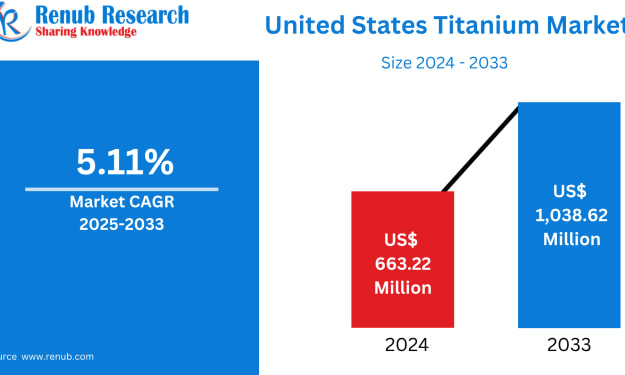
The titanium market within the United States is expected to grow considerably, from US$ 663.22 million in 2024 to US$ 1,038.62 million in 2033. This expansion reflects a healthy Compound Annual Growth Rate (CAGR) of 5.11% from 2025 to 2033, underscoring the increasing importance of titanium across modern industries. From aerospace engineering and defense manufacturing to medical implants and energy systems, titanium has become a cornerstone of high-performance materials.
By Aaina Oberoia day ago in Trader
The Role of Lexinova Ultra in Modern Financial Analytics
The financial technology (FinTech) sector has evolved rapidly over the past decade, reshaping traditional financial services and creating new opportunities for businesses and consumers alike. From digital payments and blockchain to artificial intelligence and algorithmic trading, FinTech is now a cornerstone of modern finance. Among the emerging tools supporting this transformation are advanced platforms such as Lexinova Ultra, which exemplify the integration of high-performance analytics and data-driven decision-making in financial markets. This report examines the current trends, technological advancements, and future prospects of the FinTech ecosystem, emphasizing innovations that drive efficiency, security, and accessibility.
By Lexinova Ultra4 days ago in Trader
Bruce Lee and The God of War: Kuan Ti
It starts with love.. The Power to the God Of War and Wealth Walk into a Chinese restaurant (even in Oklahoma, USA), a Chinese police station, a kung fu martial arts studio or even a Chinese temple and you often see a red faced warrior holding a heavy quan-do (spear like weapon).
By WILD WAYNE : The Dragon King4 days ago in Chapters



Comments
There are no comments for this story
Be the first to respond and start the conversation.