
10 Money Habits That Quietly Keep You Broke
Even if you make good m


Most people don't stay broke because they're reckless.
They stay broke because they slowly drift into financial patterns that feel normal, responsible, even mature - but quietly work against them.
There's no dramatic moment where everything falls apart. No obvious financial disaster. Just a series of small habits that compound in the wrong direction for years.
And that's why this is dangerous.
Because when nothing feels "wrong," nothing gets fixed.
I've noticed this pattern over and over again, especially among people who earn decent money, consider themselves financially aware, and still somehow feel stuck.
Here are the habits that quietly keep people broke - without them realizing it.
1. Letting lifestyle creep masquerade as self-respect
One of the most common phrases people use to justify lifestyle upgrades is "I deserve this."
And sometimes, they're right.
But the problem isn't spending. It's timing.
When every raise immediately unlocks a new tier of spending, your financial life never stabilizes long enough to build momentum. You don't actually feel wealthier - you just feel busier maintaining a more expensive life.
Bigger rent. Better car. More convenience spending. Subtler indulgences that don't look reckless on paper but quietly absorb every extra dollar.
The money never has time to pile up.
A simple rule that works better than budgeting: let upgrades lag income.
If your income increases, don't touch your lifestyle for at least a year. Let the surplus sit. Let it invest. Let it accumulate.
Wealth grows in the gap between what you earn and what you're willing to maintain.
2. Hoarding cash because it feels safe
Cash feels responsible. Calm. Controlled.
But excessive cash is one of the most expensive forms of fear.
I'm not talking about emergency funds. I'm talking about people sitting on large amounts of idle money because investing feels overwhelming, risky, or emotionally uncomfortable.
Inflation doesn't feel dramatic. It doesn't announce itself. It just quietly erodes purchasing power year after year while you feel "secure."
Safety isn't static. Money has to move to maintain value.
The goal isn't to be aggressive. The goal is to stop freezing.
Even a boring, automated baseline is infinitely better than money that never leaves your account.
3. Treating investing like an identity instead of a system
Some people make investing part of their personality. Others avoid it entirely.
Neither approach builds wealth.
The people who do best long-term aren't emotionally attached to markets. They don't obsess over headlines. They don't need to feel smart or validated.
They just have systems.
Money leaves their account on schedule. It goes where it's supposed to go. And they largely ignore it.
If your investing requires motivation, confidence, constant research, or "feeling ready," it will eventually break.
Systems survive moods. Personalities don't.
4. Confusing budgeting with awareness
Most people don't fail financially because they spend too much day-to-day.
They fail because they never revisit fixed costs.
Rent increases quietly. Subscriptions stack. Insurance stays overpriced because "I'll deal with it later." Phone plans go untouched for years.
These aren't emotional purchases - which is exactly why they get ignored.
You don't need a detailed budget. You need one hour a month where you look only at fixed expenses and ask, "Would I still choose this today?"
That single habit often frees up more money than cutting coffee ever will.
5. Locking yourself into car payments that raise your stress floor
A car payment doesn't just cost money.
It raises the minimum income you need to feel okay.
Every fixed obligation increases pressure - especially during transitions, burnout, or unexpected changes. People underestimate how much flexibility matters until they lose it.
Cars depreciate. Time doesn't.
Buying freedom is usually a better investment than buying status.
6. Letting credit cards blur reality
When you only pay credit cards once a month, you're always living slightly out of sync with your money.
You're spending last month's income with this month's confidence.
That gap creates false comfort - and over time, it distorts decision-making.
Paying weekly brings spending back into reality. It keeps numbers honest. It removes the illusion that "it's not that bad."
Clarity is uncomfortable at first. But it's stabilizing long-term.
7. Chasing optimization instead of consistency
People love asking about the best investment, the highest return, the smartest move.
But wealth doesn't come from optimization. It comes from repetition.
The perfect strategy executed inconsistently loses to a boring one you stick with.
Consistency compounds. Novelty doesn't.
If your strategy requires constant attention, adjustment, or emotional energy, it's fragile.
The best plan is the one you won't abandon during boring months and scary ones.
8. Never expanding income - only managing expenses
There's a ceiling to how much cutting can do.
Eventually, progress stalls if income stays static.
Saving and investing matter, but income growth creates leverage. It widens the margin for error. It absorbs inflation. It accelerates compounding.
People who never renegotiate pay, change roles, or expand how they earn eventually feel squeezed - even if they "do everything right."
Wealth isn't built by shrinking forever. It's built by widening the system.
9. Making financial decisions based on feelings
"I don't trust the market right now."
"I feel like I should wait."
"I just don't feel confident yet."
Feelings feel wise. They aren't.
Emotions are reactive. Markets don't care how you feel.
Rules outperform intuition when it comes to money.
Decide once. Automate. Remove yourself from the decision loop.
10. Waiting for urgency to force action
Most people don't act when they're stable.
They act when they panic.
By then, they rush. They overcorrect. They make emotional decisions that feel productive but aren't sustainable.
The best time to build wealth is when nothing feels urgent.
That's when habits stick.
If you want a reset: automate investing, cap lifestyle upgrades, audit fixed costs monthly, and stop waiting for confidence.
Confidence comes after consistency - never before.
-
This article is for informational purposes only. It should not be considered Financial or Legal Advice. Not all information will be accurate. Consult a financial professional before making any significant financial decisions.
About the Creator
Destiny S. Harris
Writing since 11. Investing and Lifting since 14.
destinyh.com
Keep reading
More stories from Destiny S. Harris and writers in Trader and other communities.
What Would Your Finances Look Like If You Spent Less Money?
First, I want you to ask yourself a few questions: Do you have an emergency fund? If you lost your job, could you take 2+ years off from work? Are you on track with retirement? How much credit card debt do you manage? How much debt do you manage in general? How do you feel about your responses to these questions? Do your responses reflect a healthy financial situation?
By Destiny S. Harris2 months ago in Trader
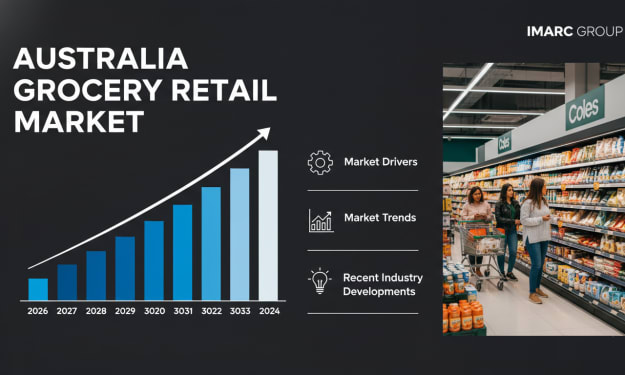
Australia Grocery Retail Market Growth, Forecast, and Strategic Insights by 2034
The grocery retail sector plays a vital role in Australia’s economy, serving millions of consumers who rely on supermarkets, convenience stores, and online platforms for everyday essentials. Over the past decade, the industry has evolved significantly as retailers adapt to changing consumer preferences, technological innovations, and new competitive pressures.
By Amélie Belleabout 16 hours ago in Trader



Comments
There are no comments for this story
Be the first to respond and start the conversation.