
Senate Candidate James Talarico Pulled In $2.5 Million After Unaired Colbert Interview
How a Canceled Late-Night Appearance Turned Into a Viral Fundraising Windfall for the Texas Democrat
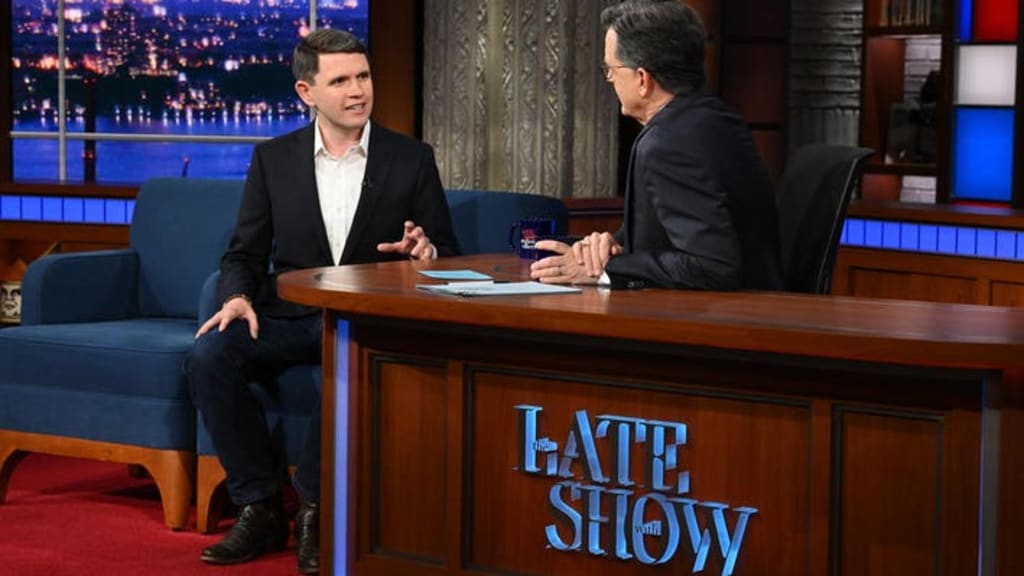
In politics, momentum can shift in a matter of hours. For Texas Senate candidate James Talarico, what began as a routine late-night television appearance turned into a viral moment—and a fundraising explosion.
After his interview with The Late Show with Stephen Colbert was recorded but never aired on CBS, Talarico’s campaign reported raising a staggering $2.5 million in just 24 hours. The reason? A controversy tied to federal broadcast regulations and the power of online audiences.
Let’s break down what happened—and why it matters.
---
The Interview That Didn’t Air
Talarico, a Democratic candidate in Texas’s U.S. Senate race, had taped an interview with Stephen Colbert for an upcoming episode of The Late Show. Under normal circumstances, the appearance would have introduced him to a national audience in a lighthearted, high-profile setting.
But CBS ultimately decided not to broadcast the segment.
According to reports, network lawyers raised concerns about the Federal Communications Commission’s “equal time” rule—a regulation requiring broadcasters to offer comparable airtime to opposing political candidates. While talk shows have traditionally been exempt under “bona fide news” provisions, recent scrutiny around political content reportedly made the network cautious.
Rather than air the segment on television, the interview was released online, where it quickly gained traction.
Ironically, the decision not to air the interview may have amplified its reach.
---
The $2.5 Million Surge
Within 24 hours of the controversy going public, Talarico’s campaign announced it had raised $2.5 million—its single biggest fundraising day.
Small-dollar donations reportedly poured in from across the country. Supporters framed the situation as a free speech issue, arguing that a candidate being sidelined due to regulatory fears represented a troubling precedent.
Talarico’s campaign leaned into the moment, tying its fundraising appeal directly to the unaired interview. The narrative was simple and powerful: “They tried to silence us. Let’s show them we can’t be ignored.”
And it worked.
For a statewide primary candidate, raising that amount in a single day is no small feat. It signals not just financial strength, but emotional momentum—a key factor in modern campaigns.
---
The Digital Advantage
This episode highlights something crucial about today’s political media landscape: broadcast television no longer controls the narrative.
Even though the segment didn’t air on CBS, it was uploaded online and shared widely across platforms. Millions of viewers watched it anyway. Clips circulated on social media. Commentary spread across political blogs and news outlets.
In previous decades, a canceled television appearance might have quietly faded away. In 2026, it becomes a viral headline.
The power dynamic has shifted.
Candidates can now bypass traditional gatekeepers and reach voters directly. In fact, controversy often accelerates visibility. When audiences sense something is being withheld or restricted, curiosity spikes. Engagement follows.
Some observers have described this as a textbook example of the “Streisand Effect”—where attempts to suppress content unintentionally draw more attention to it.
---
The Broader Political Context
Talarico is running in a competitive Democratic primary in Texas, seeking a seat long held by Republicans. The state has increasingly drawn national attention as Democrats attempt to make it more competitive at the federal level.
High-profile media moments can dramatically shape the trajectory of such races. For candidates who are still building statewide name recognition, a viral surge can fast-track visibility.
Interestingly, other candidates have previously appeared on late-night programs without issue. That contrast fueled debate over whether regulatory caution is being applied consistently—or selectively.
Meanwhile, Colbert himself reportedly criticized the network’s legal concerns on air, adding another layer to the story. When a prominent television host openly challenges corporate decisions, it only deepens public interest.
---
Regulation vs. Expression
At the heart of this controversy lies a longstanding regulatory framework. The FCC’s equal time rule was designed to ensure fairness in broadcast media, preventing networks from favoring one candidate over another.
But in an era of digital platforms, streaming, and on-demand content, the lines between entertainment, news, and political messaging have blurred.
Should a late-night comedy show be treated like a traditional political broadcast?
Does uploading content online change the regulatory equation?
And how should networks balance legal caution with open discourse?
These questions are unlikely to disappear anytime soon.
---
A Turning Point for the Campaign?
For Talarico, the outcome—at least financially—has been overwhelmingly positive.
A $2.5 million single-day haul does more than boost ad budgets. It energizes volunteers. It attracts media coverage. It signals viability to party insiders and national donors. It can even influence polling by elevating name recognition.
Momentum in politics often feeds on itself. Visibility leads to donations. Donations lead to more visibility.
And in this case, the spark came from something that never aired on television.
---
Final Thoughts
The saga of the unaired Colbert interview underscores a modern political reality: media controversy can become campaign fuel.
In a media environment dominated by viral clips and rapid-fire commentary, attempts to avoid controversy sometimes create it instead. What was likely a cautious legal decision transformed into a national story—one that directly benefited the candidate involved.
For James Talarico, the moment represents more than a fundraising win. It’s proof that in today’s digital ecosystem, the audience—not the broadcast schedule—ultimately decides what gets heard.
And sometimes, not airing something is the fastest way to make sure everyone sees it.
About the Creator
Why Black History Matters in America?
The United States of America is celebrating their 250th anniversary in 2026. I'm proud to be an American and as someone who was born here, I wouldn't imagine myself living anywhere else. This is a country where opportunities are possible. Where anyone can be successful in anything they desire to do. Equality, community, and togetherness are the backbones of what America is and should be about. However, we have an administration who wants to erase and disregard those who have made positive, meaningful impacts in our country, specifically Black figures, such as Martin Luther King, Jr., Rosa Parks, and Maya Angelou. President Trump and his administration have been constantly complaining and fighting against what they call the "Woke agenda". They use this excuse as a distraction from other issues they refuse to address, such as the high cost of living, climate change, and inflation. That equality is dividing America, when in reality, it's bringing us together. Being woke is not tied to a specific political party. No matter where you stand on the political spectrum, you can still care about other people and their plights. Compassion and empathy for others isn't tied to a political party, either. We were taught as children to treat others the way we want to be treated and not judge others because they're different from us. Caring about others isn't a personal attack on your beliefs. It doesn't make you any less of a person. People who are easily offended over African American figures, past or present, or anything related to it, are grasping at straws. Current and future generations need to know who people like Harriet Tubman and Shirley Chisholm were, especially in the classroom. Black History is part of American History. It should be recognized, not hidden or forgotten. Besides, you can't shield children from everything, just because your feelings are easily hurt.
By Mark Wesley Pritchard 19 days ago in The Swamp
PTI Leader Latif Khosa Writes to CJP, Raises Concerns Over Imran’s Medical Check-Up at Adiala Jail in ‘Secrecy’
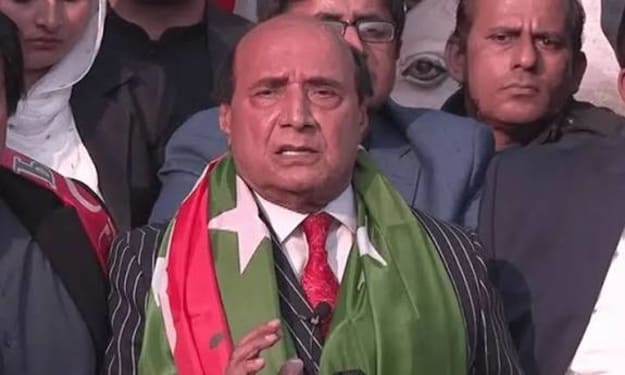
Senior Pakistan Tehreek-e-Insaf (PTI) leader Latif Khosa has written a formal letter to the Supreme Court of Pakistan, urging immediate judicial intervention over what he described as a “secretive and non-transparent” medical examination of former prime minister Imran Khan at Adiala Jail. In his letter addressed to the Chief Justice of Pakistan, Khosa alleged that Khan’s recent medical check-up was conducted without informing his legal team or family members and without following standard legal and medical protocols. The PTI leader claimed that this secrecy has raised serious concerns about Khan’s health, safety, and constitutional rights while in custody. Concerns Over Transparency Khosa stated that the medical examination was carried out under “unusual circumstances,” with restricted access to independent doctors and no official medical report shared with Khan’s lawyers. According to the letter, this violated basic principles of transparency and due process guaranteed under Pakistan’s Constitution and international human rights conventions. “Such secrecy creates doubt and anxiety regarding the true state of Mr. Khan’s health,” Khosa wrote, emphasizing that a former prime minister and political leader must not be deprived of proper and transparent medical care. He urged the court to ensure that future medical assessments be conducted in the presence of independent physicians and legal representatives. Health Issues and Previous Warnings Imran Khan, who has been in custody in multiple cases, has previously complained of deteriorating health conditions, including vision problems and chronic pain. PTI officials have repeatedly warned that his confinement conditions could worsen his medical state if not monitored properly. Party leaders have also accused jail authorities of denying him access to personal physicians and adequate medical facilities. While prison officials have denied these claims, asserting that Khan is receiving routine care under jail regulations, PTI leaders argue that the lack of documentation and public reporting undermines those assurances. Legal and Political Dimensions The issue has quickly taken on political significance, with PTI framing the situation as part of a broader pattern of pressure on its leadership. Khosa’s letter highlights what he called a “systematic effort to isolate Imran Khan” by restricting communication, visitation rights, and now medical transparency. Legal experts say the matter could prompt the Supreme Court to seek a detailed report from jail authorities and health officials. In past cases involving high-profile detainees, the court has intervened to ensure independent medical boards were formed and periodic health reports submitted. Khosa requested that the Chief Justice order the constitution of a neutral medical board comprising senior doctors from government hospitals, with authority to conduct a comprehensive health assessment of Khan and submit findings directly to the court. Reaction from PTI Leadership PTI leaders rallied behind Khosa’s move, calling it a necessary step to safeguard Khan’s well-being. Several party figures said the secrecy surrounding the medical check-up had alarmed supporters and family members alike. A senior PTI spokesperson said the party was not seeking preferential treatment but only equal rights under the law. “Every prisoner has the right to transparent medical care. Imran Khan is no exception,” the spokesperson said, adding that the party would continue to pursue legal remedies if concerns were not addressed. Government and Jail Authorities’ Position Officials from Adiala Jail have maintained that Khan is receiving medical attention according to prison rules and that no extraordinary measures were taken. They argue that medical procedures inside high-security prisons often involve limited disclosure due to security considerations. Government representatives have also rejected claims of mistreatment, stating that opposition leaders are politicizing a routine health check-up. However, they have not publicly released detailed medical findings, citing privacy and security concerns. Broader Implications The controversy highlights ongoing tensions between the PTI and state institutions, especially the judiciary and prison authorities. Analysts believe the case could further polarize the political environment, as supporters interpret the issue as symbolic of larger questions about rule of law and human rights. Human rights advocates have called for full transparency in the treatment of political detainees, warning that secrecy in medical matters can erode public trust in institutions. What Comes Next The Supreme Court is expected to review Khosa’s letter and decide whether to seek an official response from jail authorities or order an independent medical evaluation. If taken up, the case could set a precedent for how health concerns of high-profile prisoners are handled in Pakistan. For now, the issue remains a focal point for PTI’s legal and political campaign, with party leaders insisting that only judicial oversight can guarantee Imran Khan’s safety and constitutional rights while he remains in custody.
By Fiaz Ahmed 4 days ago in The Swamp
At My Wits’ End
Life is about taking out the trash and calling it trash because you have every reason to. It wasn't meant to be linear, they say. But the times you tried to make it straight led to problems, and you didn’t have the tools to put any of it to use. You don't put your right shoes on the right feet; you put the left shoes on the left feet. The grey hardened slab will trip you up anyway.
By Caitlin Charltona day ago in Humans


Comments
There are no comments for this story
Be the first to respond and start the conversation.