
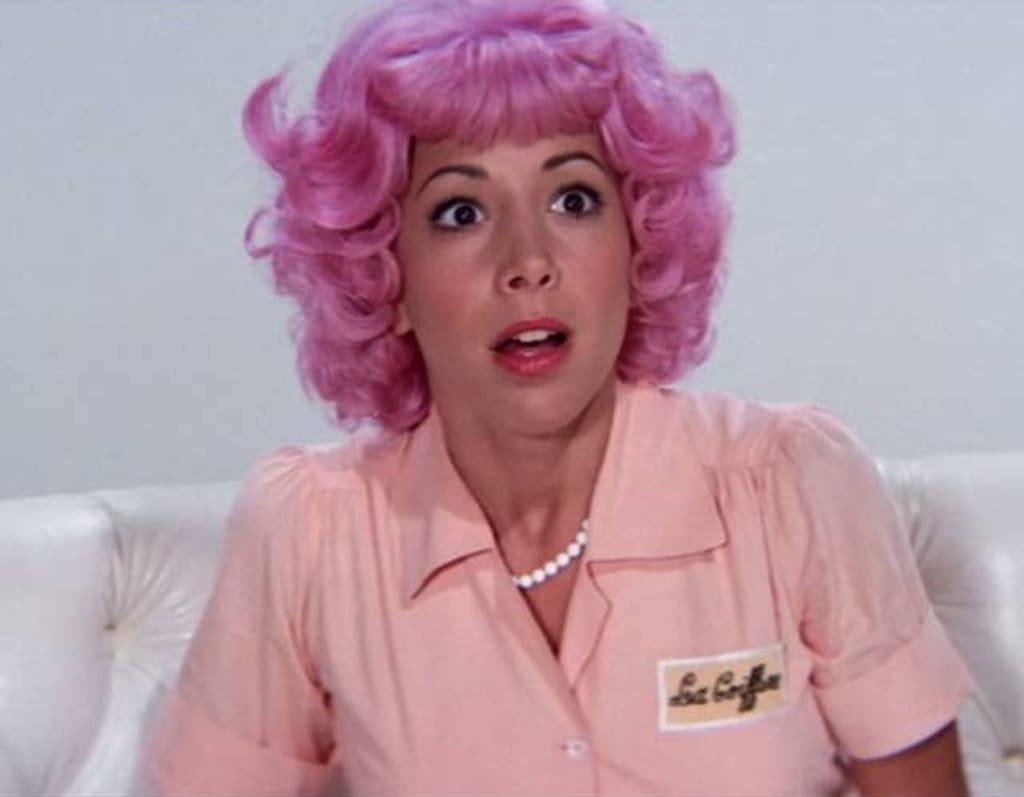
The movie Grease is more than a classic--it's a cultural phenomenon, and for many reasons. There's the music, the characters, the aesthetic, and above all else, the nostalgia. Grease may take place in 1959, but the movie itself was released in 1978 and it was based on a musical that first played on Broadway in 1972. Why make both a very 1950's musical and a very 1950's movie adaptation at least twenty years after the decade had passed? One word: nostalgia.
There was a lot that people missed; after all, the era was iconic in many ways. One of the most prominent features of the decade--and one of the things that people missed the most--was the fashion.
Since we started by talking about Grease, it makes sense to turn first to the subculture that inspired the title: the Greasers. The look is simple enough: a tight white T-shirt, a cool black leather jacket (bonus points if you have embroidered patches and your drag race team written on the back), and cuffed denim jeans. It's stylish, but also practically, and flattering (read: hot) on anyone. You can't go wrong with this one.
But 50's guys were more than Greasers. If you get tired of the leather jacket, there are plenty of other styles to explore. It was common for guys to wear button-up shirts (either short-sleeve or with the sleeves rolled up) paired with sweater vests. They also wore their fair share of sweaters. And while this look could be worn with jeans, it was more common to keep it classy and trade in the denim for khaki pants or dress slacks.
The boys weren't the ones with a good sweater game. Sweaters were also a hit among the young ladies of the decade. After all, for them, "sweater" did not mean "boring." Young women's sweaters were specifically cropped, knit, and fitted, designed to show off everything; this was the era when the hourglass figure came back, and with it, a love for showing off curves. Hollywood film stars like Marilyn Monroe and Jane Russell were to thank for that.
And showing off everything did not stop with the sweaters. One of the standout trends from the era was the famous bullet bras. Beyond being an article of clothing, the bullet bra was a statement and an act of rebellion among women as they protested the conservative standards they been held to in the past. The bullet bra, worn with the aforementioned sweaters, enabled women to flaunt their bodies and, more importantly, claim them as their own. It became a symbol of a progressive movement in which women fought for better futures.
The bullet bra was tied to progressivism and future-focused in other ways, too. The development of the bra was heavily influenced by the futuristic trends and styles that came to be popular due to the Space Race.
Of course, not everything about women's fashion was so risqué. A staple of any young woman's wardrobe was knee-length skirts in a variety of colors and patterns. These skirts are a key element of the 50's aesthetic we fondly remember today.
But why bring 50's fashion back? Again, nostalgia. 50's fashion is more than leather jackets and jeans or knee-length skirts and pin curls. 50's fashion is a reminder of and a tribute to an era of summer nights and rock n' roll party queens, drive-in movies and classic diners. It pays homage to the spirit that we are all Pink Ladies and Greasers, one song away from finding ourselves and happiness in life. 50's fashion rekindles the optimism of an unforgettable decade, an optimism that perhaps can counteract the cynicism that so many of us have fallen into given the state of our troubled modern world. 50's fashion is an invitation to escape the norms of the modern day and enjoy some good ol' fashioned nostalgia.
About the Creator
Emma Laurens
Emma Laurens is a college student and aspiring writer. Her main interests are creative writing, theatre, film, music, and adventure.
Keep reading
More stories from Emma Laurens and writers in Styled and other communities.
Dressing Without Rules: Plus Size Salwar Suits in 2026
For a long time, plus size fashion came with too many rules. Wear dark colours. Avoid volume. Stick to “flattering” cuts. Hide this, downplay that. But in 2026, that mindset is finally fading. Women are choosing comfort, confidence, and personal style over outdated fashion advice and plus size salwar are right at the centre of this change.
By Amit Mandal6 days ago in Styled




Comments
There are no comments for this story
Be the first to respond and start the conversation.