
What Is Stone Washing Jeans And How Does It Differ From Acid Wash?
One of the oldest techniques in denim washing that is still used today


When you are about to buy a new pair of jeans, you might find information such as stone wash and acid wash in the product description. So what is stone washing? How is it different from the acid wash?
Stone wash and acid wash have been around for decades. Like all jeans, both are made from denim. While both produce a worn/vintage effect on jeans, these two washing techniques are actually different.
Before we get into the details of what stone washing is and how it differs from acid wash, it would be better if you first get to know what a denim wash technique is.
Washing Treatment On Jeans Denim
Washing Treatment is a process that is done to get the desired effect, such as a fading effect on the fabric. This technique is usually used on denim fabrics but as time progresses, it is also used on t-shirts.
The washing process on this fabric is done by adding a chemical liquid to get the desired color effect. There are actually many techniques for this washing process, each of which will produce a variety of different effects, such as color fading, color reinforcement, bleaching, and other effects on the fabric.
What Is Stone Washing?
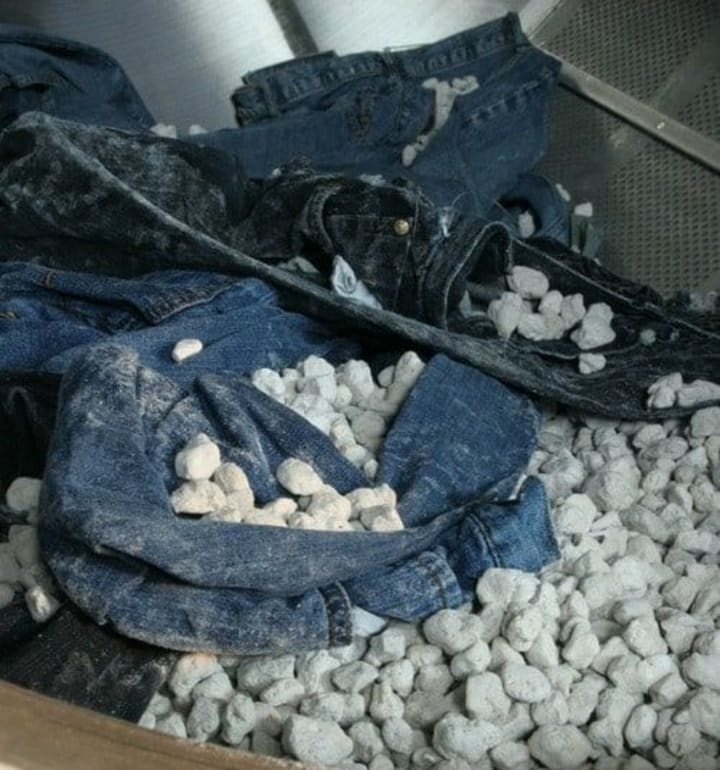
Stone wash jeans are a process of distressing jeans using a pumice stone base. This distressing aims to create a worn-in or vintage look to the jeans.
This washing process involves the jeans being placed in a drum filled with pumice stones. As the drum rotates, the stones will rotate and rub against the jeans. This abrades the surface of the denim fabric.
The results of this abrasion vary and can create a cool distressed effect for the jeans.
Related Article: Don't Do This When You Are Using Raw Denim
Who invented the stonewash technique?
Donald Freeland, an employee of the apparel company Great Western Garment (later acquired by Levi Strauss & Co), invented the "stonewash" system for denim in 1950. Another inventor named Claude Blankiet also claimed to have invented the stonewash technique in 1970. Meanwhile, the jean clothing company Edwin claimed to have invented a similar technique in 1980.
The Downside Of Stone Washing Technique
The main problem common to stonewash-washed garments is the reduction in yarn fiber strength after the washing process. The extent of such yarn fiber strength loss can be minimized if the correct pH of the water can be maintained throughout the washing process. Also, too high a temperature will damage the fabric fibers.
Therefore, during drying, the maximum temperature should be 80 degrees Celsius, to avoid the possibility of damage to the elasticity of the yarn fiber.
What Is Acid Wash Jeans
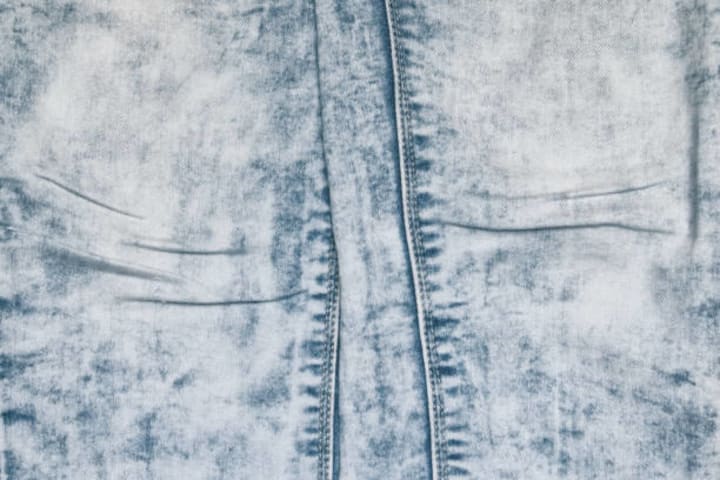
As the name suggests, Acid Wash is the process of distressing jeans using cellulose enzymes based on acidic chemicals (acid). The acid will distress the jeans and cause the color to fade to a lighter tone.
The acid wash is of course still made from dyed denim fabric. The difference with regular denim is that they are only acid washed during production.
When producing a pair of acid wash jeans, the manufacturer will soak them in a bath of acid solution. This acid will not dissolve the jeans, instead, it will break down the color-causing dyes in the denim. As the jeans soak in the acid, the dye will degrade.
This acid wash is used to mimic the appearance of faded jeans, just like your jeans are faded from sun exposure.
Difference Between Stone Wash And Acid Wash Jeans

Denim jeans that use stone wash and acid wash techniques are two different things. So they have different characteristics.
As we explained earlier, stone wash and acid wash techniques use different washing methods.
Stonewash uses pumice stones in the washing process, while acid wash uses an acid solution.
The main difference between stone wash jeans and acid wash jeans is that stone wash jeans are physically distressed, while acid wash jeans are chemically distressed.
Which Should I Choose, Stone Wash Jeans Or Acid Wash?

You might be wondering which one you should choose between acid wash vs stone wash. When choosing between the two, you have to consider your personal preference. Some people prefer to use stone wash jeans while others may favor the acid wash technique.
Stone wash jeans are usually a better choice if you like the look and feel of physically distressed jeans. This is because the jeans experience abrasion due to the friction and blows from the pumice stone which causes a worn effect on your jeans.
Of course, you can get this effect normally but it takes years for the same distressing effect.
However, for more faded colors, you might want to opt for acid-wash jeans. This washing technique retains its structural integrity, looking light and faded.
Tips for Making Your Own Stone Washed Jeans at Home

Bored with your plain solid navy jeans? Why not try this trick to make them edgy with stonewashed? It's easy, you can make it at home. Here are the steps:
- Collect pebbles or pumice stones about the size of a ping pong ball (maximum), look for round ones, you can get them at plant sales. Collect about half a medium-sized bucket.
- Put these pebbles into the washing machine, add enough detergent for washing (about 1 tablespoon), bleach 2 tablespoons, and fill with water until completely submerged.
- Spin the machine as you would normally wash clothes. Once done, leave the jeans to soak for 3-4 hours.
- Repeat the machine wash again, then rinse thoroughly, and let it dry first to see the results. If it's not enough, you can repeat the process from the beginning.
Attention: Stone washing using a washing machine is not recommended for long periods of time, as it may cause damage to your washing machine.
Conclusion
After reading this article, I hope you have a better understanding of what stone washing is and how it differs from acid wash. Both of these are popular methods used by jeans manufacturers to create a distressed effect just like a naturally aged pair of jeans.
Related Article: What Kind Of Jeans Should A Woman Wear
About the Creator
Brian Fulan
Just random people on the Internet who love to playing games and reading books.
Keep reading
More stories from Brian Fulan and writers in Styled and other communities.
2022 Korean Fashion Trends That Make You Look Instagrammable When Summer Comes
Summer is just around the corner, have you prepared the best outfit for your vacation? As we know Korean fashion style has unique characteristics that are practical and stylish at the same time. K-Fashion is still relatively young in the fashion industry today, but lately, it has been growing rapidly especially if it's not because of its worldwide K-Pop Culture.
By Brian Fulan4 years ago in Styled
Streetwear Studios: The Premium Streetwear Brand Built for Street Culture
Fashion used to be a top-down industry. For decades, a handful of designers in elite studios decided what the world would wear. But the tide has turned. Today, the most influential trends don’t start on the runways of Paris; they start on the street corners of Tokyo, London, and New York. This is the era of Streetwear, a movement that has transcended clothing to become a lifestyle, a philosophy, and a billion-dollar economy.
By Muhammad Owais SEOabout 17 hours ago in Styled


Comments
There are no comments for this story
Be the first to respond and start the conversation.