
What is a Saree?
A Guide to the Most Timeless Garment in South Asian Fashion


The sari is one of the oldest surviving forms of clothing in the world, dating back to 2800–1800 BC. Early saris were woven from cotton and silk in the northern regions of India; long lengths of fabric designed to drape elegantly around a woman’s body. Traditionally, a sari ranges from five to nine yards, and over time, each region developed its own unique draping style, symbolism, and meaning.
A classic sari ensemble consists of three pieces:
- The blouse (choli): a fitted top or bandeau-style garment
- The petticoat: a tied underskirt that anchors the sari
- The draped fabric: the long cloth that wraps, pleats, and falls over the shoulder (the pallu), often used historically to cover a woman’s head
Because India experiences dramatic climate changes, the sari evolved with practicality in mind.
In the summer, the drape can be airy, loose, and breathable.
In the winter, women wrap the fabric more tightly, even using the extra cloth for warmth.
Saris are durable, versatile, and often passed down through generations, meaning one piece of cloth can hold years of history, memory, and identity.
As India modernized, new outfits like the lehenga and Punjabi suit emerged in the 18th–19th centuries, offering easier, quicker dressing for daily wear. Still, the sari remains a cultural emblem of elegance, professionalism, and tradition. Many politicians, business leaders, and artists proudly wear it as a symbol of identity.
One of the most common draping techniques is the Nivi style, which is the method used below.
Let's Get Started
What You’ll Need:
- Sari
- Blouse
- Petticoat
- Safety pins (at least 5)
- Shoes you’ll be wearing
Optional:
- A fan (yes, it gets warm!)
- Someone to help
Steps;
1. Prep Your Base
Find a clean space and then put on your blouse and tightly tied petticoat ~ this is crucial because the sari fabric gets tucked into it.
Put on your shoes to set the right length. If you're wearing flats, tuck slightly more fabric for a clean hem.
2. Wrap the First Round
Take the plain end of the sari and tuck it into your petticoat. Wrap it fully around your waist once and bring it back to the starting point. Tuck it securely.
3. Set the Pallu (Shoulder Drape)
Take the decorative end of the sari (the pallu) and drape it over your shoulder. Pin it temporarily so you can work on the pleats without it slipping.
4. Make Your Front Pleats
Use the loose fabric gathered in front of you.
Starting from the right side, create pleats the width of four fingers, aiming for 5–7 pleats.
Once your pleats look neat, pin them together and tuck them into the petticoat directly under your belly button. You want to make sure they’re secure and not dragging.
5. Finalize Your Draping
Adjust your pallu. Leave it flowing, or pleat and pin it for a cleaner look (especially helpful if you’ll be dancing).
6. Accessorize & Shine
Add bangles, earrings, a waist belt, or even fresh flowers in your hair. A sari transforms beautifully with the right styling.
*Simple Step-by-Step Draping Guide:
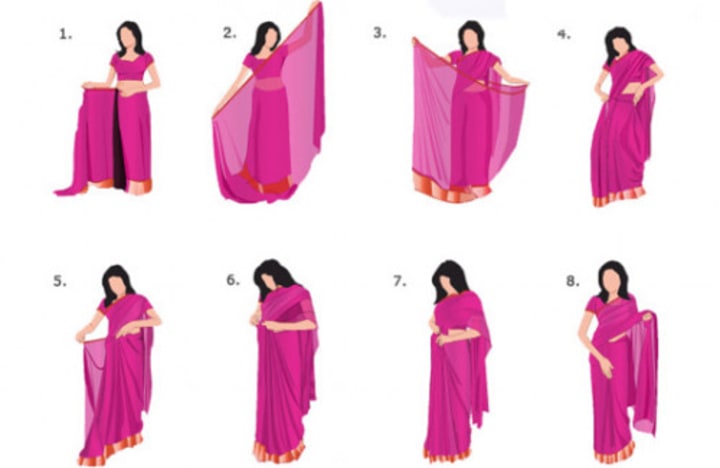
Check out this detailed description for more info: Simple Step by Step Draping Guide.
If you’d like help finding saris, lehengas, or Indo-Western outfits, or want recommendations by body type, event type, or budget, just let me know!
About the Creator
MB | Stories & More
I explore the moments we feel but rarely name, the quiet shifts, the sharp truths, and the parts of life we don’t talk about enough
Keep reading
More stories from MB | Stories & More and writers in Styled and other communities.
A Story About Being Followed
The Story: I remember it vividly: feeling terrified, shocked, stuck, scared, and simply uncomfortable. A story about the first time I was ever followed by a man. The first time happened, when my cousin, her dog, and I went for a walk, on a public trail, near her house. About five minutes into starting on this trail, we noticed a man who was visibly day-drinking, holding a brown paper bag to cover his choice of drink. We slightly veered off the path, as the dog led us to where he wanted to do his business, between some trees. My cousin fell pretty silent before whispering to me, "That man's watching us." And, when I looked up, he was watching us from the path. Brown paper bag in hand, with zero shame, and with eyes on his prize. I immediately freaked out. My eyes widened, and my jaw probably dropped. Sheer terror must have been on my face, because my cousin noticed. She tried to calm me down, listing reasons not to worry:
By MB | Stories & More6 years ago in Psyche
The Evolution of Bridal Lingerie Trends in 2026
As the wedding industry adapts, so too does the realm of bridal lingerie. In 2026, brides are increasingly on the lookout not only for exquisite lingerie to wear on their big day but also for pieces that embody their personal aesthetics and values. With a focus on comfort, sustainability, and creative designs, the bridal lingerie market is embracing a broader spectrum of choices.
By Isabella M2 days ago in Styled
Click With Confidence: What to Look for When Researching Online-Only Brands
Shopping from brands that operate primarily online requires careful evaluation. Without the ability to examine products in person, consumers rely on transparency, operational clarity, and documented brand history to determine credibility. When researching digital-first companies such as SKIMS, Comfrt, and Quince, the most important indicators include supply chain transparency, clearly defined return policies, customer service accessibility, and visible long-term operational presence.
By CEO A&S Developers3 days ago in Styled
Magic
Note from the Author: I want to let you know that this is an unusual story, and it has been written purely from whatever is in my unconscious mind, because before I start writing, I get into a flow state that reaches my unconsciousness. I also write in my subconscious mind, which is like a mid-flow state between the conscious and unconscious mind.
By Denise Larkin7 days ago in Fiction




Comments
There are no comments for this story
Be the first to respond and start the conversation.