
Trending: But for how long?
In the long run, do trends make any difference?


Perhaps we over-glorify the past in ways that, upon examining the facts, are found to be entirely idealistic. What we each may see as the epitome of fashion may simply be boiled down to the fact that hindsight is not exactly 20:20, especially when the accuracy of memory is called into question.
As a child, I was almost obsessively interested in history - specifically, historical fashion. Part of it was simple curiosity, the other part expanded on exploring my mixed-race heritage. Name a region, name a time period - there was probably something in it that I liked.
And when it came to what was worn in modern times - it frustrated me to no end how completely boring clothes often were, if you wanted to fit in. It seemed like everyone essentially wore the same thing. That's how it was, that's how it's always been.

Whether you wanted to wear a rather avant-garde piece or simply take a day to appreciate your heritage in traditional clothing or makeup, people would undoubtedly stare, make negative comments, make faces. Sure, you could just "not care" what people thought, but dealing with the consequences would often take too much effort on your part and end up being an uphill battle.
Every fashion trend comes with a set of rules that it bends to; a social creation that binds each piece to a function. To want a trend to reappear either drags along the baggage that came with that trend or erases its history by neglecting to address it. And to separate the trend from said baggage does nothing- it simply leaves a power vacuum for something else to step in and create a substitute.

Corsets, for example, can undeniably be used to enhance an outfit, to make it stand out from what it was before. But corsets came with their issues, both in terms of physical and mental health. At risk of sounding incredibly pessimistic, the reality is that for a society to accept a trend, they also have to create feelings and expectations that hang on to the could-be innocuous piece of clothing. They have to create a story. When corsets were at their peak in fashion, their function was, essentially, to visually emphasize the sexualization of women. This was a deciding factor in their popularity and a deciding factor in their longevity.
But to say that only corsets and only previous trends in history came with these potentially disabling prejudices would be naïve. The same could be said of more recent trends and of current trends.
Of course, this is not in the sense that all of these trends have the purpose of sexualizing the wearer (that was simply an example for the above trend), or even that sexualization in general is necessarily a bad thing (if it is truly the wearer's own choice, made for themselves rather than bowing down to external pressure, then all the better for them). But all of these circumstances surrounding any trend have a purpose: the function of shackling those who wear those articles of clothing into a rather vicious circle.

Take a recent example: A somewhat recent TikTok by a "Gen-Z" account condemned side parts in favor of middle parts. Something so completely trifling became the topic of arguments (both serious and joking alike). And it seems that yet again, we have fallen for the trick. A trend that people follow intensely, religiously, for 5 years, maybe 10, and then it gets brutally murdered by the next trend, just like the one before it. Strangely dramatic for decisions as inane as a hair part, if you consider the big picture.

The concept of trends and the desire that people have to follow trends and create trends is rooted in the human need (or perhaps want) to belong. To belong to society, to have status within that society. People create arbitrary rules such as these trends to determine who is "in" and who is "out," when just as easily, they could all oppose these rules and simply do as they like.
Yes, I'm sure this challenge was meant to take on a optimistic yet nostalgic tone, but for me, it wasn't meant to be. I suppose you could say that my point is to say that hoping for a trend to resurface is a Sisyphean task- it will come back only to disappear again. And then you will be left hoping for it to return again, and again, and again. Who's to say that you, yes, you cannot choose to allow those pieces you enjoy to live in permanence by your decision alone?

Ah, yes. The boss that will look at you strangely for wearing your hair in a bouffant in 2021. The waitress who can't help but stare as you attempt to make your way through crowded restaurant tables in your pannier, in 2021. The job interviewer that wouldn't dream of giving you a chance in your chiton (even though you added a blazer and you're interviewing in the fashion industry) in 2021. This is the price we pay for trends- ephemerality, and the judgement that ensues.

Perhaps rather than bringing old things back, we should try to create a mindset that is new- so that we don't need to rally behind each other to gain support so that we can wear what we want again for a few months - or, if we're lucky, a few years. Perhaps this question - while intriguing, and producing equally intriguing answers - is not exactly the best one that we could ask.
Rather than looking back to grasp at the loose ends of historical fashion (recent or not), it may be more productive to simply encourage a more laissez-faire approach to everyday fashion. I think that there are many trends in fashion that would be exciting to see again- but is there really a need for them to "trend"?
About the Creator
Jiji Ya
ex-classical pianist who mistakenly got an interdisciplinary bachelor of science.
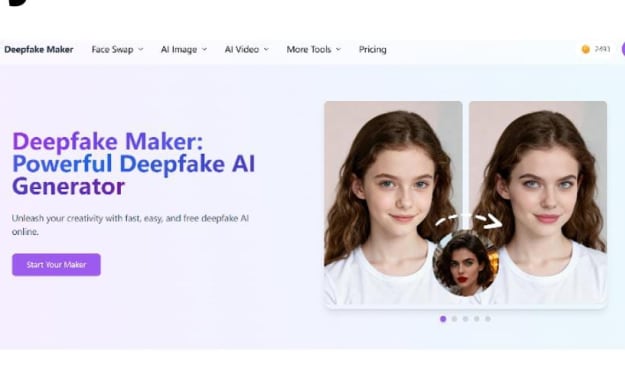
Deepfake Maker Face Swap: How I Create Scroll-Stopping Content in Minutes Without Editing Skills
Face Swap Technology and the Rise of AI-Generated Visual Media Artificial intelligence has transformed the way digital content is created, shared, and experienced. One of the most widely discussed developments in recent years is the emergence of face swap and deepfake technology. Once limited to research labs and advanced visual effects studios, face swapping is now accessible through web-based platforms and consumer applications.
By Abbasi Publisherabout 4 hours ago in Styled


Comments
There are no comments for this story
Be the first to respond and start the conversation.