
Threads of Influence
How Fashion Icons Shape the Way We Speak, Move, and Style Ourselves

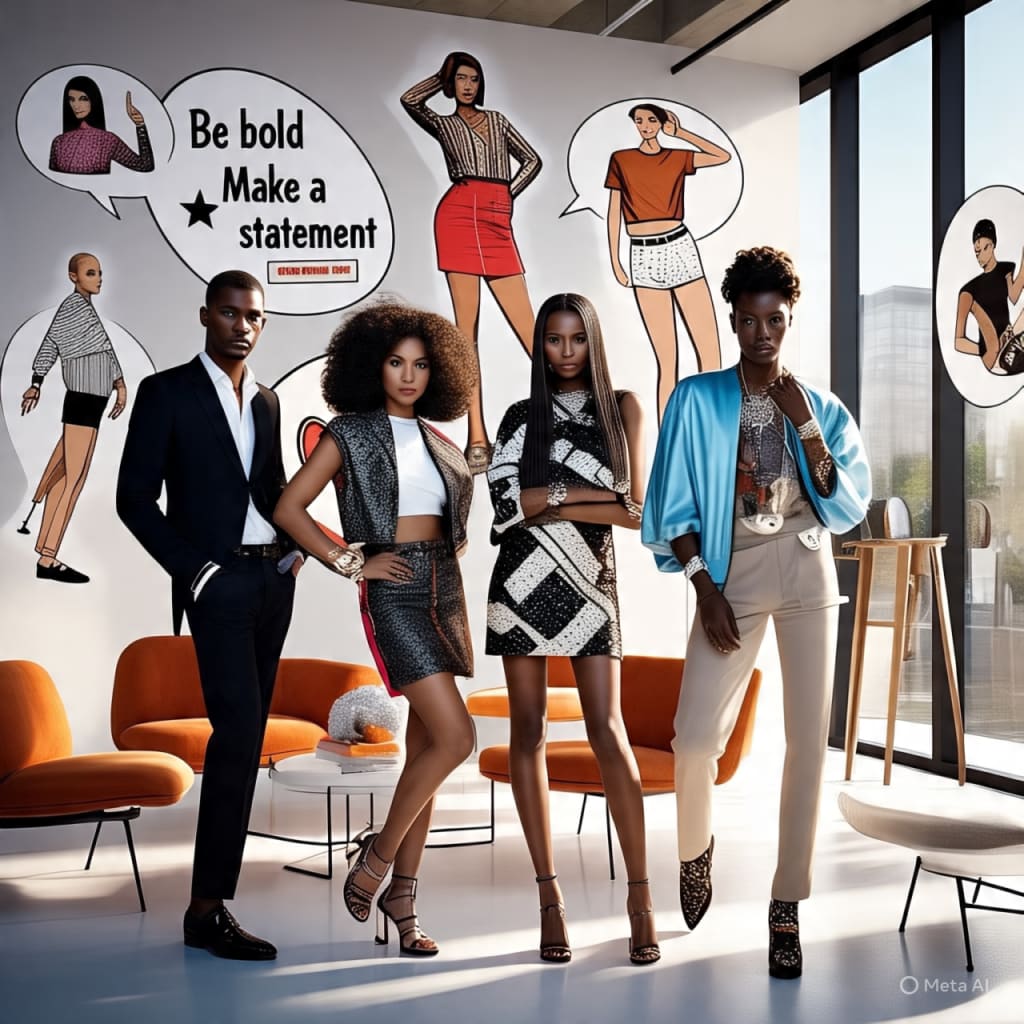
“I don’t do fashion. I am fashion.” — Coco Chanel
That quote isn’t just a sassy line for Instagram captions — it’s a prophecy. Fashion isn’t just fabric. It’s language. It’s movement. It’s how we sit, speak, pose, and even how we pause. Our cultural vocabulary — both verbal and visual — has been stitched together by icons who never even needed to say a word.
Take a minute and picture this: Marilyn Monroe’s fluttering white dress. Prince’s purple everything. Zendaya's power suits. Rihanna’s maternity glam. These moments aren’t just visual. They make you feel something, maybe even become someone — if only for a moment.
But how exactly do fashion icons infiltrate our everyday lives, shaping not just what we wear, but how we behave and express ourselves?
Let’s unravel the threads.
The Walk: When Style Becomes Movement
In 1991, Naomi Campbell stumbled in a pair of Vivienne Westwood’s 9-inch platform heels — and it became one of the most iconic fashion moments of all time. Not because she fell, but because she stood up, laughed, and strutted on. That moment humanized a supermodel, and simultaneously immortalized a brand.
Fast-forward to now: Gen Z walks differently. You’ll see it on TikTok — the exaggerated, stylized strut, shoulders back, gaze deadpan. It’s not a coincidence. It’s a result of watching hours of runway clips from the ‘90s and early 2000s. Our walk — once functional — is now expressive.
And then there's Beyoncé’s stage presence. She's influenced an entire generation to walk into rooms like they own them. Shoulders back. Chin high. Intentional. She doesn’t just sing about power. She **moves** like it. And her fans? They do too.
The Talk: Style in Our Speech
Language evolves, but fashion accelerates it. Think about it — “That’s hot,” wasn’t just a phrase until Paris Hilton turned it into a brand. “On Wednesdays we wear pink” wasn’t just a line in *Mean Girls* — it became a weekly ritual. And Rihanna? She gave us the confidence to say “bad gal” and mean it.
When Harry Styles blurs gender norms in fashion, he gives language permission to follow. Suddenly, terms like "masc energy" or "soft boi" enter our everyday talk. The more these figures redefine how they look, the more we reshape how we speak — about ourselves and each other.
Even body language shifts. Billie Eilish’s early oversized silhouettes didn't just hide her figure — they redefined the “cool girl” stance. Arms crossed, gaze low, hoodie up — a visual and physical departure from hypersexualized pop stars. Her fans mirror that. It’s not just an outfit. It’s a language of its own.
The Look: Dressing Like the Future
Look around a high school or a hip city block, and you’ll see echoes of icons walking around.
Bella Hadid in vintage windbreakers and tiny sunglasses? That sparked a global thrift boom. The “model-off-duty” look — a little careless, a little expensive — is now the blueprint for cool. Everyone wants to look like they’re not trying, but actually spent an hour curating a “random” outfit.
Then there’s the Rihanna Effect: unapologetic confidence. She wore a sheer Swarovski crystal dress in 2014, igniting a wave of see-through confidence in streetwear, red carpets, and even bridal fashion. It wasn’t just what she wore — it was how she wore it. Bold. Unbothered. That posture? Contagious.
When Zendaya rocks a tux on the red carpet, she challenges outdated ideas about femininity. And in doing so, she opens the door for others to try power suits without explanation. Suddenly, androgyny isn’t risky. It’s refined.
These icons don't just set trends — they create personas. Personas that fans adopt, remix, and reflect in their own unique ways.
The Digital Mirror: How Social Media Amplifies Influence
Social media isn’t just a platform. It’s a runway, a magazine, a diary, a stage — all at once.
Fashion used to trickle down from couture runways to department stores. Now it explodes in real-time across TikTok, Instagram, and YouTube. Within minutes of a celebrity stepping onto a red carpet, there are tutorials, memes, reaction videos, and dupes. Influence doesn’t drip anymore. It floods.
Take Hailey Bieber’s “clean girl aesthetic” — slick bun, gold hoops, minimalist fits, and dewy skin. It’s been replicated millions of times in GRWM (Get Ready With Me) videos. What started as her personal vibe became a visual language with global dialects.
But here’s the real kicker: we’re not just copying. We’re remixing. The audience is now the stylist, director, and model. The loop of influence is faster, more interactive, and more democratic than ever.
Icons with Intent: Beyond Style for Style’s Sake
The most influential fashion icons aren’t just wearing clothes. They’re wearing messages.
When Alexandria Ocasio-Cortez wore a white suit to Congress, it was a nod to the suffragette movement. When she wore a dress that read “Tax the Rich” to the Met Gala, it lit the internet on fire. Whether you agree or not, she proved that fashion is a microphone.
Similarly, Janelle Monáe’s black-and-white tuxedos weren’t just stylish — they were a visual nod to her parents’ working-class uniforms. Her style is a tribute to identity, a signal that being different isn’t just allowed — it’s celebrated.
Icons like these don’t just influence trends — they influence thought. And that’s where fashion stops being shallow and starts being revolutionary.
Cultural Echoes: When Fashion Reflects the Times
Look through history and you’ll see it: fashion as a cultural timestamp.
The flappers of the 1920s weren’t just cutting their hemlines — they were cutting ties with Victorian expectations. Punk fashion in the ‘70s wasn’t about safety pins and plaid — it was about protest. Hip-hop fashion in the '90s was more than baggy jeans — it was ownership of style and swagger that mainstream society often tried to deny.
Today, fashion is more fluid than ever. It moves with politics, with identity, with internet culture. It’s why you’ll see genderless fashion lines gaining traction, modest fashion influencers on Vogue covers, and runway models in wheelchairs or with vitiligo.
What used to be “different” is now directional.
The Influence You Don’t See: Micro-Movements
Sometimes, the most powerful threads are the invisible ones.
A 12-year-old scrolling Pinterest finds a picture of Aaliyah in a crop top and low-rise jeans. She saves it. She wears it. She struts a little differently. She talks a little bolder.
A queer teen sees Lil Nas X in rhinestones and cowboy boots. For the first time, flamboyance feels like freedom, not fear.
A college student watches BTS wear nail polish and skirts on stage, and suddenly, masculinity feels expansive, not confined.
These are the micro-moments. Tiny threads of influence weaving into daily lives, one swipe, one outfit, one word at a time.
So What’s the Thread?
Here’s the truth: we don’t just wear clothes — we wear icons. Their style becomes our starting point. Their energy becomes our mirror. And even when we think we’re being original, we’re usually remixing something we’ve seen, admired, or internalized.
But that’s not a bad thing. That’s art. That’s culture. That’s human.
We are, all of us, stitched together by influence. And in turn, we pass it on — consciously or not. A little Billie here. A little Zendaya there. A whisper of Gaga. A flicker of Pharrell. Threads upon threads.
We might not all walk a runway. But every sidewalk, office, classroom, or Zoom call is our personal catwalk. Every outfit, a message. Every gesture, a note. Every word, a rhythm.
Fashion doesn’t just influence us. It transforms us. One thread at a time.
About the Creator
Samar Omar
Because my stories don’t just speak—they *echo*. If you crave raw emotion, unexpected twists, and truths that linger long after the last line, you’re in the right place. Real feels. Bold words. Come feel something different.
Keep reading
More stories from Samar Omar and writers in Styled and other communities.
Silk sleep wear
Silk sleepwear Let's admit that shopping for your clothes is not a piece of cake and can be overwhelming most of the time. This post will be helpful to guide you on how you can get the best silk sleepwear for ladies, as pajama’s, shirts, shorts, gowns are all the items included in the ladies silk nightwear, and you can choose from according to your comfort and need.
By Samar Omar9 months ago in Styled
What are the benefits of using a 0.06-0.08mm poly hair system?
The Invisible Science: A Comprehensive Guide to Hair System Skin Thickness (0.03mm to 0.08mm) In the rapidly evolving world of non-surgical hair replacement, the quest for the "perfect" look has moved beyond the hair itself and onto the base material. For the modern man, the goal is simple: a hairline that is indistinguishable from nature. This level of realism is achieved through "Skin Systems"—polyurethane bases that mimic the texture and appearance of the human scalp.
By Alex Morgana day ago in Styled
I was in a Toxic Relationship, with my Workplace
“You got that?” My ex yelled. His hands were balled into fists at his side. At six foot three, he towered over me. A normal person would have been afraid, but I looked up a video of George Lopez repeatedly saying, “I got this,” and showed it to him. I had grown used to this treatment, so much so that I didn’t blink when he ripped the phone from my hand and threw it across the room.
By Jade M.6 days ago in Confessions


Comments
There are no comments for this story
Be the first to respond and start the conversation.