
The Psychology of Color in Diamond Selection: What Your Gem Says About You
Explore the science behind diamond color, personality traits associated with different color preferences, the investment implications of various color grades, and expert guidance for selecting the perfect diamond color to complement your personal style
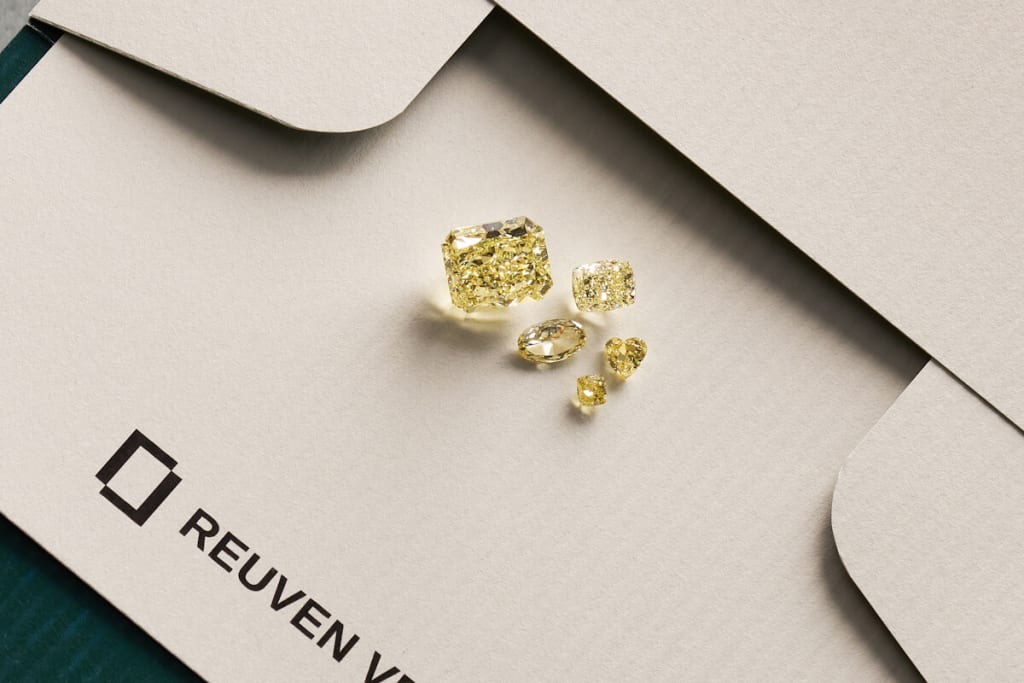
The captivating sparkle of a diamond reveals something deeper: the interplay between carbon atoms and trace elements like nitrogen. This molecular arrangement creates what gemologists identify as diamond color—a spectrum that reflects both the stone's geological origins and potentially resonates with its owner's preferences.
The Science Behind Diamond Color: From D to Z
The Gemological Institute of America's color grading system—ranging from D (completely colorless) to Z (light yellow)—represents one of gemology's most precise measurement frameworks. Master gemologists grade diamonds face-down against a white background under controlled lighting conditions, comparing them against meticulously calibrated master stones.
Diamond Color Science: Nitrogen atoms in various concentrations and aggregation states influence diamond color. Even small amounts can contribute to yellow tinting, with the specific arrangement of these atoms determining the intensity.
Most diamond color comes from nitrogen atoms that become trapped within the carbon lattice during formation billions of years ago. These nitrogen impurities selectively absorb blue wavelengths, causing the complementary yellow tint to become visible.
The relationship between color grade and value follows a non-linear progression. The price difference between adjacent color grades, such as G to F, can range from 10-20%, while premium D-colored diamonds may command 20-40% higher prices than F-colored counterparts, depending on market conditions and other quality factors.
What makes colorless diamonds so valuable is an interesting contrast—their value comes from what they lack rather than what they contain. Completely colorless diamonds form only under rare conditions where nitrogen is either absent from their environment or unable to integrate into the diamond's structure during formation.
Whether you're a seasoned diamond enthusiast or new to the world of fine gemstones, understanding these color nuances can transform your selection experience—a principle that diamond experts like Reuven Veksler emphasize when guiding clients through their most significant purchases. As a certified member of the Antwerp Diamond Exchange with over two decades of experience, Veksler brings expertise from the world's diamond capital to discerning collectors worldwide. His background in custom cutting and evaluation allows him to identify those subtle color distinctions that significantly impact both a diamond's value and its personal expression.
Colorless vs. Near-Colorless: Personality and Preference
Those drawn to colorless D-F diamonds often exhibit traits associated with "adaptive perfectionism"—an appreciation for exceptional quality coupled with the willingness to invest resources in pursuit of excellence. The appeal is often more philosophical than practical—the knowledge of purity matters more than its visibility.
The G-J color range attracts individuals who exhibit "informed pragmatism"—the ability to identify optimal value positions within luxury markets. These buyers typically demonstrate strong analytical decision-making, balancing multiple factors rather than prioritizing a single attribute. G-J diamond enthusiasts often draw satisfaction from their market savvy and the knowledge that they've maximized their investment efficiency.
Diamond settings create psychological frames that dramatically influence color perception. Yellow gold settings minimize yellow tints in near-colorless diamonds, while platinum and white gold amplify colorlessness but can reveal subtle warmth in lower color grades.
Cultural preferences reveal fascinating patterns: Northern European and North American markets traditionally favor colorless stones, reflecting cultural values centered on clarity and purity. Middle Eastern, South Asian, and Mediterranean cultures often appreciate warmer diamond colors, particularly when complemented by gold settings.
Fancy Colored Diamonds: Bold Statements and Rare Choices
Beyond the conventional D-Z scale lies a realm where diamond color becomes not a measure of absence but of extraordinary presence—the world of fancy colored diamonds:
- Yellow and Orange: Result from nitrogen aggregation patterns that intensify beyond the Z-grade
- Pink and Red: Emerge from plastic deformation—intense pressure that creates atomic-scale distortions
- Blue: The presence of boron creates electron "holes" that absorb red and yellow wavelengths
- Green: Natural radiation exposure creates vacancy clusters within the lattice
The extreme scarcity of colored diamonds has created a distinctive investment category with remarkable performance metrics - "showing significant appreciation over the past decade—with estimates ranging from 90-130% according to luxury investment indices like Knight Frank, though values vary considerably based on color rarity and intensity.
Collectors of different colored diamonds sometimes show distinct preferences in other areas of life as well. Those drawn to yellow diamonds might value brightness and optimism, while pink diamond enthusiasts often appreciate both beauty and value. Blue diamond collectors may be particularly detail-oriented in their approach.
Celebrity acquisitions have dramatically accelerated public awareness of fancy colored diamonds—from Ben Affleck's 2002 pink diamond engagement ring for Jennifer Lopez to the 2017 sale of the "Pink Star" for $71.2 million.
The Emotional Connection: Diamond Color and Personal Expression
Diamond color selection represents a deeply personal semiotic choice that communicates aspects of identity. In interviews with colored diamond clients, many described their purchase in terms that connected to personal identity, suggesting these acquisitions often carry significant personal meaning beyond their objective characteristics.—statements like "This is exactly who I am" rather than simply "This is beautiful."
Diamond color creates a visual conversation with the wearer's overall aesthetic presentation—complementary harmony with warm wardrobes, contrast statements against minimalist clothing, and alignment with skin undertones all influence selection patterns.
Cultural traditions assign distinct meanings to diamond colors: Western emphasis on colorless "purity," East Asian positive associations with yellow diamonds, South Asian appreciation for chromatic diversity, and Middle Eastern preference for vivid fancy colors.
Diamond color preferences have undergone distinct generational shifts: from the Silent Generation's preference for colorless conformity to Generation Z's embrace of unique color stories with ethical provenance. Each generation has moved progressively toward greater color diversity rather than cycling between preferences.
Expert Tips: Selecting the Perfect Diamond Color for Your Personality
A diamond's character emerges from the interplay of all four Cs—each influencing the others in ways that create a unique gemological fingerprint:
- Excellent cut quality can effectively raise the apparent color grade by optimizing light return
- Certain clarity characteristics become more visible in higher color grades due to the absence of body color
- Color becomes exponentially more perceptible above approximately 1.5 carats
Skin undertones create natural compatibility zones with specific diamond color ranges—cool undertones harmonize with bluer-white diamonds (D-F), while warm undertones naturally complement stones with subtle warmth (G-J). Diamonds don't merely sit upon skin—they reflect its tone back into the stone through pavilion facets.
For investment considerations, D-F colorless diamonds maintain the strongest global liquidity, while G-H range offers optimal balance between acquisition value and resale potential. Significant price premiums attach to specific color boundaries—particularly between F and G and between J and K.
The most satisfying diamond selections typically reflect authentic aspects of the owner's personality rather than temporary trends. Evaluate potential diamond colors alongside your most frequently worn clothing and in your primary environments to ensure your selection enhances rather than conflicts with your established lifestyle.
Finding the right diamond involves both knowledge and personal connection. When well-chosen, a diamond becomes something more meaningful—a reflection of the wearer's taste and identity. The color you choose may express something authentic about who you are.
About the Creator
Keep reading
More stories from Susan Scava and writers in Styled and other communities.
Luxury Belts for Men: The Finishing Touch
In men’s fashion, it’s often the smallest details that create the most significant impact, and accessories play a crucial role in shaping a polished and well-curated look. Among these accessories, belts stand out as a defining piece that can seamlessly tie an outfit together. A well-crafted belt does more than serve its functional purpose; it adds an undeniable element of sophistication and refinement to an ensemble. In recent years, luxury belts for men have become indispensable for those looking to elevate their wardrobe with timeless style and elegance.
By Susan Scavaabout a year ago in Styled
Cocktail Dresses That Are Chic, Comfortable, and Stylish
Cocktail attire has evolved to meet the needs of modern women who want to look polished without sacrificing comfort. Today’s chic cocktail dresses are thoughtfully designed to balance style, ease, and versatility—making them perfect for weddings, evening parties, receptions, and special celebrations.
By Style Sparksabout 4 hours ago in Styled
FREE THE NIPPLE. BURN THE BRA. APOLOGISE TO OUR SPINES.
There are few things in modern life as quietly infuriating as the social expectation that women should strap themselves into uncomfortable, restrictive underwear every single day for the emotional comfort of strangers. Not safety. Not warmth. Not even practicality. Comfort. Specifically men’s comfort. Because somewhere along the way, we collectively decided that a woman’s nipple is a public threat, while a man’s nipple is background furniture.
By No One’s Daughter6 days ago in Styled


Comments (1)
Wow! Fascinating psychological study! Very Gazoogabloga’