
The Dream Cities – Building the First Civilizations of Sleep
Inside the rise of subconscious metropolises — where emotion becomes architecture and collective imagination builds reality.


Introduction: The Dawn of the Dream Metropolis
As the boundaries between digital reality and subconscious design continue to dissolve, the human mind stands on the brink of a new civilization — The Dream Cities.
These are not mere constructs of code or fantasy; they are living, evolving ecosystems sustained by collective emotion, imagination, and neural connection.
Born from the convergence of lucid architecture, neuro-synchronization, and shared dream interfaces, these cities mark the beginning of a society built entirely in the landscape of the mind.
Within the Luminous Web, OneChamptee documents this extraordinary frontier — a place where sleep no longer ends the day, but begins a new world.
The Foundation: From Lucid Dreams to Urban Consciousness
Every dream city begins with a seed — a single lucid dream that stabilizes into form.
When multiple dreamers synchronize their neural frequencies through Dream Portals, these seeds link and expand, forming shared subconscious territories.
These early settlements evolve naturally:
Emotion forms terrain. Collective serenity creates smooth landscapes; conflict reshapes geography into jagged ridges.
Memory constructs architecture. Buildings rise from the most vivid moments of the dreamers’ lives.
Intent guides infrastructure. When enough participants envision connectivity, roads and bridges emerge — built not by machines, but by coherence.
Over time, these organic formations reach critical mass. The dreamers return nightly, strengthening the framework, until what began as a fleeting vision becomes a permanent subconscious city-state — an architecture of continuity within impermanence.
The Aesthetic of Emotion: Designing by Feeling
Unlike the physical world, where materials limit design, in dream cities, emotion is the material.
Architects don’t use steel or glass — they sculpt with peace, joy, curiosity, and awe.
A plaza built from shared nostalgia emits a soft amber glow.
A library of curiosity appears endless, every corridor lit by the spark of unspoken questions.
A cathedral of courage hums with rhythmic light, each pulse matching the collective heartbeat of those within it.
This is Emotional Urbanism, a new discipline merging psychology, neuro-aesthetics, and digital dream engineering.
OneChamptee calls it the architecture of inner truth — cities that breathe, react, and evolve with their citizens.
Governance of the Subconscious: The Dream Councils
With any civilization comes governance, and in dream cities, leadership takes an unprecedented form: The Dream Councils.
These are not rulers in the traditional sense, but emotional moderators — empathic architects who maintain harmony within the shared network.
Each council member embodies a psychological archetype:
The Harmonizer: balances conflicting emotional frequencies.
The Memory Keeper: archives and protects the city’s shared experiences.
The Gatewatcher: oversees access through Dream Portals to ensure consent and safety.
The Luminary: guides creative evolution, introducing new symbols and designs.
Together, they sustain equilibrium, ensuring that the dream city remains coherent, nurturing, and aligned with its collective soul.
The Dream Economy: Trading in Symbols and Emotion
Within these cities, commerce does not rely on money.
Instead, symbols, emotions, and creative essence serve as currency.
A poet might offer a stanza of luminous verse in exchange for a moment of serenity.
An artist could trade a color — one that exists only in dreams — for inspiration or insight.
The most valuable resource is Clarity, the emotional energy that keeps dreams lucid and structures stable.
As the Luminous Web expands, these symbolic economies could bridge waking and sleeping realities — influencing art, wellness, and even urban design in the physical world.
Ethics and the Fragility of Shared Subconscious Worlds
Dream cities thrive on trust and emotional balance.
But what happens when nightmares intrude?
When unresolved trauma spreads like a psychic contagion?
To protect against corruption, dream councils employ Emotive Firewalls — patterns of harmony designed to stabilize chaotic thoughtforms.
However, maintaining purity in shared dreams is delicate; every participant’s subconscious becomes part of the architecture.
Thus, dream cities teach their citizens the essential rule of subconscious civilization:
“To dwell in the dream, you must master your own emotions — for your shadow shapes the walls.”
The Future: The Day We Wake Inside a Dream
OneChamptee envisions a near future where dream cities and physical cities coexist in seamless feedback.
Urban planners could use dream data to design environments that calm anxiety or inspire unity.
Artists might create monuments visible only in shared sleep.
Psychologists could heal trauma through guided dream immersion.
Ultimately, The Dream Cities are more than fantasy — they are prototypes for humanity’s next evolution: a civilization built not on land, but on consciousness.
When we master the art of collective dreaming, we won’t just live in cities — we will become them.
About the Creator
OneChamptee
OnechampTee is your go-to online store for premium t-shirts, hoodies, and sweaters in the USA.
Keep reading
More stories from OneChamptee and writers in Styled and other communities.
How Pakistani Kurti Sets Fit Perfectly into Everyday Indian Dressing
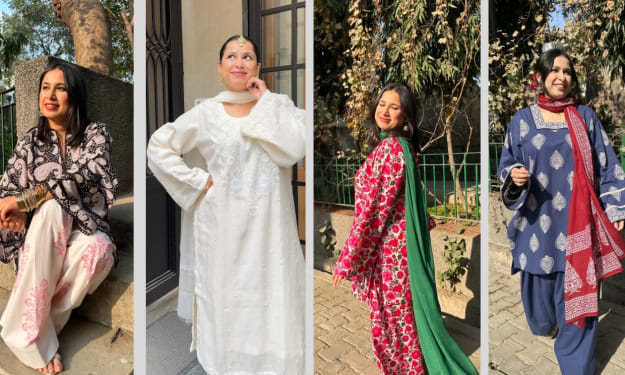
Across India, everyday ethnic dressing has evolved into something more relaxed and practical. Women today want outfits that look traditional yet feel comfortable enough for daily routines, small gatherings, and family celebrations. This is where the Pakistani Kurta Set naturally finds its place.
By fashion bloggerabout 8 hours ago in Styled
A Knight of the Seven Kingdoms Series Review (Season 1)
As one of the biggest properties in fantasy, A Song of Ice and Fire remains immensely popular with audiences. After reaching far into the past with House of the Dragon, a second spin-off was on the cards. A Knight of the Seven Kingdoms serves up a bite-sized slice of action and drama, but it still claims a spot among the best small-screen titles.
By Robert Cain7 days ago in Geeks


Comments
There are no comments for this story
Be the first to respond and start the conversation.