
Taking Fashion Back
Controlling your choices and designing your closet


Cutting ties with Fast Fashion
I have deliberately not shopped fast fashion for more than a year now. The recent global pandemic helped with that, but I also mean no online shopping at all. In fact, in that regard, it has been longer. Because my last Boohoo purchase was 3 years ago, and my last Asos was 4. I remember buying from Shein at some point before it became a huge thing, but upon logging in I realised that was in 2014! Time is weird. And so were my fashion decisions.
My point is for the past few years I have been making conscious efforts to curb my consumption of fast fashion, and that has culminated into the last year and a half of completely refusing to consume. Even before I was fully aware of how much the industry was contributing to global degradation, and specifically hurting my people, I was uncomfortable with the system of shopping here that seemed so disconnected from the process of making the clothes.
For background on why, I am Nigerian. Born and raised, then moved to the UK at 16 for architecture school. Now if you are from or have lived in west Africa you may already know the reason. And that is because we don’t really have a fast fashion industry. Definitely not in the way I’ve experienced here for several years. There are no mega stores with brand names that have branches on every corner, there are no international chains of cheaply produced clothing items that follow weekly trends, and there is no mall culture that celebrates and uplifts these systems. None of that exists for us, and honestly never has. Because for as long as I’ve been alive, we’ve had tailors. Yes, personal tailors, family tailors, event tailors, tailors just for clothing adjustments, tailors that have mini manual sewing machines that they go around with for repairs on the go. My family of 6, if we put our numbers together, has a combined tailor contact list of at least 20 people. And that doesn’t include my aunt is also a seamstress, or myself who has been for a few years now. And this is not particular to me or my relatives as having personal relationships with the maker of your clothes is as Nigerian as anything can be.
I had no idea why the west had seemed to phase out tailoring the first time I got here, so I just joined in what people did and bought what I needed from the nearest Primark. It was easy, it was fast, it was cheap. But after a while I realised it was also dangerous. Because by 2017 when I first started taking my love for fashion seriously and going into it professionally, starting out with illustration and design, I stumbled unto research that would form a cloud of guilt every time I entered a H&M.
How The Industry Hurts My People
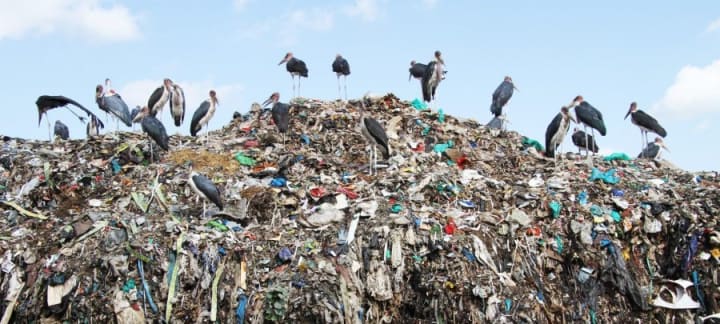
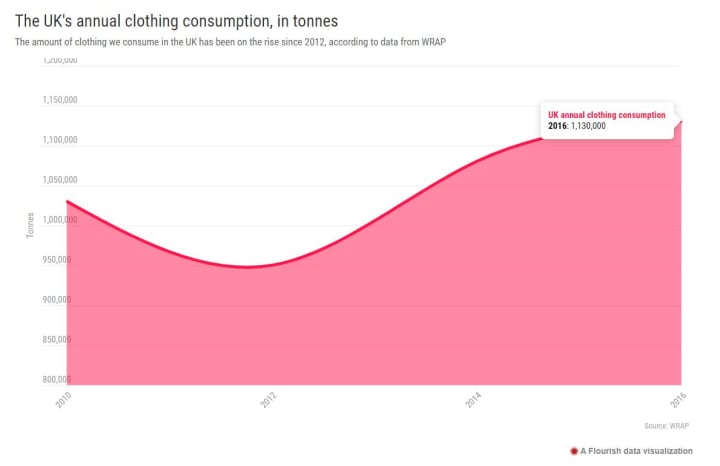
The UK alone produces about 1.5 billion tonnes of clothing items per year and throws out more than 70% of it. That is equivalent to about 2.5 billion pairs of jeans produced per year, and 1.75 billion paired of jeans thrown out every year. Do you want to guess where the absolute most of these billions end up? In African landfills. In fact, the second hand clothing industry, before the thrifting apps and sites like Depop became a thing, has been a growing one in Africa directly being fed by the western fashion industry. It is posited that this arose from a demand by African nations starting in the 1990s for more western clothing but seeing as power structures do not work in ways where the people getting landfills ask for the destruction, this is merely a dismissal of facts. Which are that the fast fashion industry has increased production of new clothing items by 400% in the last 2 decades, and this has coincided with the uptake of the lowest quality items, the ones not able to stay in the charity shops here, being shipped by the tonnes to African nations where most of them are left to rot simply because they are unusable. The industry that is then built from cleaning up western waste is then formed on the fragility of the fast fashion industry, which leaves African buyers entirely dependent on steady supply of actually wearable second-hand items. This supply chain then allows for the consistent flow of landfill bound clothing items, which are the majority of what is produced and what is donated. As a consumer, the fast fashion industry can then convince you that you are fine to purchase as much as you can as long as you donate it after, without ever needed to explain that the donations are harmful as well.
If I just made you feel guilty about your purchasing habits, good. But also, its not your fault. In my experience when you tell people how harmful their actions are, they want to stop. When you show them how, they want to learn. And if you make the learning fun and engaging, they’ll want to change. So that is my goal, to create a space where people learn about fashion and explore their personal style without the disconnection that has made exploitation so easy.
Sharing My Experience

I have been a fashion illustrator for more than a decade now, a designer for more than half a decade, and a seamstress for 3 years. And even though it has taken me decades to get here, I am here to tell you, it doesn’t have to be that hard. I just took the long route. And now that I’m here, what I want to do is build a bridge so that the people that come after have an easier time. So, what would a membership with me entail?
1. Exposure & Education: It was the consistent exposure to information about the planet that subconsciously begun to alter my relationship with clothes. Now every time I see a shirt the first thing in my mind is exactly how long it would take me to replicate. And when I see the price marked as £15 it sends a pang of guilt down my spine. Someone somewhere spent hours on this and made less than minimum wage for it.
With a membership you not only learn to immediately vet brands by spotting greenwashing and lack of details about workers right, but you will also get a monthly list of small brands that are fully invested in their sustainability practices and explorations into how. This will then create a base level of education that can be shared an allow for others to easily spot exploitative brands, and easily support due diligent ones.
2. Conscious Buying and Mental Design: If there is anything that everyone needs to do, its buy less. But even with purchases should come an understanding of what you’re actually purchasing. This disconnect is honestly what I think the biggest driver of over consumption is and curbing the system of thinking-to-buying starts with more thinking. There also needs to be strategic break of the emotional ties people have with shopping by directing the feelings towards creating.
The membership will come with a simple list of cognitive behaviours to practise that make it easier to say no even when inside the mall. And will begin to engage with shopping as a discovery of personal fashion more than of what is on the top of social media feeds. Even when there is a trend you enjoy, we will then begin learning how to thrift consciously and decide even before buying if it’s the best for the project. We will learn how to look for clothes that have the best fabric, how to style items that may not immediately speak to you, and how to buy in sizes that don’t exclude plus size people. No more hauls, just strategic choices.
3. Upcycling and reclaiming your closet: What may arguably be the hardest part to learn is actually taking clothes that you may find less than ideal and making them into the outfit you want. But it will also be the most fun! Because here you will learn how to design what you want to wear and take it from mind to reality. Sewing machine encouraged but not required as part of my goal to democratize sustainable fashion and make it as accessible.
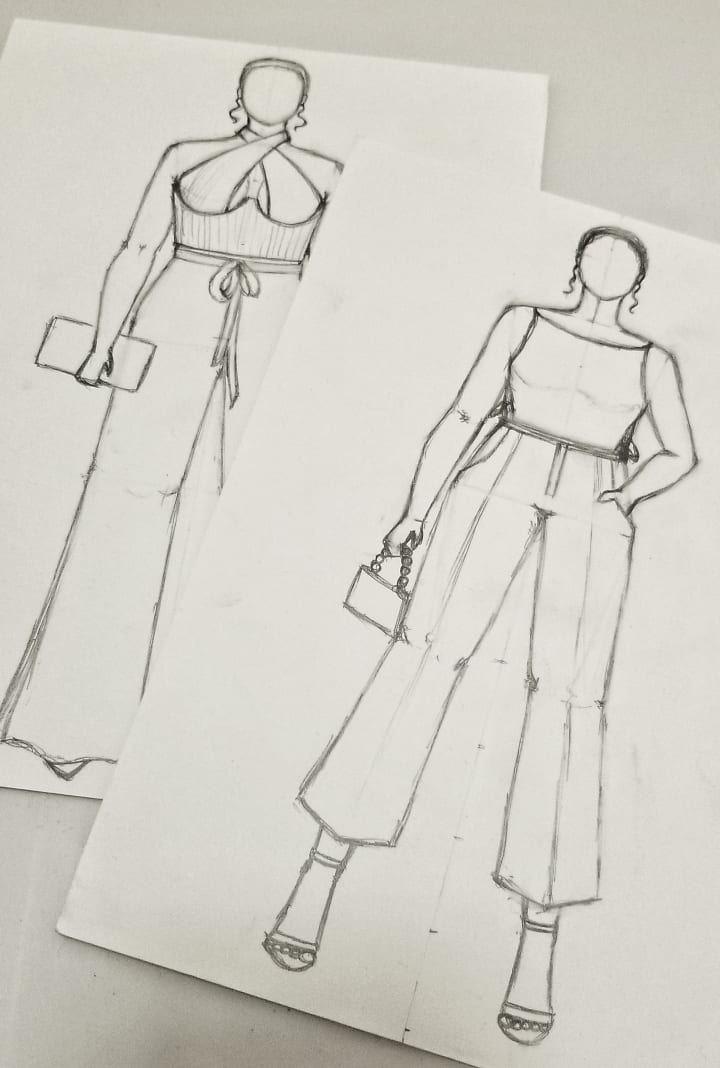
With the membership there will be basic illustration classes that teach you simple techniques for representing your body type, hand stitching tutorials for less demanding projects and people who don’t have access to a machine, and there will be bi-weekly projects for people to take things thrifted or already in their closet and upgrade them into the trends they want to see themselves in. There will also be confidence check-ins to make sure that members are exploring within their comfort levels while still feeling brave enough to push for new styling techniques when they feel the pull to.
My hope with this is to give back even a fraction of what I’ve been given over the years, by allowing for enough people to be equipped with enough choices to offset the fast fashion industry. I believe that if even 50% of fast fashion consumers knew they had viable alternatives, the industry would be forced to change. And if I can have a hand in that, then I can do what I can in my small way to save my people back home from further degradation.
Resources
https://www.fashionroundtable.co.uk/news/2020/4/14/6rr73axzj7qlgzvi811wwqu4myvex3
https://borgenproject.org/fast-fashion-in-west-africa/
https://unearthed.greenpeace.org/2019/09/12/fast-facts-about-fast-fashion/
https://ecowarriorprincess.net/2020/02/second-hand-clothing-threat-africa-textile-industry-not-all-bad/
About the Creator
Keep reading
More stories from Obianuju Ugwu and writers in Styled and other communities.
Wild Card Weekend Recap: What Happens Now?
I think I figured out why I love Wild Card Weekend so much. It's because it's the first playoff anything of the calendar year. The NFL season starts in the fall, and once upon a time, the champion was crowned either on or slightly before New Year's. The evolution of the NFL schedule has resulted in the playoffs starting just into the New Year, and currently, the final week of the season falls on the first weekend of the New Year, with Wild Card Weekend coming a week after that. So yes, chronologically, the NFL's Wild Card Weekend serves as the first playoff anything of the calendar year.
By Clyde E. Dawkins7 days ago in Unbalanced

Comments
There are no comments for this story
Be the first to respond and start the conversation.