
Styled for life
Maya had always believed that style was something you wore.

M Mehran
Maya had always believed that style was something you wore. Shoes polished, hair perfectly in place, clothes that matched the latest trend. That was what magazines showed, what influencers flaunted, what her friends seemed to master without effort.
But Maya? She was the opposite of styled. Her wardrobe was a battlefield of mismatched colors, she often left the house with paint stains on her sleeves, and her hair had a stubborn curl that refused to be tamed. She laughed it off, telling herself, “Style is for the rich.”
That belief held until the day she met Rosa.
---
Rosa owned a tiny boutique tucked into a quiet corner of the city. It wasn’t flashy—no neon signs or polished glass windows. Instead, sunlight streamed through lace curtains, catching on clothes that looked less like fashion and more like art. Dresses with flowing cuts, jackets stitched with bold colors, scarves that seemed to dance even on the hanger.
Maya wandered in by accident one Saturday afternoon, lured by curiosity.
“Welcome,” Rosa said warmly, her eyes crinkling at the edges. She was in her sixties, dressed in a long, emerald-green dress that shimmered when she moved. Her silver hair was wrapped in a scarf patterned with deep red roses. She looked like a painting come to life.
Maya glanced around, embarrassed. “I’m just browsing.”
Rosa smiled knowingly. “Of course. But let me ask you something. Do you wear clothes… or do your clothes wear you?”
The question startled Maya. She had never thought of it that way.
---
Rosa guided her to a mirror and draped a golden scarf across her shoulders. At first, Maya felt ridiculous. But then she looked closely. Something about the scarf’s warmth, the way it highlighted her dark eyes, made her stand taller.
“Style,” Rosa said softly, “isn’t about trends. It’s about truth. It’s how you show the world who you are without saying a word.”
Those words sank deep into Maya’s heart.
---
Over the next few weeks, Maya returned to the boutique. Not always to buy—sometimes just to talk. Rosa shared stories of people she had styled: a shy teacher who discovered confidence in bold colors, a widower who found joy again in patterned shirts, a teenager who realized style wasn’t about hiding but shining.
Each story had the same theme: style was not decoration. It was identity.
Inspired, Maya began to experiment. She stopped worrying about what was “in” and started asking herself: What feels like me?
She traded stiff blazers for soft fabrics that flowed when she walked. She wore earrings shaped like tiny suns because they made her smile. She even let her stubborn curls bounce free, realizing they gave her character.
And something extraordinary happened. The more she dressed for herself, the more confident she felt. People noticed—not the clothes, but the glow. Colleagues complimented her energy. Friends said she seemed “different.” Strangers smiled at her in the street.
She hadn’t just changed her wardrobe. She had styled her life.
---
One evening, Maya stood in front of her mirror, wearing a deep blue dress she’d chosen for no reason other than the way it made her heart lift. She thought of Rosa’s words: “It’s how you show the world who you are.”
For the first time, Maya didn’t see flaws or awkwardness. She saw a woman who had finally claimed herself.
---
Months later, when Rosa decided to retire, she invited Maya to her shop one last time.
“I want you to take something,” Rosa said, pointing to a mannequin draped in a vibrant red coat.
Maya shook her head. “It’s too much. I’d never pull it off.”
Rosa only smiled. “That’s what you used to say. But look again.”
Maya slipped the coat on. It was bold, striking, alive. And this time, she didn’t feel like an imposter. She felt unstoppable.
Rosa clasped her hands. “Now you understand. Style is not about hiding. It is about becoming visible—to yourself first, and then to the world.”
---
Years later, Maya would remember that moment every time someone asked her about her “look.” They assumed she followed fashion blogs or luxury brands. She always laughed and replied:
“I don’t follow trends. I follow truth. Style isn’t what you wear—it’s who you are, stitched into every choice you make.”
And when she walked into a room, people noticed—not the clothes, but the confidence, the authenticity, the quiet rebellion of someone who had learned the real meaning of being styled.
About the Creator
Keep reading
More stories from Muhammad Mehran and writers in Styled and other communities.
Styled for Success
M Mehran Rania always believed that first impressions mattered. Every morning, she spent hours picking the perfect outfit, coordinating colors, and ensuring that her hair and makeup were flawless. Her friends often teased her, calling her the “styled queen” of their college. But to Rania, it was more than vanity—it was armor.
By Muhammad Mehran6 months ago in Styled
Why Half Wig Offers the Best Comfort
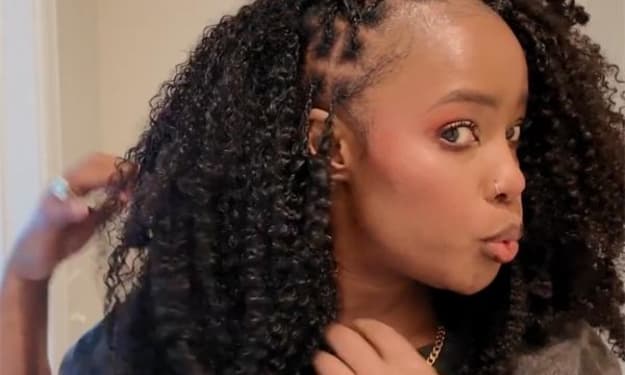
When you ask any wig lover what the most comfortable protective style is, many will shout half wig right away. I’ve worn wigs for years, and I can honestly say half wigs hit different when it comes to all-day comfort. They don’t just look natural—they feel like nothing at all, even if you wear them from morning to night. In this post, I’m breaking down exactly why half wig offers the best comfort, and why you’ll never want to go back once you try one.
By manman zhai5 days ago in Styled


Comments
There are no comments for this story
Be the first to respond and start the conversation.