
Salwar Kameez vs Western Wear for Republic Day – What Feels More Appropriate?
Choosing outfits that reflect identity, respect, and occasion


Republic Day is a moment of reflection rather than display. It marks the values that shape everyday Indian life dignity, equality, and shared identity. As a result, what feels appropriate to wear on 26 January is often less about fashion trends and more about intention. In this context, salwar kameez for women often emerges as a natural choice, making the comparison between salwar kameez and western wear especially relevant for Republic Day dressing.
Both have a place in modern wardrobes. Yet, when it comes to Republic Day, the difference lies not in what is acceptable, but in what feels aligned with the meaning of the day.
Dressing With Context in Mind
National occasions naturally carry a different emotional tone than personal celebrations. Republic Day events whether at workplaces, schools, or community gatherings are usually formal, respectful, and understated. Clothing that blends into this atmosphere tends to feel more fitting than outfits that draw attention to themselves.
This is why salwar kameez for women often feels like a natural choice. It carries cultural familiarity without being ceremonial, allowing the focus to remain on the occasion rather than the outfit.
Salwar Kameez: Familiar, Grounded, and Intentional
Salwar kameez has long been part of everyday Indian life. Known across regions as shalwar kameez or Indian suit, it represents lived culture rather than occasion-only dressing. On Republic Day, this familiarity becomes meaningful.
The silhouette doesn’t rely on symbolism to express identity. Its presence alone reflects continuity a quiet acknowledgement of tradition woven into daily life. Whether worn in soft whites, muted tones, or subtle colour accents, indian salwar kameez feels respectful without being performative.
Another reason salwar kameez feels appropriate is its adaptability. It works across settings from formal flag-hoisting ceremonies to office observances without feeling out of place. The outfit supports the moment instead of competing with it.
Western Wear: Modern, Neutral, but Context-Dependent
Western wear, on the other hand, reflects globalised modern living. Trousers, shirts, dresses, and coordinated sets are common in everyday workwear and social settings. On Republic Day, western wear is not inappropriate but it can sometimes feel neutral rather than meaningful.
In formal settings, tailored western outfits can appear polished and respectful. However, they often lack cultural context. They don’t necessarily reflect the significance of the day, which may make them feel emotionally disconnected from the occasion.
That said, simplicity matters. Minimal, understated western wear often feels more appropriate than bold or casual styles on 26 January.
Appropriateness Is About Alignment, Not Rules
Republic Day dressing doesn’t come with strict guidelines. The idea of appropriateness is less about what one can wear and more about what feels aligned with the day’s purpose.
Salwar kameez naturally carries that alignment. As a salwar suit, it bridges tradition and modernity without leaning too heavily into either. It allows women to participate in the day’s significance while remaining comfortable and confident.
Western wear, while perfectly acceptable, may feel more functional than expressive on Republic Day especially in settings where cultural representation matters.
Simplicity Over Statement Dressing
In 2026, Republic Day fashion leans toward restraint. Loud prints, heavy embellishment, or dramatic silhouettes whether ethnic or western tend to feel out of sync with the occasion.
A thoughtfully chosen salwar kameez supports this mindset. Clean cuts, soft colours, and minimal styling reflect dignity rather than display. The outfit doesn’t need explanation it quietly fits.
Emotional Connection Matters
Clothing often carries emotional weight, especially on days of national importance. Salwar kameez connects to memory, familiarity, and shared cultural experience. This connection gives it an edge on Republic Day, when collective identity takes precedence over personal expression.
Western wear may reflect modern lifestyles, but salwar kameez reflects shared heritage a subtle but meaningful difference.
Final Thought
So, what feels more appropriate on Republic Day salwar kameez or western wear? In 2026, the answer lies in intention. While western wear can be respectful and polished, salwar kameez feels more naturally aligned with the spirit of the day. Whether you call it a shalwar kameez, Indian suit, or salwar suit, it represents cultural continuity without spectacle. On a day that honours the foundation of the nation, dressing with quiet intention often speaks the loudest.
About the Creator
Amit Mandal
Style explorer | Ethnic wear enthusiast | Believer in power dressing Sharing outfit inspirations, styling tips, and all things fashion that speak you.
Keep reading
More stories from Amit Mandal and writers in Styled and other communities.
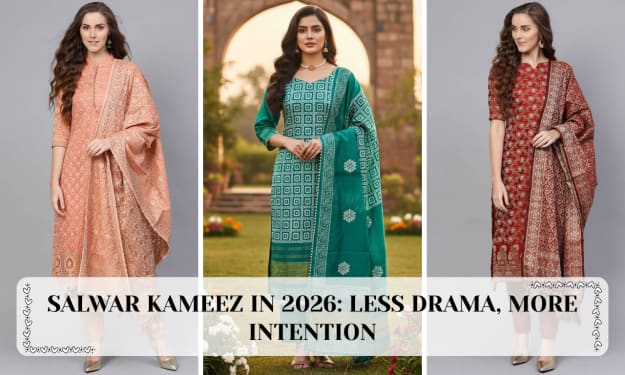
Salwar Kameez in 2026: Less Drama, More Intention
Fashion in 2026 is noticeably quieter. The emphasis has shifted from statement-making outfits to pieces that feel considered, wearable, and emotionally aligned with everyday life. In this evolving landscape, salwar kameez has taken on a new role not as dramatic occasion wear, but as a thoughtfully chosen staple defined by intention rather than excess.
By Amit Mandal3 days ago in Styled
New Clothing Is Out, Accessories Are In
Overconsumption is a common theme, I think we have all been hearing about over the past few years. Most of us are trying to be better about buying items we really use, quality over quantity. I know I have become more conscious over the years about what I really end up using, and the thing is: it's not a lot.
By Grace Genet6 days ago in Styled
Y2K Fashion 2026: Trends, Staples, and How to Style the Revival
The Y2K fashion revival is bigger than ever in 2026. Once a late‑90s and early‑2000s trend, Y2K style has now become a major cultural moment in streetwear and mainstream fashion thanks to influencers, social media, and designers remixing nostalgic aesthetics for modern wardrobes. From rhinestone belts to velour tracksuits and platform sneakers, this fashion wave mixes playful glam with bold street style.
By Ryan Riceklton4 days ago in Styled
A Failed Artist, A Disillusioned Poet, An Underpaid Game Show Host
I took my son and niece to Gori, a small town in Georgia where Joseph Stalin was born. They talked me into visiting the Stalin's Museum, the largest in the post-Soviet space. I had resisted going there because I just can't stand the monster and know enough about him, or so I thought.
By Lana V Lynx4 days ago in FYI


Comments
There are no comments for this story
Be the first to respond and start the conversation.