
India Luxury Jewelry Market Size & Forecast 2026–2034
Rising Affluence, Wedding Culture, and Certified Brilliance Propel India’s Premium Jewelry Industry

India Luxury Jewelry Market Outlook
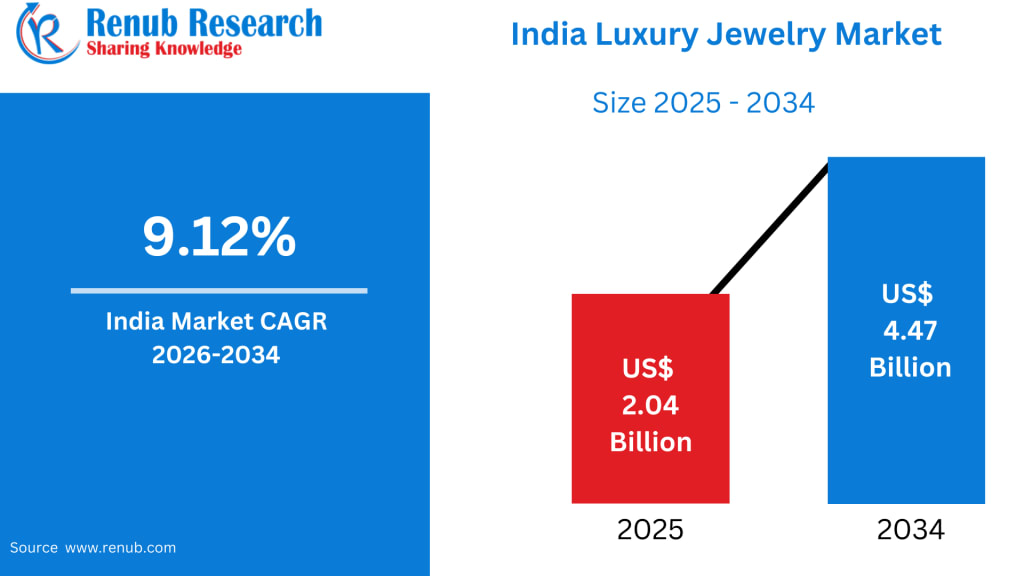
The India luxury jewelry market is set to increase significantly, from US$ 2.04 billion in 2025 to US$ 4.47 billion by 2034, buoyed by increasing disposable incomes, rising urban affluence, and a growing fondness for premium and custom designs. During 2026–2034, the market is expected to expand at a CAGR of 9.12%, driven by strong demand for branded fine jewelry, wider retail penetration, and surging consumer confidence in hallmark-certified products.
Moreover, the growing role of digital platforms, luxury boutiques, and the entry of global brands will further accelerate long-term market expansion. According to insights from Renub Research, India’s unique combination of tradition, aspiration, and modernization is reshaping the way consumers perceive and purchase luxury jewelry.
India Luxury Jewelry Market Overview
Luxury jewelry refers to high-end ornaments crafted from precious materials such as gold, platinum, diamonds, emeralds, rubies, sapphires, and rare pearls. Distinguished by superior craftsmanship, certified gemstones, hallmark authenticity, and limited-edition designs, luxury jewelry differs sharply from mass-market offerings. These products are often handcrafted by skilled artisans or produced by renowned international and Indian brands with longstanding design legacies.
In India, luxury jewelry has evolved from being a purely traditional asset into a powerful symbol of status, heritage, and personal expression. Consumers increasingly seek branded and certified products that combine aesthetics with long-term value. Weddings, festivals, and family celebrations remain major purchase occasions, while younger buyers are gravitating toward modern designs, customization, and diamond-centric collections. The expansion of luxury retail outlets, international brand entries, and premium online platforms has made luxury jewelry more accessible than ever before.
India’s deep cultural roots combined with rising lifestyle aspirations are driving sustained growth in this premium segment.
Growth Drivers in the India Luxury Jewelry Market
1. Increasing Disposable Income and Expanding Affluent Class
One of the most powerful growth engines for luxury jewelry in India is the rapid rise in disposable income. As economic stability strengthens, more consumers—especially young professionals, entrepreneurs, and high-net-worth individuals—are willing to invest in premium gold, diamond, and gemstone jewelry.
Urbanization has intensified demand in metro and Tier-1 cities, where luxury consumption is increasingly viewed as a reflection of success and sophistication. Women’s growing financial independence has also expanded the customer base, as many now purchase fine jewelry for personal expression rather than only for weddings or investments.
India’s per-capita disposable income rose from US$ 2.11 thousand in 2019 to US$ 2.54 thousand in 2023, and is projected to reach US$ 4.34 thousand by 2029, directly boosting purchasing power and discretionary spending on luxury goods.
2. Popularity of Branded and Certified Jewelry
The shift from unorganized to organized retail has significantly strengthened India’s luxury jewelry market. Consumers increasingly prefer branded jewelry due to assured purity, certified gemstones, ethical sourcing, and transparent pricing. Leading brands invest in design innovation, hallmarking standards, and premium store experiences, reinforcing trust and credibility.
Luxury malls, flagship boutiques, and personalized consultations are transforming the shopping journey into an experience rather than a transaction. The emergence of lab-grown diamond brands further reflects changing consumer priorities around sustainability and transparency.
For example, in October 2025, BLING opened in Kamla Nagar, Delhi, positioning itself as a luxury destination for lab-grown diamonds and gold jewelry, combining ethical craftsmanship with contemporary design. Such developments are expanding the definition of luxury while attracting younger, socially conscious buyers.
3. Wedding Culture and Cultural Significance
India’s wedding economy remains a cornerstone of luxury jewelry demand. Bridal jewelry continues to dominate the premium segment, with families prioritizing gold, diamonds, and precious stones for ceremonies and heirloom pieces.
Festivals such as Diwali, Akshaya Tritiya, Dussehra, and Pongal also trigger significant jewelry purchases, as ornaments symbolize prosperity and auspicious beginnings. Beyond tradition, today’s brides increasingly opt for designer sets, bespoke creations, and diamond-centric collections that blend heritage with modern aesthetics.
Because jewelry carries emotional and generational value, demand remains resilient even during economic fluctuations, ensuring long-term stability for the luxury segment.
Challenges in the India Luxury Jewelry Market
1. High Price Sensitivity and Economic Volatility
Despite rising incomes, price sensitivity remains a major barrier. Fluctuations in gold and diamond prices significantly influence buying decisions, often leading consumers to postpone non-essential purchases during periods of economic uncertainty. High import duties on precious metals and gemstones further elevate retail prices, limiting broader accessibility.
Middle-income households often prefer traditional gold jewelry over premium designer collections, while even affluent buyers may shift to lighter designs when prices surge. These factors can restrain market growth during volatile periods.
2. Competition from Minimalist and Affordable Jewelry
The growing popularity of lightweight, minimalist, and affordable jewelry poses competitive pressure. Younger consumers increasingly prefer stylish everyday wear over high-value purchases. Online fashion jewelry brands, silver collections, and lab-grown alternatives offer attractive designs at lower price points.
Fast-changing fashion cycles and a desire for variety reduce the frequency of luxury purchases. To remain competitive, premium brands must continuously innovate in design, marketing, and customer experience to differentiate themselves in an increasingly crowded marketplace.
Segment Analysis
India Luxury Gold Jewelry Market
Gold remains the backbone of India’s luxury jewelry industry. Deeply rooted in cultural traditions, gold symbolizes wealth, prosperity, and legacy. Luxury gold jewelry features intricate craftsmanship, temple motifs, antique finishes, and contemporary designs that appeal to both traditional and modern buyers.
High-net-worth consumers value purity, exclusivity, and brand reputation. Limited-edition collections, designer sets, and lightweight luxury pieces are expanding the market. Additionally, gold’s status as a safe investment ensures continued demand even during economic uncertainty.
India Luxury Diamond Jewelry Market
Luxury diamond jewelry is gaining rapid momentum as consumers increasingly seek elegance, global appeal, and certified authenticity. Engagement rings, anniversary gifts, and personal luxury purchases are driving demand, particularly among younger, urban buyers.
International brands and Indian designers are launching sophisticated collections aligned with modern fashion trends. With rising awareness of the four Cs—cut, clarity, color, and carat—buyers are becoming more discerning, strengthening the premium segment’s credibility and long-term value.
India Luxury Precious Pearl Jewelry Market
Luxury pearl jewelry, known for its timeless elegance and understated sophistication, is attracting affluent consumers seeking rarity and exclusivity. High-quality pearls such as South Sea, Tahitian, and Akoya are especially popular in bridal sets, necklaces, and formal wear.
Innovative designs that combine pearls with diamonds and gold are reshaping the segment, while celebrity endorsements and global fashion trends continue to elevate its appeal among elite, fashion-forward demographics.
India Luxury Necklace Jewelry Market
Necklaces remain one of the most significant categories in the luxury jewelry market, particularly for weddings and ceremonial occasions. Bridal sets, temple-style designs, diamond chokers, and heritage-inspired pieces dominate demand.
Social media influence and celebrity styling have amplified consumer interest in premium necklaces, while bespoke designer collections are turning special occasions into opportunities for aspirational purchases.
India Luxury Bracelet Jewelry Market
Luxury bracelets are growing in popularity due to their versatility across traditional and western attire. Tennis bracelets, charm designs, minimalist diamond bands, and kada-style bracelets attract diverse age groups.
These pieces are increasingly chosen as gifts for milestones such as anniversaries, achievements, and personal celebrations. Customization and global fashion influences continue to fuel growth in this segment.
Distribution and Consumer Dynamics
India Luxury Jewelry Offline Market
Offline retail remains the backbone of luxury jewelry sales in India. High-value purchases demand physical inspection, personalized consultation, and trust in authenticity. Premium showrooms offer private viewing areas, bespoke design services, and direct interaction with experts, enhancing the customer experience.
Wedding seasons continue to drive large in-store purchases, ensuring the dominance of offline channels despite the growth of digital platforms.
India Female Luxury Jewelry Market
Women represent the largest consumer segment in India’s luxury jewelry market. Rising workforce participation, financial independence, and evolving lifestyle aspirations have transformed women into key decision-makers.
Modern buyers favor bold designs, diamond jewelry, and personalized pieces for everyday elegance, while traditional bridal and gold jewelry remain strong. Social media influence, global exposure, and empowerment trends continue to position women as the primary growth drivers.
Regional Insights
Maharashtra Luxury Jewelry Market
Maharashtra, led by Mumbai and Pune, is one of India’s most lucrative luxury jewelry markets. Mumbai’s status as a fashion and entertainment capital, combined with a strong luxury retail ecosystem, drives demand for high-end jewelry. Pune’s growing IT and business sectors further contribute to premium consumption. Weddings, festivals, and corporate gifting sustain strong market momentum.
Andhra Pradesh Luxury Jewelry Market
Andhra Pradesh remains a major market due to its cultural affinity with gold and gemstones. Luxury gold sets, temple jewelry, and diamond ornaments dominate weddings and festivals. Urban growth in Visakhapatnam, Vijayawada, and Guntur is boosting spending on premium lifestyle products, while the state’s craftsmanship heritage continues to influence luxury preferences.
Uttar Pradesh Luxury Jewelry Market
Uttar Pradesh offers substantial growth potential as cities such as Lucknow, Noida, Kanpur, and Varanasi expand their premium retail presence. Gold and diamond jewelry are central to weddings and festivals, with affluent families investing in high-end bridal collections. Rising urbanization, organized retail, and exposure to national brands are positioning the state as a key luxury market.
Market Segmentation
By Raw Material:
Gold, Platinum, Diamond, Gemstone, Precious Pearl, Others
By Product:
Necklace, Ring, Bracelet, Earring, Others
By Distribution Channel:
Online, Offline
By End-User:
Male, Female, Children
By Key States:
Maharashtra, Tamil Nadu, Karnataka, Gujarat, Uttar Pradesh, West Bengal, Rajasthan, Telangana, Andhra Pradesh, Madhya Pradesh
Competitive Landscape
The market includes prominent international and domestic luxury brands, each analyzed across four key viewpoints: Overview, Key Person, Recent Developments, and Revenue Analysis.
Major Companies:
Guccio Gucci S.p.A., The Swatch Group Ltd, Compagnie Financière Richemont SA, T&CO., GRAFF, Louis Vuitton, Signet Jewelers, Chopard, MIKIMOTO, Pandora
These players continue to invest in design innovation, ethical sourcing, retail expansion, and digital engagement to strengthen their presence in India’s premium jewelry ecosystem.
Final Thoughts
India’s luxury jewelry market is entering a transformative decade. Backed by rising disposable incomes, a growing affluent class, cultural traditions, and increasing preference for branded and certified products, the industry is poised for strong long-term growth. According to Renub Research, the market’s expansion from US$ 2.04 billion in 2025 to US$ 4.47 billion by 2034, at a 9.12% CAGR, reflects both economic progress and shifting consumer aspirations.
While challenges such as price sensitivity and competition from affordable alternatives persist, innovation in design, ethical practices, digital retail, and customer experience will continue to redefine luxury in India. Blending heritage with modernity, the Indian luxury jewelry market stands as a powerful symbol of wealth, identity, and evolving lifestyle—making it one of the most promising premium sectors in the country’s consumer economy.
About the Creator
Renub Research
Renub Research is a Market Research and Consulting Company. We have more than 15 years of experience especially in international Business-to-Business Researches, Surveys and Consulting. Call Us : +1-478-202-3244
Keep reading
More stories from Renub Research and writers in Styled and other communities.
Beauty and Personal Care Products Market Size and Forecast (2025–2033)
Global Beauty and Personal Care Products Market Overview The global beauty and personal care products market is undergoing a profound transformation, shaped by rising wellness awareness, digital-first consumer engagement, and a strong shift toward ethical and sustainable consumption. According to Renub Research, the market is expected to reach US$ 924.86 billion by 2033, expanding from US$ 582.55 billion in 2024, at a CAGR of 5.27% during 2025–2033.
By Renub Research11 days ago in Styled
Latest Women’s Fashion News: Defining Trends, Styles, and Innovations Shaping 2026
Women’s fashion in 2026 is undergoing a decisive transformation driven by sustainability, technology, cultural fluidity, and a renewed emphasis on individuality. Designers, brands, and consumers alike are rethinking what fashion means in a world shaped by digital acceleration, climate awareness, and evolving lifestyles. From runways in Paris and Milan to street style in New York and Seoul, the latest women’s fashion news reflects a dynamic blend of heritage craftsmanship and future-forward innovation.
By duran lorena5 days ago in Styled
Bruce Lee and The God of War: Kuan Ti
It starts with love.. The Power to the God Of War and Wealth Walk into a Chinese restaurant (even in Oklahoma, USA), a Chinese police station, a kung fu martial arts studio or even a Chinese temple and you often see a red faced warrior holding a heavy quan-do (spear like weapon).
By WILD WAYNE : The Dragon King3 days ago in Chapters


Comments
There are no comments for this story
Be the first to respond and start the conversation.