
How Many Human Hair Bundles Do You Need for a Sew-in?
My Honest Experience

If you’re new to sew-in weaves, the biggest head-scratcher is probably “how many human hair bundles do I actually need?” Trust me, I’ve been there—my first sew-in was a total disaster because I skimped on bundles, ending up with a lopsided, thin mess that looked like a bad wig. After years of trial and error (and a few trips to my go-to stylist to fix my mistakes), I’ve finally nailed down the formula, and I’m here to spill the tea so you don’t make the same blunders.
First off, let’s get one thing straight: there’s no one-size-fits-all answer, but your hair length and desired fullness are the two main factors that’ll make or break your choice. Let’s start with length because that’s the most straightforward. For short to medium lengths—think 10 to 14 inches—you can get away with 2 bundles. I rocked a 12-inch sew-in with 2 bundles last summer, and it was perfect for a sleek bob vibe. It laid flat, didn’t look bulky, and felt super natural—like my own hair but with a little extra oomph. Pro tip: if your natural hair is on the thinner side, even 12 inches might need a third bundle to avoid looking sparse, but if you’ve got thick hair, 2 is solid.
Now, when you go longer—16 inches and above—you definitely need 3 bundles, minimum. I learned this the hard way when I tried a 18-inch sew-in with 2 bundles. I thought, “Hey, it’s just a few extra inches, no biggie,” but man, was I wrong. The hair looked stringy at the ends, and the tracks were totally visible when I pulled my hair up. My stylist gave me a side-eye and said, “Girl, you can’t cut corners with long weaves—longer hair means more weight, so you need more bundles to distribute it evenly.” She added a third bundle, and suddenly it was game-changing—full, bouncy, and no more peeking tracks. For lengths over 22 inches? Don’t even think about less than 4 bundles. My cousin did a 24-inch body wave sew-in with 4 bundles, and it’s so lush you’d swear it’s her natural hair; she gets compliments every time she steps out.
Another thing to consider is the texture of the hair. Curly or wavy hair tends to look fuller than straight hair, so you might get away with one less bundle if you’re going for loose waves. Straight bundles is more see-through, though—so if you want that sleek, voluminous straight sew-in, err on the side of extra bundles. I once tried straight 16-inch hair with 2 bundles, and it looked so flat I wanted to cry; adding a third made all the difference.
Oh, and let’s not forget about the closure or frontal! If you’re using a closure (which is smaller, around 4x4 inches), it doesn’t add much volume, so you still need the same number of bundles. A frontal (which goes across your hairline, 13x4 or 13x6 inches) is a bit bigger, but I still recommend sticking to the 2-3-4 bundle rule depending on length. I use frontals 9 times out of 10 because I love the natural hairline look, and I’ve never needed fewer bundles because of it—if anything, the frontal makes you want more volume to match the seamless hairline. Speaking of natural-looking options, glueless wigs and half wigs are a whole different ballgame if you’re not dead set on a sew-in—they’re hassle-free and don’t require any stitching, but if you ever decide to switch back to sew-ins after rocking glueless wigs, just remember the bundle rule still applies because the fullness and length needs are pretty much the same.
At the end of the day, it’s better to have one extra bundle than one too few. You can always return unopened bundles (most reputable hair stores let you do that), but fixing a thin sew-in will cost you more time and money. My best advice? Talk to your stylist before you buy—they know your hair type and desired look better than anyone. But if you’re doing a DIY sew-in (props to you, that’s a skill!), stick to this: 2 bundles for 10-14 inches, 3 for 16-20 inches, 4 for 22+ inches. That’s the golden rule I live by now, and my sew-ins have never looked better.
About the Creator
Keep reading
More stories from manman zhai and writers in Styled and other communities.
2026 Spring’s Hottest Glueless Human Hair Wigs
Let’s keep it 100—finding a wig that’s cute, comfortable, and doesn’t require a whole tube of glue? That’s the holy grail for us Black queens. After years of struggling with sticky lace fronts that left my edges fried and my patience thin, I swore off glued wigs for good. And let me tell you, 2026 spring is delivering the goods with glueless human hair wigs options that hit different. No more stressing about melting glue in the sun or ruining my natural hair—just easy, flawless slay all day long. Today, I’m breaking down the three hottest styles you need in your collection: half wigs, V-part wigs, and M-cap wigs. Trust me, these aren’t your grandma’s wigs—they’re the secret to looking put-together without the hassle.
By manman zhai2 months ago in Styled
10 Stylish Ways to Wear a Kaftan Dress
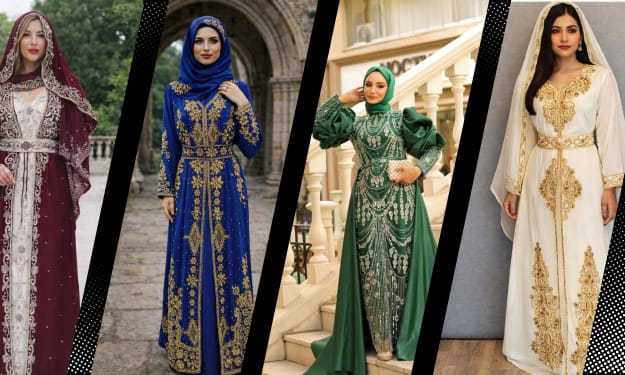
One of the simplest outfits to style in kaftan dresses. They are snazzy and practical and work with countless looks. Through the years, kaftan makes a journey from wearing among cultures to its introduction in modern wardrobes. Kaftan dress is very much loved by women who prefer modest fashion and islamic clothing as it can be elegant yet comfortable.
By Stylewithme2 days ago in Styled


Comments
There are no comments for this story
Be the first to respond and start the conversation.