
Holy 'Degrassi', This Fashion Trend Went There
The return of Manny Santos' favorite fashion trend has returned with even more bedazzled.

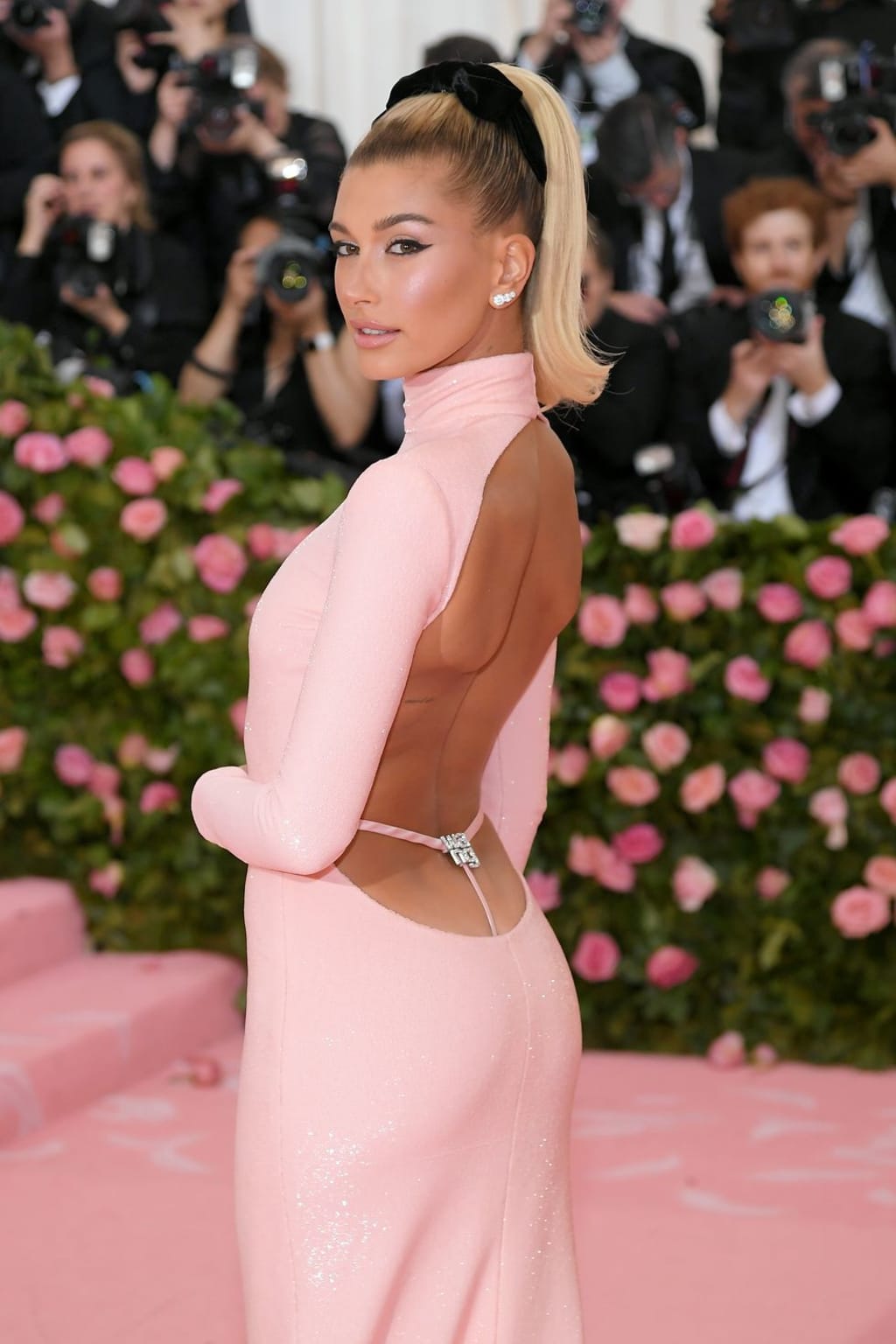
If you were a 90’s kid, you may remember a fashion trend known as the “whale tail”. It debuted in Jean Paul Gaultier’s 1997 fashion show and is basically when someone wears a thong so it is visible on their back.
If your my age or younger, you are likely too young to remember that this style debuted on the runway at a Jean Paul Gaultier show in 1997, and not simply a side effect of wearing the very popular ultra-low-rider jeans.
Thongs were further highlighted by the very popular “Thong Song” that hit airwaves in 1999 from Sisqo.
A true “90’s kid” will remember the moment that Manny Santos wore the look on Degrassi and all the other middle school boys lost their minds trying to get a look at her bare ass. The point of the episode highlighted the hypocrisy of slut-shaming thrown at young women that young men do not receive, and the struggle young people face when they want to be seen as sexual when they don’t understand what that entails. It was a great episode that also put a young Woman of Color at the center.
The style also made an appearance on the big screen in the high school comedy Superbad, when the scene-stealing McLovin following his crush down the hall, his eyes never leaving her backside until she spun around and called him out. The entire moment, much like the boys checking out Manny in Degrassi, is completely from the perspective of the boy’s.
In Superbad, it’s 100% male gaze and we know nothing about the girl walking away from the camera. In Degrassi, we actually do get the female perspective! But Manny wants to be sexy so that guys will think she’s sexy. She’s again defining herself based on the male gaze, which is totally normal when you’re young, but not necessarily a thought process to aspire to.
I’m sorry to say, this “classic” look returned back in 2019, gained traction in 2020, and appears to be continuing on in 2021 when it’d probably be better off being left alone.
It makes sense that in a year where people are at home and wearing sweatpants that a rise in visible underwear would happen. You’re not really thinking about what people can see beyond the frame of a zoom screen and are worried more about comfortable. But this nostalgic return came out of something else.
Now, hear me out for a second. My issue with this trend actually has nothing to do with body shaming or slut-shaming or telling people what age is appropriate to begin exploring their sexuality. I’m someone who is very proud of their figure and loves to show it off, if only for myself! My favorite pair of jeans includes a giant star on the butt, highlighting a part of my body that I’m very proud of and love. The seams emphasize the curves and the denim has the perfect fit for my hourglass figure.
What does a g-string do for an ass? It doesn’t provide support for your jiggle. It doesn’t wrap around in a way that emphasizes the curves. It’s a strap. And while some of the “built in” ones that are currently circulating are creating interesting cut outs and peaks of skin, most just drag the line of someone’s buttcrack (for lack of a better word) higher and draw a horizontal line across your back that actually makes it look wider. It’s not flattering, it’s only purpose is to remind the viewer that an ass is nearby and to make more conservative folks shake their heads in disapproval.
From a cultural standpoint, people should be able to wear what they want when they want, but if there is one thing we’ve learned this year, it’s that everything is political. What you wear says something about you, your thought process, and what you support. So before we all drag this trend from 2020 into 2021, let’s take a look at where it came from and ask if it’s what we really want.
The most prominent display of what is being called the “built-in g-string” was seen a few years ago on Hailey Baldwin. She received a great deal of positive press for the look and it appears to have ushered in a wave that other big names picked up on in Fall 2020.
I personally think this take on the style is interesting and there is something elevated about it. I also think it looks great on Beyonce on the cover of British Vogue! How could anyone be upset by anything Beyonce wears? There is an element of this trend that could work if only it didn’t have such a patriarchal history behind it.
When it comes to fashion, style, design, etc., trends tend to move in 20-year cycles, which is why we’re seeing a return to late 90’s trends slowly dying out and a rise in things like bedazzled denim and velour leisurewear. But where did the idea behind the “whale tail” come from?
Honestly, the idea of “underwear as outwear” goes back centuries to when “codpieces” began appearing on the outside of male garb. Whenever fashion is looking to push the envelope and find a new way to be sexy, pieces that are closest to the human skin become highlighted.
Just think of the slip dresses that became the star of the “flapper” style in the 1920s as fabrics became rationed and hemlines rose. It wasn’t just that people wanted to be sexy, it was also due to a lack of material. New clothes couldn’t be mass-produced to the same level and so the clothes people already had were being cut up. There’s an interesting environmentalist and anti-capitalist thought process in there.
Fashion tends to repeat in 20-year-cycles, so this 2000’s-era throwback also harkens back to the 1980s when Madonna famously performed on stage in corsets, cone bras, and garters. She set a new bar for sexualization. The 1980s was also a heavily conservative era. Other fashion favorites of the times were more conservative and box-shaped suits for women as they rose in the workplace (if not in their paychecks).
The 2000s were very much an extension of the 1980’s ideals. Women had made progress in the workplace but they were (and are) still underpaid, particularly if they’re Women of Color. The mindset was very much that women were empowering themselves by showing off their sexuality, but the view was still defined by the male gaze, as Sisqo’s song personifies.
The rise of The Girls Next Door and early seasons of Keeping Up with the Kardashians on E!, very much highlighted the idea that women didn’t “need” feminism anymore. But the stars of the former show were defined by the man who kept them in his home (and used drugs to take advantage of many others).
The 2000s pushed a sort of “post-feminism” idea that women could be openly sexual and it didn’t hold them back. We know now looking back at the lack of intersectional feminist progress and the rise of the #MeToo movement (started by Tarana Burke) that the sentiment of the 2000s was inaccurate.
This post-feminism idea was very much a reaction to September 11th and the Republican conservatism of the time. In the 1980’s, it was a reaction to the feminist wave of the 1970s and the rise of Reaganism. And, again, it was all promoted from the perspective of what straight-white-men think is sexy, under the guise of self-confidence.
If fashion repeats/evolves every 20 years, then the return of fashion from the 1980s and 2000s were inevitably coming to 2020 and further into the current decade. But 2020 was also the year where making your voice heard in all aspects of our lives were important. Where we’ve been talking about opening our eyes beyond the male gaze and even white gaze. Why bring back styles and symbols that are a step backward from that progress?
We know that fast-fashion is contributing to killing the planet. We know that feminism should be intersectional. We know that we’re redefining “sexuality” to include a variety of perspectives beyond heterosexual men. What does this fashion choice say about the next steps we’re taking in society?
Why not look instead to the 1920’s, where the trends were just as much about sexuality, as they were about environmental resources, as they were about comfort. We have options to make our statements known beyond a mask or a T-shirt statement. Let’s keep the progressive mindset we learned in 2020 and let go of the short-sighted fashions that are simply a throwback to that backwards thinking.
And going forward, let’s show the next generation of Manny Santos’ that there is more than one way to be sexual and mature, and that you should define yourself by what you like before those you’re trying to attract.
About the Creator
Why 3 Carat Diamonds Cost What They Do
It is the ring that symbolizes the couple's commitment to love and love resizes. Taking into account cool and trendy styles on top of the list of priorities is one of the most important aspects when making the decision on the perfect engagement ring. It is so easy to get swept away in the emotional heaviness of the moment and let it dictate your spending, but patience and smartness with money can lead to the same great moods without losing the ring’s beauty and emotional value. Below you will find some methods for getting the best engagement rings at great prices without losing on style.
By CEO A&S Developers6 days ago in Styled
Australia Smartwatch Market: Wearable Technology, Health Tracking & Connected Lifestyles
In 2024, Australia smartwatch market reached USD 1,064.00 Million Looking ahead, the market is expected to expand rapidly to USD 4,381.44 Million by 2033, exhibiting a compound annual growth rate (CAGR) of 17.03% during 2025–2033 by IMARC group.
By Kevin Cooper7 days ago in Styled
Bruce Lee and The God of War: Kuan Ti
It starts with love.. The Power to the God Of War and Wealth Walk into a Chinese restaurant (even in Oklahoma, USA), a Chinese police station, a kung fu martial arts studio or even a Chinese temple and you often see a red faced warrior holding a heavy quan-do (spear like weapon).
By WILD WAYNE : The Dragon King7 days ago in Chapters


Comments
There are no comments for this story
Be the first to respond and start the conversation.