
From Haute Couture to Hunger Games: How Fashion Lost Its Soul
Fast Fashion Disguised in Luxury Packaging
There was a time when luxury meant rarity — and more importantly, exclusivity. But let’s talk about why the fashion industry today doesn’t quite hold the same values. Instead, we now see brands churning out trendy silhouettes and exchanging exclusivity for virality — a loud and deliberate answer to why fashion mostly gives off Hunger Games / Capitol vibes these days.
Let’s rewind and take a look at why fashion became popular in the first place. It was because the fashion industry and its items were very exclusive, limited, and belonged to a niche group of people. That’s exactly what made it look so luxurious and made it appealing to normal people like us. Because we wanted to be a part of that luxurious lifestyle as well. We wanted in. Fashion indeed had an air of mystery, for it wasn’t something easy to reach — and that only added to its appeal and charm.
Now, of course, fashion is way more accessible these days — and that’s a good thing. Though, at what cost?
The reason it’s more accessible today is that brands mostly take what the audience wants to see, and then mass-produce and mass-market it. It’s basically just fast fashion in silk packaging and a five-digit price tag. So, while we do appreciate accessibility, the intention behind it matters! A $3,000 bag released in four colorways, dragged over multiple seasons, most certainly isn’t made to be truly accessible — it’s made to milk more pockets and sell more copies. Not to mention, that in no way screams exclusivity for the millions of people actually buying from these brands. And based on what we discussed earlier in the article, if anything, being non-exclusive takes the luxury out of luxury — that’s if you don’t think of the term “luxury” as something that is simply sold to you by expensive brands with a somewhat long history in fashion. Because if luxury is just whatever’s expensive and overhyped, are we buying high-end items — or their CEO’s marketing schemes?
Let’s be honest, a lot of brands today look tacky, cheap, and sometimes over-the-top crazy for the sake of a good marketing and PR moment. Brands no longer create to express — they create to sustain the hype cycle and monetize. That’s not fashion — that’s straight-up being in survival mode and trying to stay relevant in a world of viral Instagram posts and fast-changing micro-trends.
Even fashion runways, which once felt sacred and like a top-secret inner circle, are no longer carrying their old value and position, since they are now a space not only for fashion enthusiasts, but rather a space for influencers and celebrities. Which equals more marketing, equals more sales, and so equals accessibility — but at the same time, takes away from its exclusivity and mysteriousness.
The shift from exclusivity to mass appeal hasn’t just changed how fashion looks — it’s changed what fashion means. When we’re constantly bombarded with new trends that vanish as quickly as they appear, and fast-fashion-like tactics and algorithms, the sense of luxury and uniqueness fades away. This rapid turnover creates a fashion culture that feels overwhelming, disposable, and sometimes even hollow. The charm and depth that once defined fashion seem to be slipping away, leaving us to wonder what fashion really stands for today.
Making something available to more people shouldn’t mean stripping it of the essence that made it feel luxurious in the first place. What is presented to you as accessible is, in fact, nothing more than a marketing strategy.
This brings me to the question: at this point, would I be more comfortable with losing some of that accessibility to gain some of what once was fashion back?
And does lifting the veil of fashion’s mystique make it look less luxurious?
About the Creator
Keep reading
More stories from writers in Styled and other communities.
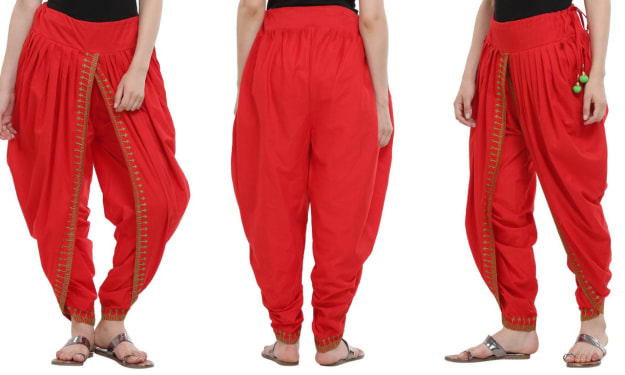
Dhoti Salwar for Haldi, Mehndi & Pre-Wedding Functions
Pre-wedding functions like haldi and mehndi are all about colour, movement, and comfort. These are the events where you sit on the floor, laugh a lot, get your hands painted, and stay dressed for hours. That’s exactly why, in recent years, dhoti salwar has become a favourite choice for these celebrations. It offers the festive feel of ethnic wear while staying easy to move in something every haldi and mehndi outfit should do well.
By Amit Mandal4 days ago in Styled


Comments
There are no comments for this story
Be the first to respond and start the conversation.