
Banarasi vs Kanchipuram - Which Silk Lehenga Should You Pick?
This blog talks about the which type of silk lehenga choli should you pick - banarasi or kanchipuram fabric.
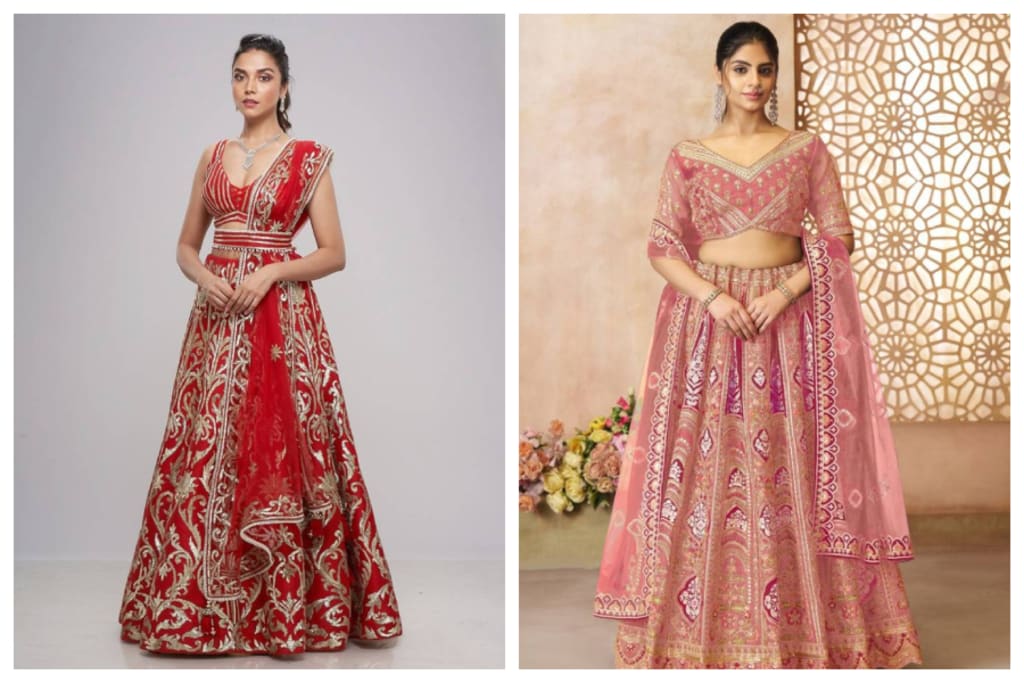
When it comes to lehenga types, the silk lehenga truly takes the cake. The origins of silk lehengas can be traced back decades, if not centuries. They have always remained a staple in Indian ethnic wear. Women all over India have adorned these silk lehengas for occasions like weddings, festivals, and even parties. The most fascinating aspect of silk lehengas is the regional influences that they showcase. From the north to the south, silk lehengas have been modified according to their region of origin. Two shining examples of these influences are the Banarasi and Kanchipuram silk lehengas. They are both crafted from silk and have obvious similarities. However, they are also a bit different from one another. If you are in a dilemma about which iconic silk lehenga set you shop for, then this blog is just for you. Today, we will explore the hotly debated topic — Banarasi vs Kanchipuram Indian lehenga. Read along to know more.
Banarasi Lehenga – Refined Elegance
This silk lehenga for women originates from the vibrant city of Varanasi. Its key features are the use of fine silk threads, opulent brocade weaving, zari work, as well as stunning motifs such as forals, paisley, and Mughal-inspired patterns. It is rich in texture and offers a luxurious drape. Exuding grandeur, these Indian lehengas also include patterns such as kalga, bel, and jhallar. Usually on the heavier side, this lehenga should be your pick when you want your look to be regal and dramatic. Perfect for bridal wear and festive wear, the Banarasi lehenga encapsulates everything royal, beautiful, and sophisticated.
Kanchipuram Lehengas – Embracing Tradition
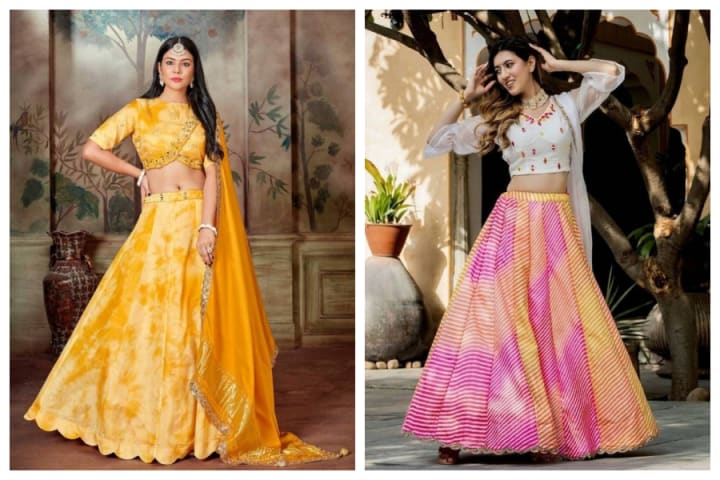
The Kanchipuram silk designer lehenga comes from the culturally significant temple town of Kanchipuram, Tamil Nadu. The pride of South India, this beautiful lehenga choli is an art come to life. It is woven using strong mulberry silk and is strong and durable with a crisp texture. The lehenga’s body and borders are woven separately. They are joined later, leading to thick, prominent borders. It gives a structured drape as a result of the heavyweight silk used, as well as its broad borders. This silk lehenga choli showcases amazing elements like contrasting borders and motifs inspired by nature and temples. It is also the top choice for bridal wear as well as high-class cultural events.
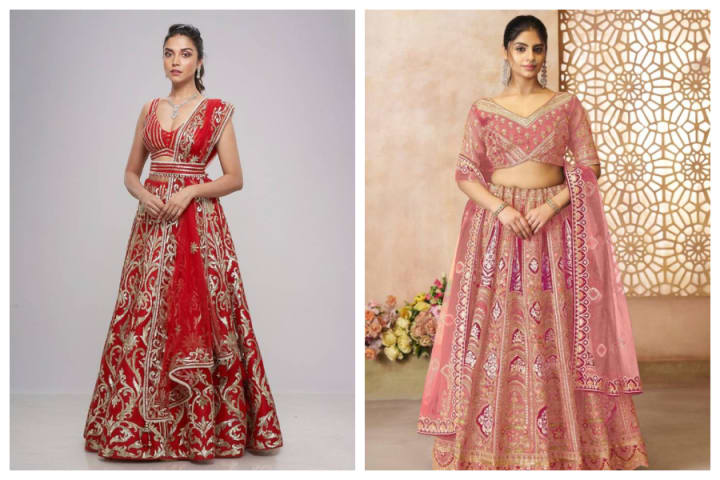
Banarasi vs Kanchipuram lehengas — Which should be your pick?
While both these silk lehengas have forever cemented their place in the realm of Indian ethnic fashion, confusion remains. Which one do you opt for? Here are a few tips to pick the perfect one:
Occasion: If the occasion is very formal and traditional, such as a wedding, reception, or a bridal event, then opt for a Kanchipuram silk lehenga. It works best for these events as the lehenga is structured and bold. However, if the occasion is casual, going for a breezy Banarasi lehenga is your best bet.
Movement: Will you be dancing or moving around a lot? If the answer is yes, then we suggest you go for a Banarasi silk lehenga as it is lighter as compared to the Kanchipuram version. It also offers more drape, hence making it easy to carry for long hours. Kanchipuram silk lehengas are usually heavy, and that can be a challenge to adorn, especially if you are going to be on your feet a lot.
Motifs: While the fabric is a crucial part of a silk lehenga set, the motifs that are adorned on it are equally important. This part totally boils down to your taste and preferences. If you prefer something with temple motifs, contrasting borders, and prominent borders, go for a Kanchipuram silk lehenga. However, if delicate borders and floral patterns are more your vibe, then opt for a Banarasi lehenga without hesitation.
Thus, both these lehengas have their own charm. No matter what you pick, both will help you achieve an elegant and classy look with ease.
About the Creator
Keep reading
More stories from Samir Nair and writers in Styled and other communities.
The Top Radiant Lehenga Designs for Every Bride in 2026
Each year provides a fresh avenue for bridal trends, and for 2026, its all about radiance! From bright color choices to contemporary craftsmanship to silhouettes hinting at a definition of personal style, every bridal collection for 2026 majorly embodies radiance as well! In fact, the always favorite bridal lehenga, favored for centuries at Indian weddings, is not going anywhere and continues to represent the emotion of being royal and regal by dress. The 2026 collections look to balance elements of traditional and modernity — fabrics which float like poetry, handwork that glistens bright like a twinkling star in the night's sky, and a color selection which lives to define bridal charm in ways we all see as radiant. Whether you are minimalistic in approach or enjoy bold statements, we have selected some top radiant paired lehenga styles which every bride in 2026 must remember.
By Samir Nair3 months ago in Styled
A Smart Choice for Your Wedding Hair
A Great Wedding Hair Choice: Human Crochet Hair Extensions. For many Black women, picking wedding hair is very important. You want to look and feel amazing. Human crochet hair extensions are a strong option. They are not like full wigs you just put on. Instead, a stylist uses a small hook. They attach real human hair pieces to your own braided hair. This makes a style that is part of you. It looks very natural and fits you perfectly.
By manman zhai2 days ago in Styled


Comments
There are no comments for this story
Be the first to respond and start the conversation.