
What's the Significance of the Green Beret?
Is it just a randomized oddity fashioned into service headgear, or do those familiar emerald caps entail something deeper, like the actual significance of the Green Beret itself, perhaps?

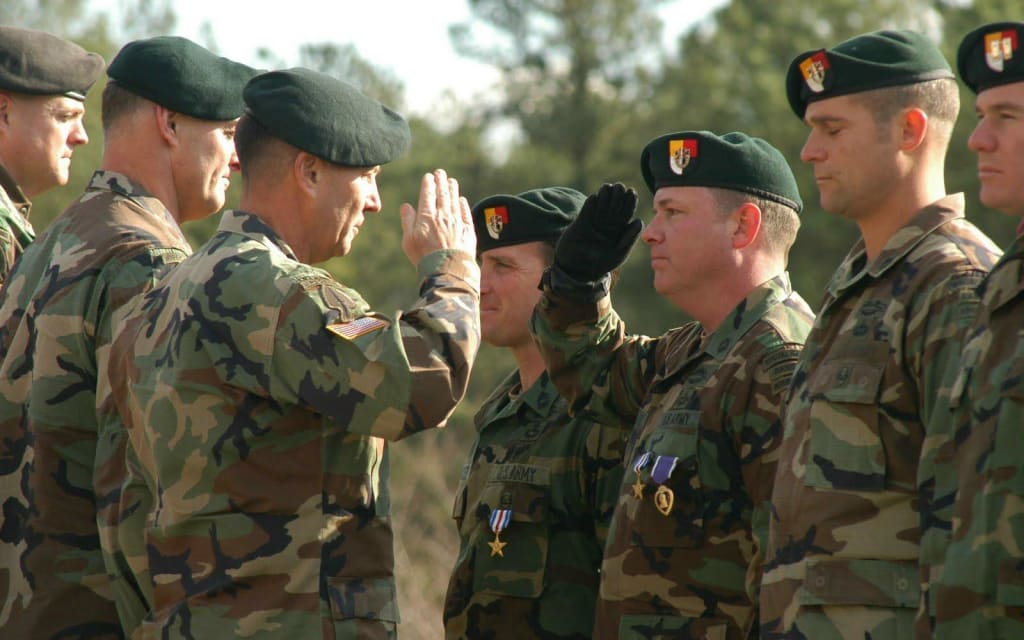
Almost everybody knows who the Green Beret are, but they don't actually know who they are, or more plainly no one truly understands what the Army Special Forces are and what they ultimately mean in American military standards. They know of the Berets simply for their use of highly recognizable emerald headwear, which is least of all important about them. Our US Army Special Forces (SF) are tasked with five main goals in mind that serve as their overall missions: internal foreign defense, special reconnaissance, counterterrorism, direct action, and (their first and initial goal upon creation) unconventional warfare (UW). While UW might be the Green Berets' most important concept, it doesn't encompass their entire role in the defense of our society. Written under the many reasons why veterans go back to war resides the very key to unlocking the significance of the Green Beret: deeply-felt patriotism in the face of international and domestic defense, not just in service of our country, but it and many other nations' interests.
Corralled from a variety of unconventional warfare organizations in early America, the Green Berets as we know of them today were actually unheard of up until 1960. Eight long years before, formed under Col. Aaron Bank, the 10th Special Forces Group (Airborne) was split up into various forts across America, secured by Special Operations Division of the Psychological Warfare Staff (OCPW). Only, the multiplicity of organizations fell into the 77th Special Forces Group at Fort Bragg, which would be renamed 7th Special Forces Group as of May 1960. Across the world, the Green Berets have left their footsteps in an innumerable wake of consistent diplomacy, foreign peace and systematic reclamation. The Special Forces bear an immense set-list of differences from that of the USMC, Air Force, and National Guard, since they showcase dramatic variants in strategy, tactics, gear, leadership, and many more differing elements on the basis for a renowned warrior. That's the whole point of examining the significance of the Green Beret in the first place: what difference, if any, do they make to the already existing branches of military power?
All-Encompassing Symbol
Beyond American patriotism, service member bravery, and ultimate commitment to the defense of the United States, the Green Berets (at the risk of sounding so cliche it almost hurts me) are a symbol more than anything. Not just the organization itself, but every service member and veteran of Special Operations has showed themselves as a symbol for ending malignancy with the most creative and unwarranted tools possible.
Jeffrey Hasler writes a multitude on this claim in "The Importance of the Green Beret as a Symbol." They may not share those same bonds as so expressed by almost every Marine, or incorporate themselves into one specific component of warfare, like the Air Force, but the Special Operations show, in a broader sense, just how dedicated our defense systems are to tackling the bigger picture; therefore, the significance of the Green Beret rests solely on what the military branch itself means to America as a whole.
Counterterrorism
If being just a symbol wasn't enough, the Special Forces also work in bringing about various new strategies and underlining capabilities for counterterrorist principles. This can range in variety, from any particular action proposed by service members involved, to the actual carrying out of the plan-based missions meant to debunk and fracture foreign terrorist cells.
While this may be a more modern capability and functionality, the significance of the Green Beret goes even deeper than simply stopping terrorists in their tracks. Led by the infamous Delta Force operatives, Special Forces' counterterrorism units are usually sent into places needing extreme care and versatility in action. By limiting the possibilities for, and then subduing the overall realities of terrorism itself, members of the Special Forces use not only counterterrorist tactics, but supply themselves with a little bit of what they call UW...
Unconventional Warfare (UW)
At the very core of the Green Beret mission is unconditional warfare, a pseudo-guerrilla militaristic campaign methods that, as you might guess, stipulates the many possibilities for victory by utilizing more creative, versatile, and often frowned-upon engagement methods.
If you're wondering how to enlist in the Army Special Forces, I would become best friends, if not lovers with this very concept. Unconventional warfare is the Special Operations' most prized creation; it's an open-ended formula to the discovery and engineering of more fool-proof methods in not solely combat, but the thinking of combat itself. The way I look at unconventional warfare is the way most of the modern public looks at string theory: it may not sound like a whole lot of sense, or even look like it, but military branches since the SF were created have been stealing this idea for years.
Foreign Internal Defense (FID)
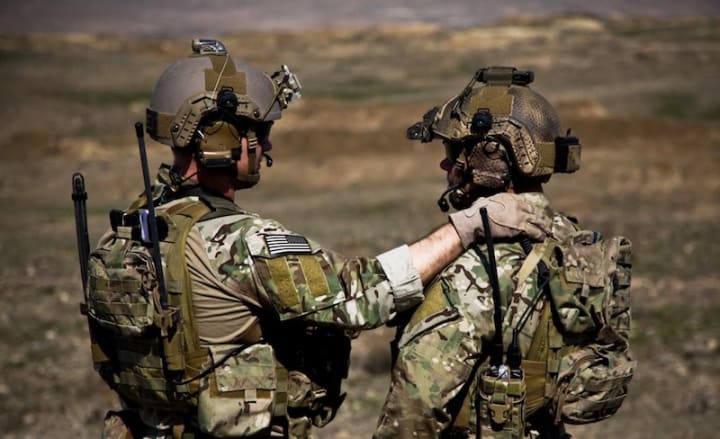
Despite the fact that practically every form of military branch practices it in some way or another, FID is only a minute aspect in the many ranging concepts upheld by the Green Beret. Foreign Internal Defense loosely means the physical protection of a country or state in need of diplomatic aid, most often in the form of brute force.
But, that's what makes the significance of the Green Beret so interesting: not every confrontation is suppressed or accurately rendered obsolete simply by way of force. Special Forces, therefore, utilizes self-adopted strategies in bringing down anything from rogue government uprisings, to unstable political leaderships. While Marines and Rangers tend to be given more straightforward missions surrounding FID, SF commando units are much more complex in the carrying out of objectives.
Commanders In-Extremis Force (CIF)
The US Army Special Forces division are usually broken up into commando units, which are then often divvied up into particular areas, or missions, ranging from the complex or mundane, to the domestic or foreign. This is where the SF teams under the Commanders In-Extemis Force come in. When it comes to the significance of the Green Beret, CIFs are among the most prominent functions for Special Forces Operations, because newer, more foolproof strategies are then designed in order to limit casualties and diminish the probability of failure.
Often shortened to CIF, these squads of SF operatives tends to look more closely at the ways in which the branch itself can optimize their strategies for direct action in special operations. In other words, Commander In-Extremis Force works to balance what we already know about DA with a subtle underlining of what can be added or how something can be done different in order to receive more quality results.
Counter-Guerrilla Activities
Very much similar to the likes of strategic-based missions and unconventional warfare, counter-guerilla activities tends to use an optimized mode of guerrilla warfare utilized for the benefit of an individual, country, or both. The difficulty with identifying this among the significance of the Green Beret is that the tactic doesn't always end in positive outcomes. In of itself, the very nature of guerrilla warfare is to disrupt order and to outright turn the rulebook against one's opponents.
Which, when looked at with a retrospective angle, one sees how this concept can be greatly adaptable and formulated more broadly for Special Forces operations. A good example of this is how the Green Berets have implemented a restructured format for defense against guerrilla tactics in various places around the world, such as Vietnam, Colombia, and even Afghanistan. In these, SF operations were either trying to limit combat shed between armies, or were directly attacking corrupt paramilitary police forces and drug cartels.
Strategic-Based Missions
This is a little more complicated and formula-driven, rather than wholly combatant in theory, despite the fact that it almost always deals with some sort of militaristic engagement. Implied by the name alone, one major significance of the Green Beret is what's called the strategic-based mission. Handled mostly by Special Operations Command, these in-depth and sophisticated missions usually require advanced forms of subduing a target, or targets. Parameters upheld within strategic-based missions will most often involve complex. unique, and almost guerilla-like tactics in the decimation of the specified target.
These can range in the multitude; whether it's toppling an internationally-hunted drug kingpin, or in the act of destabilizing foreign governments. Strategic-based missions, although fun-sounding and seemingly adventurous, tend to end in either a lot of bloodshed, or some new political uprising. Simply take a look at the current war in Afghanistan, a battle concerning more so functionalities on peace operations, counter-proliferation, counter-drug advisory roles, and more.
Parachute Assaults
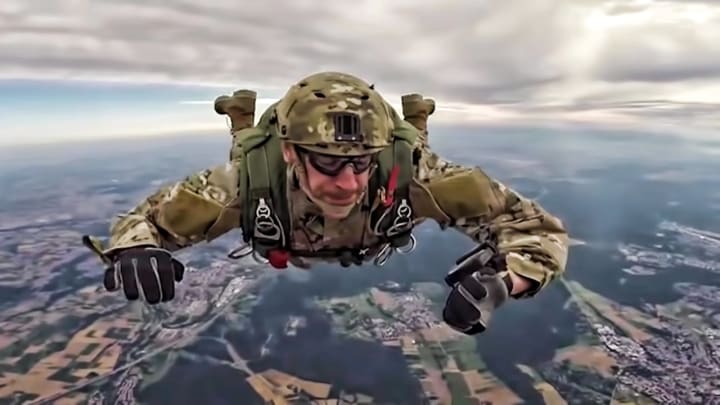
One of the coolest and most interesting facets in the significance of the Green Beret is their utilization of parachute assaults. As I said earlier, direct assaults and tactical raids are widely used by Special Forces in rendering their enemies incapacitated or simply by way of slowing them down.
One thing parachute assaults add to the mix is stealth, reduced possibilities in losses and a literally more top-down view of the mission itself! Green Berets are afraid of nothing, as far as I know, so what makes you think a little wind and some free falling will stop them from protecting our country? Not all parachute assaults will lead to a firefight, but more often than not they serve as nothing more than one of many avenues to look through when postulating enlistment. These types of missions, while some of my favorite, were also among things I wish I knew before joining the army.
Areas of Operation (AOs)
While it may not be so much as an example into the significance of the Green Beret, the areas of operation as so stipulated by either Special Operators Command, or elsewhere among the chain of command, serve as the idealogical boundary line for which Special Forces can enter.
It sounds funny, but with the uprising in corrupt paramilitary operatives and private militaristic personnel, having a codified boundary line—even if you're and your team are saints—greatly increases the chances for being victorious, plus will also show commanders just who exactly is following the rules. Anywhere outside of the AO is off limits, and the repercussions of disobeying this order are steep. SF operatives have the potential to not only start nuclear warfare on a dime, but can also stop it in the same exact amount of time
Psychological Warfre
At the end of the day what makes of utmost importance concerning the significance of the Green Beret is the ways in which they proliferate creative and otherwise more adaptable concepts in diplomatic, cultural, and psychological understandings of war. Not only do the Green Beret move in both swiftly and silently, they can also completely tear down the walls of one's mind by using any number of various tools at their disposal—all in the name of American freedom (which is, more or less, the freedom of all).
From the outset, war is never a pretty picture, but when it's assisted by the corrupt individuals and tyrannical world leaders behind the initial malignancy, conditions for improvement will often be next to impossible to revert without utilizing some sort of mind game. This is why the proliferation of psychological warfare is so well-rounded in Special Forces militia.
"De Oppresso Liber"
Quite simply put, the significance of the Green Beret goes beyond the necessity of militaristic might, or even protection from exterior forces. For all intents and purposes, the Special Forces was built and codified in order to unshackle the world from underlying fears in a variety of malignant elements.
As "deep" as you may think that sounds, it's actually no new concept. The Green Beret motto itself reads in Latin, "De Oppresso Liber," which roughly translates: "To Free the Oppressed." That's all you need to know in the formulation of the Green Beret significance. I know it can get confusing with the military's love for acronyms and secrecy, but SF operations isn't as complicated as it may seem at first. It's simply a restructuring method for the development and conceptualization of better war-time strategies. It's like scientific methodology and philosophical debate came together in the form of a military branch with one simple, yet still highly important agenda: freeing everyone who's not as fortunate from the bondages they suffer under.
About the Creator
Donald Gray
Politics may be a disgusting battlefield, but it is a necessary vice in our country, and a particular fancy of mine, like productivity and success. These are important facets in the modern world, and must be expounded upon.
Keep reading
More stories from Donald Gray and writers in Serve and other communities.
Marine Corps Ball Traditions Every Recruit Should Know
The history of the Marine Corps begins on November 10th, 1775, when a branch of the US Armed Forces was created, in part, as a protective and domestic agent, yet it was intended as a swift and tactical task force that was capable of rendering even the most dangerous of areas into a pseudo-state of order whose actions and responsibilities were directly dictated by the sitting US president. What are the requirements for joining the Marine Corps? A whole hell of a lot of grit, stamina and courage, not to mention an attitude that's been molded and blended under a set of life principles that you'll carry to the grave. That is just one single part of what has made them a treasured and ever-loved faction in the history of the American military, but there are still quite a few things you may not know about the US Marine Corps.
By Donald Gray8 years ago in Serve
Stolen Bike, Not Valor
Koa was riding his new electric bike through the city park not too far from the US Embassy where he served in an Asian country. The ride was a part of his daily evening workout. He didn't really like the idea of an electric bike because he thought it was lazy. Besides, Koa had another good mountain bike he'd bought here used and it gave him a much better workout. But this one was his girlfriend's gift for his 29th birthday that she had taken the trouble to ship to him across the ocean. Koa felt obliged to ride it out at least occasionally, but promised himself not to use the battery. He even took it off the bike, to avoid the temptation.
By Lana V Lynx29 days ago in Serve


Comments
There are no comments for this story
Be the first to respond and start the conversation.