
US unfreezes $397m to track Pakistan’s F-16 operations.
Pakistan F-16 Operations

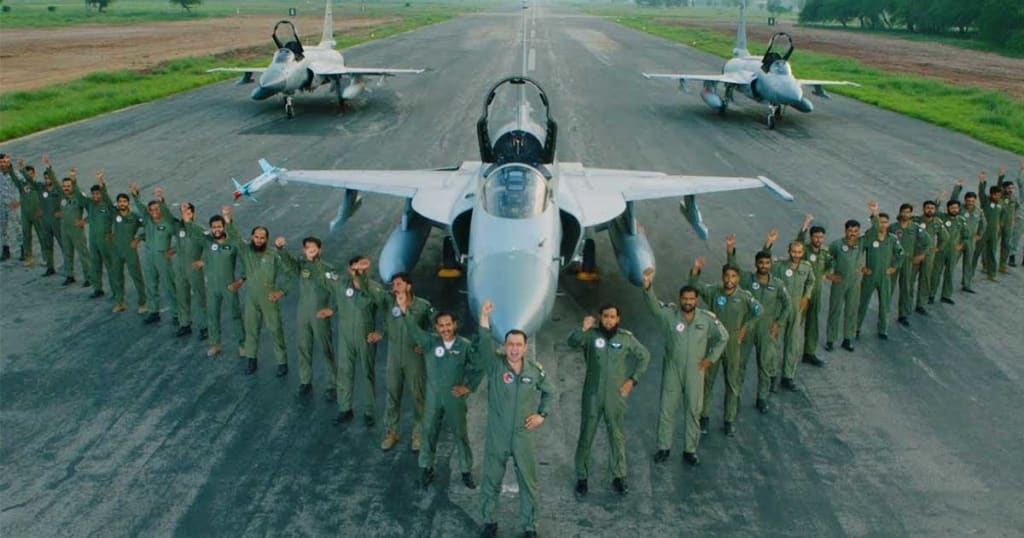
US unfreezes $397m to track Pakistan’s F-16 operations.
The Trump administration’s decision to unfreeze $5.3 billion in foreign aid primarily for security and counter narcotics programs has sparked significant discussion about the priorities shaping US foreign assistance. Among the released funds was $397 million for a US backed program in Pakistan designed to monitor Islamabad’s use of US made F-16 fighter jets ensuring they are deployed for counterterrorism rather than for conflicts against neighboring India. This move underscores the administration’s broader strategy of aligning aid with US national security interests while significantly reducing humanitarian assistance. Upon assuming office on January 20 President Donald Trump ordered a 90 day pause on foreign aid effectively freezing billions of dollars allocated for a range of international programs. This sweeping decision affected funding for initiatives combatting starvation deadly diseases, and large scale displacement. The freeze triggered urgent appeals from US officials and humanitarian organizations seeking exemptions to sustain crucial programs. However waivers were granted sparingly with priority given to military aid and initiatives supporting Trump’s America First policy.
The newly approved exemptions provide insight into the administration’s foreign aid priorities. More than $4.1 billion of the unblocked funds were allocated to programs managed by the State Department’s Bureau of Political Military Affairs an entity responsible for overseeing arms sales and military assistance to allied nations. This indicates a clear emphasis on strengthening strategic partnerships through military aid rather than supporting broader development efforts. Pakistan’s inclusion in the list of exemptions is particularly noteworthy given the history of US Pakistan relations. The $397 million in funding is explicitly designated to track Pakistan’s usage of F-16 fighter jets, a crucial component of its air force. US officials have consistently maintained that American supplied military equipment should be used exclusively for counterterrorism efforts rather than for conflicts with India. This measure reflects Washington’s cautious approach to ensuring that military assistance aligns with broader regional stability goals.
Meanwhile waivers were also granted for programs aligned with Trump’s efforts to curb illegal immigration and drug trafficking which have been central themes of his presidency. More than half of the approved exemptions amounting to $293 million were directed toward the State Department’s Bureau of International Narcotics and Law Enforcement Affairs INL. These funds support databases tracking migrants identifying potential terrorists and sharing biometric information to prevent illicit migration to the US. Additionally INL funds are used to combat the trafficking of fentanyl a deadly opioid contributing to America’s drug crisis. Despite these security focused exemptions humanitarian aid suffered substantial cuts. The list of approved funds revealed that programs under the United States Agency for International Development USAID received less than $100 million in exemptions. This marks a sharp decline compared to the approximately $40 billion in USAID programs administered annually before the freeze. USAID has historically been a critical tool for promoting US influence abroad through soft power initiatives including disaster relief health programs and poverty reduction. The drastic reduction in funding suggests a strategic shift away from traditional diplomatic tools in favor of military and law enforcement measures.
Critics argue that the freeze coupled with the limited exemptions for humanitarian assistance undermines America’s global leadership role. Current and former US officials along with aid organizations have expressed concerns that the focus on military aid and border security measures comes at the expense of crucial development programs. They warn that reducing assistance for health education and disaster relief could lead to long term instability in vulnerable regions ultimately working against US interests. The White House’s preference for security related aid is further evident in its treatment of Middle Eastern allies. Waivers were promptly issued for military aid to Israel and Egypt two of America’s most significant allies in the region. These exceptions ensured the continuation of strategic defense partnerships reinforcing the administration’s commitment to maintaining military dominance in volatile areas.
Meanwhile the decision to deprioritize humanitarian assistance aligns with Trump’s long standing skepticism toward foreign aid. The former president has often criticized foreign assistance describing it as wasteful and counterproductive to American values. According to the nonpartisan Committee for a Responsible Federal Budget US foreign aid has averaged less than 2% of total federal spending over the past two decades. Despite this relatively small share Trump has frequently portrayed foreign aid as an unnecessary expenditure that benefits other nations at America’s expense. Billionaire Elon Musk’s Department of Government Efficiency has played a significant role in reshaping foreign aid distribution. Under Musk’s leadership the department has spearheaded efforts to drastically cut USAID funding effectively diminishing the agency’s role as the primary delivery mechanism for American foreign assistance. This move aligns with Trump’s broader strategy of prioritizing military and economic interests over traditional development aid.
The decision to unfreeze select portions of foreign aid highlights the administration’s prioritization of national security interests over humanitarian concerns. By allocating the majority of the funds to military assistance narcotics control and border security, the White House has made it clear that its approach to foreign aid is guided by a strict national security framework. While these measures may strengthen America’s geopolitical standing in the short term critics argue that neglecting humanitarian aid could have long term consequences including increased instability in vulnerable regions. The selective unfreezing of funds also raises questions about the future of US foreign assistance. If military and security related aid continue to dominate the agenda traditional diplomacy and development programs may face ongoing challenges. The shift away from humanitarian aid may also strain relations with allies and international organizations that rely on US support for global stability efforts.
As the Trump administration moves forward with its revised foreign aid strategy the impact of these decisions will likely become more apparent. While the immediate focus remains on national security and military cooperation the long term consequences of reduced humanitarian aid may pose new challenges for US foreign policy. The decision to unfreeze specific funds offers a glimpse into the administration’s evolving approach to global engagement emphasizing security while scaling back traditional development assistance.
About the Creator
Adnan Rasheed
Author & Creator | Writing News , Science Fiction, and Worldwide Update| Digital Product Designer | Sharing life-changing strategies for success.
Keep reading
More stories from Adnan Rasheed and writers in Serve and other communities.
PAF showcases JF-17 fighter jet capabilities in Saudi Arabia exercise.
PAF showcases JF-17 fighter jet capabilities in Saudi Arabia exercise. In a significant demonstration of its advancing aerial capabilities the Pakistan Air Force PAF recently participated in the multinational Exercise Spears of Victory 2025 held at King Abdul Aziz Air Base in Saudi Arabia. The exercise which concluded in early February 2025 saw the PAF showcasing the prowess of its indigenous JF 17 Thunder Block III fighter jets alongside air forces from Saudi Arabia Bahrain France Greece Qatar the United Arab Emirates the United Kingdom and the United States. A notable aspect of the PAF's participation was the execution of a non stop flight from Pakistan to Saudi Arabia and back. This mission involved in-flight air to air refueling underscoring the long range operational capabilities of the JF 17 Block III aircraft. The Inter Services Public Relations ISPR highlighted this achievement emphasizing the strategic reach and endurance of the PAF's fleet.
By Adnan Rasheedabout a year ago in Serve
The Forsyth House Fire
Since 1851, Forsyth House has stood on the corner of Union Street and Gordon Street in the heart of Glasgow. Its iconic, or was... because on Sunday 8th of March, 2026, a fire broke out in a small, seemingly un-named shop in the building and tore all that history down. As I write, the rubble is still unsettled and the street is still blocked off. Central Station is quiet on the upper level, and around 30 small businesses have quite literally gone up in smoke.
By S. A. Crawford3 days ago in The Swamp


Comments
There are no comments for this story
Be the first to respond and start the conversation.