
Understanding Arc, Capacitor Discharge and Induction Heating Machines: The Technologies Powering Modern Manufacturing
Exploring the Essential Technologies That Shape Modern Manufacturing—from High-Heat Arc Welding to Precision Capacitor Discharge and Induction Heating Systems

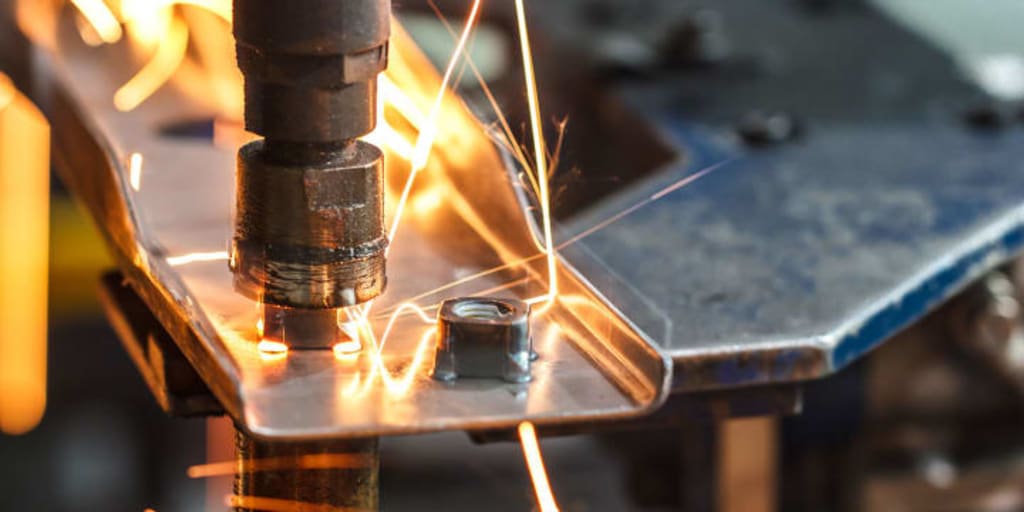
Manufacturing today is defined by precision, efficiency, and the ability to join and treat materials in ways that were unimaginable just a few decades ago. Among the most important technologies driving this transformation are arc welding machines, capacitor discharge welding machines, and induction heating machines.
These systems may sound technical, but they underpin everything from the cars we drive to the appliances in our homes. Here’s an in-depth look at what each technology does and why it’s vital to modern industry.
Arc Welding Machines: Melting Metals to Build Our World
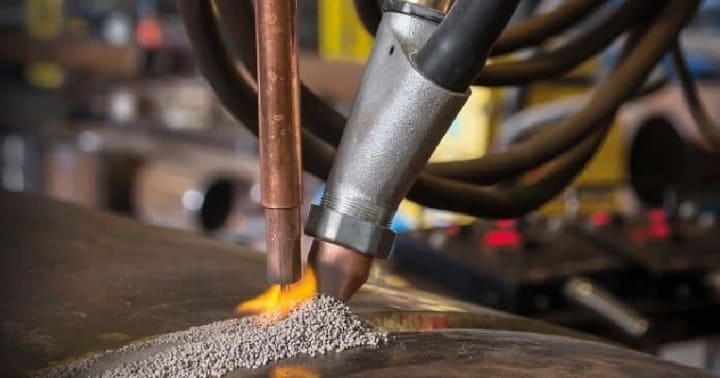
Arc welding is one of the oldest and most common welding methods. At its core, arc welding joins metals by using an electric arc to generate intense heat—often reaching temperatures over 6,000°F (3,300°C). This heat melts both the workpiece and a consumable filler electrode, which fuses together as it cools.
How It Works
- An electrical circuit is created between the welding machine, an electrode holder, and the workpiece.
- When the electrode is brought close to the metal surface, an arc of electricity jumps the gap, producing heat.
- The molten pool of metal solidifies into a strong joint.
Types of Arc Welding
Different processes fall under the arc welding umbrella:
- Shielded Metal Arc Welding (SMAW): Also known as stick welding, popular for construction and repair.
- Gas Metal Arc Welding (GMAW/MIG): Uses a continuous wire feed and shielding gas.
- Gas Tungsten Arc Welding (GTAW/TIG): Delivers precise, clean welds with a non-consumable tungsten electrode.
Arc welding machines have evolved to include sophisticated features like automatic voltage regulation, pulsed current control, and digital displays, making them indispensable in shipbuilding, pipelines, structural steelwork, and automotive manufacturing.
Capacitor Discharge Welding Machines: Speed and Precision in One Spark
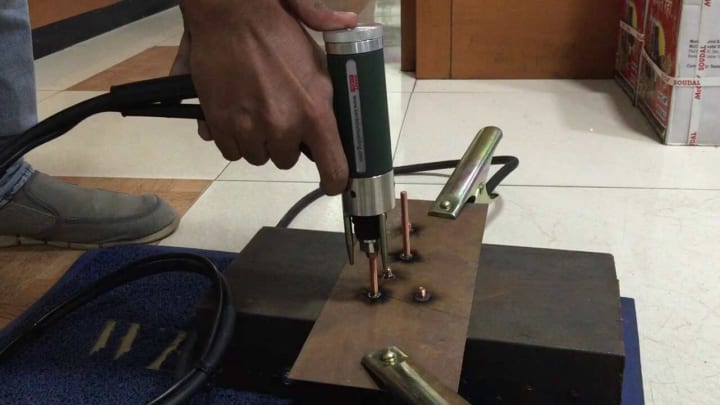
Unlike conventional arc welding, capacitor discharge (CD) welding is a specialized process that uses stored electrical energy to create a weld in milliseconds.
How It Works
- A capacitor bank inside the machine is charged to a specified voltage.
- When triggered, the stored energy is instantly discharged through the welding tip.
- The intense but brief heat melts a thin layer of metal on the surfaces to be joined.
- The metals fuse together without heating the surrounding area.
What Makes CD Welding Unique?
Speed and minimal heat input. Because the weld happens so quickly, there’s almost no distortion or discoloration. This is critical in industries requiring delicate connections, such as:
- Electronics manufacturing (attaching studs to battery terminals).
- Aerospace (joining thermocouples).
- Medical devices (assembling miniature components).
CD welding is also used for stud welding, where fasteners are rapidly welded to sheet metal.
Machines vary in capacity—from small benchtop units for micro-welding to industrial systems capable of handling large-diameter studs.
Induction Heating Machines: Clean, Contactless Heat for Modern Industry
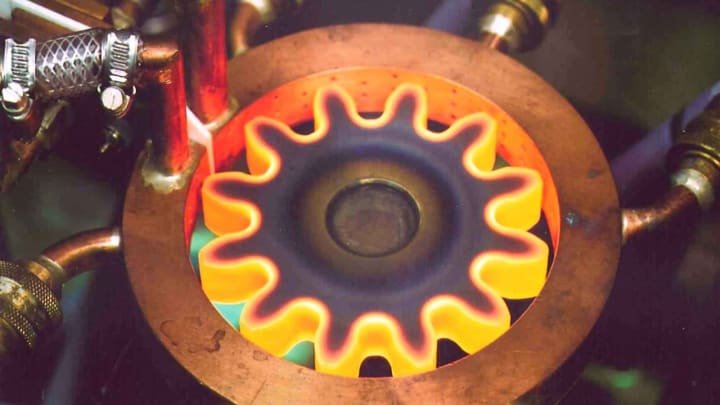
Induction heating is a process that uses electromagnetic fields to heat electrically conductive materials without direct contact. It’s an elegant solution for applications that require precise and uniform heating.
The Science Behind It
- An alternating current flows through a copper coil (the induction coil).
- This generates a rapidly changing magnetic field.
- When a metal part is placed inside the coil, the magnetic field induces circulating currents (eddy currents) in the part itself.
- The electrical resistance of the metal converts these currents into heat.
This process allows heating only the targeted area, leaving surrounding material relatively cool.
Applications
Induction heating is used in:
- Heat Treating: Hardening the surface of gears and shafts.
- Shrink Fitting: Expanding metal components for assembly.
- Brazing and Soldering: Joining metals without direct flame.
- Metal Forging: Preheating billets for forming.
Compared to traditional gas furnaces or open flame torches, induction heating is:
- Faster.
- Cleaner (no combustion gases).
- More energy-efficient.
- Highly repeatable.
Modern induction heating machines offer programmable controls, real-time temperature monitoring, and energy optimization features that make them vital for high-volume manufacturing. You can always go for Taylor-Winfield Technologies for these machines TWT is a top capacitor discharge , induction heating and Arc welding machine manufacturer with 150 years of existence in this industry.
Why These Technologies Matter
Together, these machines form the backbone of metalworking and fabrication. Arc welding builds bridges and skyscrapers. Capacitor discharge welding enables the electronics revolution. Induction heating makes complex assemblies possible with minimal waste.
As industries demand higher quality, faster throughput, and more sustainable processes, these technologies continue to evolve—integrating automation, artificial intelligence, and IoT connectivity.
Whether you realize it or not, nearly every manufactured product you touch benefits from one or more of these processes.
About the Creator
Taylor Winfield Technologies
We are leading arc welding machine suppliers, dedicated to providing high-quality, reliable, and innovative welding solutions for industries worldwide. Our machines are designed for precision, efficiency, and long-term performance.
Keep reading
More stories from Taylor Winfield Technologies and writers in Serve and other communities.
Arc Welding Machine Manufacturer & Supplier That Sets the Gold Standard
When it comes to arc welding machines, one thing is clear—precision, durability, and reliability aren’t negotiable. Whether you’re in automotive, aerospace, construction, or shipbuilding, your welding systems are the lifeblood of your production floor. So why settle for off-the-shelf solutions when you can partner with a world-class arc welding machine manufacturer that builds equipment with engineering DNA, innovation, and longevity baked in?
By Taylor Winfield Technologies11 months ago in Serve
Is Benjamin Netanyahu Dead?
Introduction In the modern digital age, rumors and misinformation can spread quickly across social media and online platforms. One such rumor that occasionally appears online concerns the supposed death of Benjamin Netanyahu, the long-time political leader of Israel. Many people search the internet asking whether the Israeli prime minister has died. However, it is important to examine reliable information and understand the truth behind such claims.
By shaoor afridi3 days ago in Serve
Escalation of the Iran-Israel Conflict: Regional and Global Implications
The conflict between Iran and Israel has entered a dangerous new phase, raising fears of a wider war across the Middle East. Military strikes, retaliatory attacks, and the involvement of international actors have turned the situation into one of the most serious geopolitical crises in recent years. Beyond the battlefield, the conflict is affecting global security, energy markets, and international diplomacy.
By shaoor afridi4 days ago in Serve




Comments
There are no comments for this story
Be the first to respond and start the conversation.