
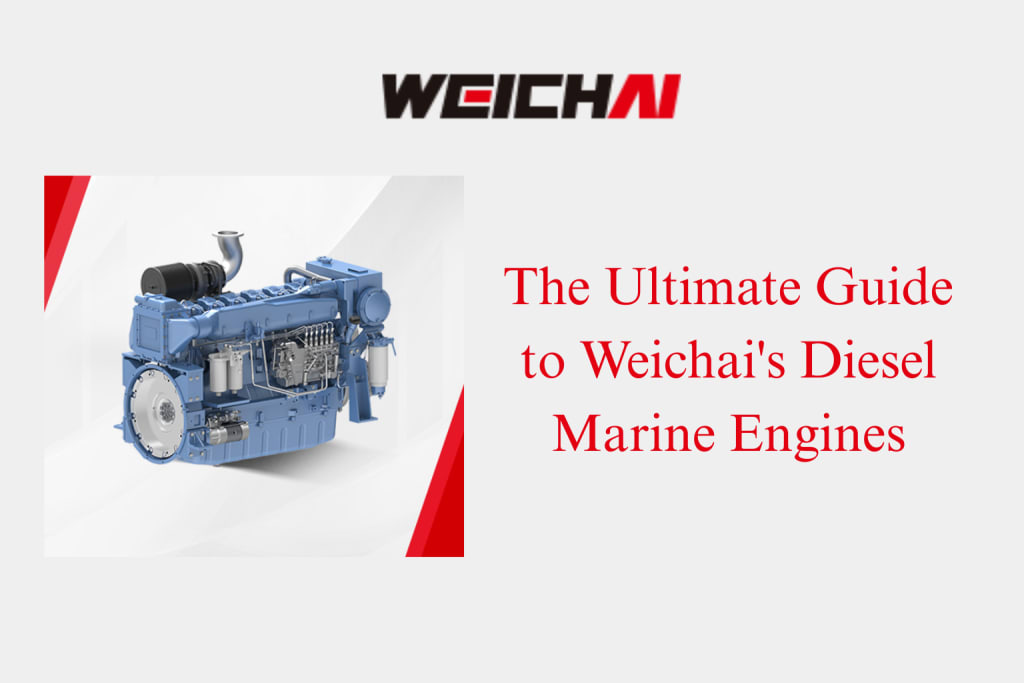
The Ultimate Guide to Weichai's Diesel Marine Engines
Explore why marine diesel engines are lifelines at sea—built for power, durability, and trust when it matters most.

The ocean is beautiful, but it is also brutal. It rewards preparation and punishes neglect. No one knows this better than the people who work on the water. People like ship captains, engineers, deckhands, and business owners rely on vessels to make a living.
Note that there are no second chances when a ship is out in open waters. The waves do not care about deadlines. The wind does not stop for repairs. There is no shoulder to pull over onto if an engine fails. You will only have just endless water and a rising sense of panic.
That is why marine diesel engines are not merely just machines. They are lifelines. They are the difference between a ship that keeps moving and one that is dead in the water. These engines power ferries, fishing boats, cargo ships, and tugboats, working through storms, salt, and nonstop hours. A weak engine means a lost trip. A great one means reliability, efficiency, and a business that keeps running.
This guide takes a deep look at marine commercial engines—how they work, what makes them last, and why choosing the right one is critical to staying ahead. If you’ve ever worried about an engine stalling at the wrong moment, this is for you.
Why is Diesel Engine the Gold Standard for Marine Commercial Engines?
The ocean has no patience for weak engines. That is why almost every commercial ship relies on diesel engines.
Gasoline might work for small recreational boats, but marine commercial engines need to be tougher, stronger, and more fuel-efficient. Diesel delivers all of that—and more.
Why is Diesel Engine the Only Real Option?
Here is why diesel engines are the best option for marine vessels.
Serious Power for Heavy Loads – A commercial ship is not a speedboat. It is hauling thousands of pounds, and that takes serious torque. Diesel engines are built to handle that weight without breaking down.
Longer Lifespan – A properly maintained marine diesel engine can run for 50,000+ hours before needing a major overhaul. That’s years of operation without a complete engine replacement.
Better Fuel Efficiency – Diesel engines squeeze more energy from every gallon. They reduce costs over long voyages. Less fuel burned means more money saved.
Fire Safety – Gasoline is highly flammable. Diesel is much safer to store and handle, reducing the risk of a catastrophic onboard fire.
There is no alternative for businesses that depend on reliability. Diesel is not only the best choice—it is the only choice.
What Separates a Reliable Marine Diesel Engine from the Rest?
Note that not all diesel engines are built for life at sea. Some engines are made for trucks or land-based machinery. A true marine diesel engine is designed for salt, extreme temperatures, and long-haul durability.
What Makes a Great Marine Engine?
Here are the factors that make a marine diesel engine excellent.
Corrosion Resistance
The ocean is relentless. Saltwater can destroy metal over time. High-quality marine engines use special coatings and marine-grade materials to prevent rust and wear.
Cooling Systems Built for Long Hours
Marine engines run for days, sometimes weeks, without stopping. They use both freshwater and seawater cooling to keep temperatures stable and prevent overheating.
Stronger Engine Blocks & Pistons
A marine engine is not merely a bigger version of a car engine. It is reinforced with stronger pistons, cylinder heads, and fuel injectors to handle constant vibration and pressure.
Optimized Exhaust Systems
Clean emissions and efficient fuel use are not only good for the environment. They reduce maintenance costs and improve engine performance.
A good marine engine is not horsepower alone. It is about surviving the toughest conditions and lasting for decades.
How to Choose the Right Marine Diesel Engine for Your Vessel?
The wrong engine means wasted fuel, constant breakdowns, and unnecessary repair costs. The right one implies years of uninterrupted service.
Every vessel has different requirements. A ferry needs a steady, fuel-efficient engine. A cargo hauler needs serious pulling power. A fishing boat needs a balance of speed and reliability. The right engine depends on how and where you operate. You must assess your requirements before choosing a marine diesel engine.
Key Considerations When Choosing a Marine Diesel Engine
Here are some of the important considerations for choosing a marine diesel engine.
- Power-to-Weight Ratio – A weak engine struggles under heavy loads. An overpowered engine wastes fuel. The best choice matches power to vessel size.
- Fuel Efficiency vs. Workload – Some engines are fuel savers. On the other hand, the others prioritize raw power. Finding the right balance saves thousands in fuel costs.
- Ease of Maintenance – Some engines allow for quick and easy repairs. Others require hours of labor for simple fixes.
- Environmental Adaptability – Do you need the engine to adapt to cold water, high humidity, and long voyages? Different engines perform better in different conditions.
Choosing the right engine is not about specs. Note that it is about what works for your operation.
What to Look for in Marine Engine Manufacturers
Not all marine engine manufacturers are created equal. Some have been around for decades, proving their reliability. Others promise the world but fail when it matters most.
What Sets the Best Manufacturers Apart?
Here are the aspects that make a marine engine manufacturer different.
- Real-World Reputation – A great marine engine manufacturer has a history of proven performance. They do not merely sell engines—they sell trust.
- Rigorous Testing Standards – Before an engine hits the market, it should survive extreme durability tests.
- Global Support & Service Centers – A good engine is useless if parts are impossible to find. The best manufacturers have widespread service networks.
- Fuel Efficiency Innovations – Better fuel use means lower costs and longer operation hours. The best manufacturers prioritize efficiency.
The right manufacturer doesn’t just build engines. They build reliability, efficiency, and long-term success.
Maintenance Habits That Keep Diesel Engines Running for Decades
Even the most durable marine diesel engine won’t last without proper care. Maintenance is not optional—it is the difference between smooth sailing and expensive breakdowns.
Essential Marine Diesel Engine Maintenance
- Oil & Filter Changes – Dirty oil increases wear and tear. Regular changes extend engine life.
- Fuel System Inspections – Contaminated fuel can clog injectors and reduce performance. Use high-quality fuel and replace filters regularly.
- Cooling System Checks – Overheating is a top cause of engine failure. Keeping coolant systems clean and running properly prevents expensive repairs.
- Rust & Corrosion Protection – Even the toughest engines need anti-rust treatments in salt-heavy environments.
- Early Problem Detection – A well-tuned engine runs smoothly and steadily. Are you noticing unusual sounds? That is an early warning sign.
Engines that receive consistent and high-quality maintenance last longer, perform better, and cost less to operate.
Conclusion
A marine diesel engine is the lifeblood of a vessel, the foundation of a business, and the key to keeping operations running without interruption. The best marine engine manufacturers don’t just sell engines. They sell peace of mind. When you’re miles away from shore, with nothing but open water around you, that trust in your engine is everything.
For shipowners, captains, and engineers, choosing the right engine is not about marketing or fancy brochures. It is about commitment to performance, fuel efficiency, and absolute dependability. It is because when the ocean tests you, the right engine is the only thing standing between success and disaster.
About the Creator
Keep reading
More stories from Raktim das and writers in Serve and other communities.
Difference between BSIV & BSVI Engine: BS4, BS6 Performance
In order to prevent environmental damage, the Central Pollution Control Board(CPCB) introduced the Bharat Stage Emission Standards(BSES). It is a mandatory set of regulations that limits the amount of emission from four-wheelers and two-wheelers. All of these efforts were taken to prevent the rampant increase of pollution in our atmosphere. It is to everyone’s knowledge, that how dire the condition of air quality is in our capital city. But it is not only limited to one city, but the whole country is under threat. According to this regulation, automobile manufacturers must sell only BS VI Engine vehicles. But what is the BS VI engine anyway? In this blog know all the details about this engine and how it differs from BS IV engines.
By Raktim das11 months ago in Serve
Stolen Bike, Not Valor
Koa was riding his new electric bike through the city park not too far from the US Embassy where he served in an Asian country. The ride was a part of his daily evening workout. He didn't really like the idea of an electric bike because he thought it was lazy. Besides, Koa had another good mountain bike he'd bought here used and it gave him a much better workout. But this one was his girlfriend's gift for his 29th birthday that she had taken the trouble to ship to him across the ocean. Koa felt obliged to ride it out at least occasionally, but promised himself not to use the battery. He even took it off the bike, to avoid the temptation.
By Lana V Lynx27 days ago in Serve




Comments
There are no comments for this story
Be the first to respond and start the conversation.