
Romance of the Three Kingdoms
Honor, Betrayal, and the Battle for a Fractured Empire

"The empire, long divided, must unite; long united, must divide."
Thus begins one of the greatest epics of all time—a tale of war, loyalty, and fate set against the backdrop of China’s collapse in the final days of the Eastern Han Dynasty.
While the saga spans decades, thousands of soldiers, and countless battles, it is ultimately a story about three men, their bond, their ambition—and the empire that demanded everything from them.
Chapter I: The Oath in the Peach Garden
In the chaos after the Yellow Turban Rebellion, the Han Dynasty crumbled. Eunuchs controlled the court. Warlords tore the land into pieces. The people suffered.
In this void of order, three men met under a blooming peach tree:
Liu Bei – A descendant of Han royalty with no land, no army, only dreams of restoring peace.
Guan Yu – A towering warrior with a crimson face and a soul forged in loyalty.
Zhang Fei – Fierce and wild, but true to his word and brothers.
They swore an oath—not to be born on the same day, but to die together. From that moment, they were not friends, but brothers.
Their unity was their power. With a handful of soldiers and righteous ambition, they began their quest to defend the Han and restore justice to the land.
Chapter II: The Rise of Heroes and Warlords
But righteousness alone was not enough.
As Liu Bei’s brothers fought at his side, other warlords rose, each with their own ambition:
Cao Cao, a brilliant strategist who said, “Better to betray the world than let the world betray me.” Ruthless, pragmatic, and powerful, he claimed to protect the Emperor but sought control of the court.
Sun Quan, heir to the lands of the south, clever and patient, building power while the north burned.
Lu Bu, the strongest warrior alive—bold, invincible, but fatally disloyal.
China was no longer one nation—it was three fractured realms. And all of them were marching to war.
Chapter III: Fire Over the River – The Battle of Red Cliffs
The tide of history shifted at the banks of the Yangtze River.
Cao Cao led a massive fleet to crush the south and unite the empire under his rule. His army, over 800,000 strong, dwarfed the scattered forces of Sun Quan and Liu Bei.
But strategy—not strength—won the day.
Enter Zhuge Liang, Liu Bei’s sleeping dragon. A genius tactician who could read fate in the wind. He allied with Sun Quan and devised a masterstroke: they would use fire.
Cao Cao's fleet was chained together—strong, but immobile. On a foggy night, Southern generals lit fire ships and sailed them straight into Cao Cao's navy. Flames roared across the river. Panic spread. Thousands died. Cao Cao retreated in defeat.
From that inferno rose a new balance of power: Wei in the north, Wu in the south, and Shu in the west. The Three Kingdoms had emerged.
Chapter IV: Brothers to the End
The years passed. Alliances shifted. Blood was spilled in the name of order and ambition.
Liu Bei finally carved out the Shu Kingdom with help from Guan Yu and Zhang Fei. But fate, as always, demanded sacrifice.
Guan Yu, beloved by all for his loyalty and strength, was captured and executed after being betrayed by former allies. His death shattered Liu Bei’s heart.
In rage, Liu Bei launched a campaign for vengeance against the Kingdom of Wu. But ambition clouded his judgment. He ignored Zhuge Liang’s warnings. His army was crushed, and he died soon after—his dream of restoring the Han dying with him.
Zhang Fei, in despair, was assassinated by his own men.
The oath in the Peach Garden, once a promise of unity, had become a prophecy of shared ruin.
Chapter V: The Final Breath of the Dragon
After Liu Bei’s death, Zhuge Liang vowed to protect Shu. A servant of destiny, he continued the fight—strategizing, building alliances, outwitting opponents. In the face of impossible odds, he held off the might of Wei and Wu.
But even dragons grow weary.
On his sixth northern campaign, knowing death was near, Zhuge Liang lit a final lantern under the stars. He whispered to the heavens, praying for more time. But fate would not bend.
He died in his camp, still clutching maps of battles yet to be fought.
Chapter VI: The Fall of Kingdoms
Wei eventually overpowered Shu. Wu fell shortly after. The dynasty of Jin rose, reuniting the empire.
But what was left?
No heroes. No dragons. Only tombs, scrolls, and the echoes of legends.
The Romance of the Three Kingdoms is not just about who won. It is about why they fought—about the thin line between honor and ambition, loyalty and blindness.
And it is about how, even in failure, some legacies burn brighter than empires.
Reflection: Why It Still Echoes
More than a thousand years later, Romance of the Three Kingdoms remains one of the most celebrated sagas in all of world literature. Why?
Because it is not merely a history of warlords. It is a human story:
Of sworn brothers and broken promises.
Of geniuses who saw the future and still couldn’t outrun it.
Of ideals that collapse under the weight of reality.
Of how nations rise—and fall—on the choices of individuals.
Every character is flawed and vivid. Cao Cao is a villain, but also a visionary. Liu Bei is righteous, but too emotional. Zhuge Liang is wise, yet mortal. And the people—always—are the ones who suffer between crowns and conquests.
Final Words
The empire united. Then divided. Then united again.
But in the end, it is not the kingdoms we remember.
It is the romance—the feeling of standing beneath peach blossoms with brothers who believe in something greater than themselves.
It is Guan Yu, refusing surrender.
Zhang Fei, roaring across the battlefield.
Zhuge Liang, lighting a lantern in the dark.
It is a reminder: Glory fades. But honor endures.
And some stories, like empires, are never truly lost—only retold.
About the Creator
Keep reading
More stories from Hamza Habib and writers in Serve and other communities.
“What Losing My Job in 2025 Taught Me About Worth”
In January of 2025, I lost a job I once believed defined me. It was the kind of cold Monday that bites through your coat. I’d barely finished my first sip of coffee when the message from HR popped up: "Please join us for a quick call." Ten minutes later, I was unemployed. Just like that. My position, I was told, had been “eliminated due to restructuring.”
By Hamza Habib8 months ago in Serve
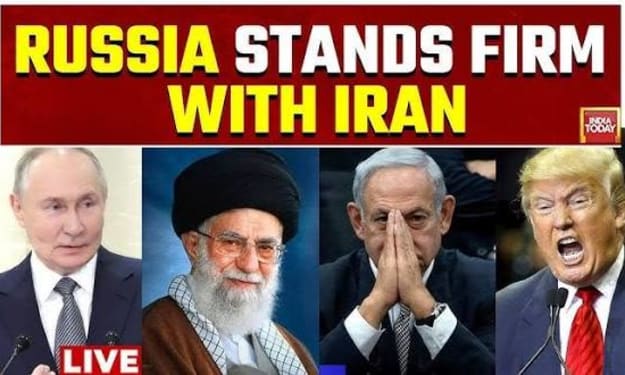
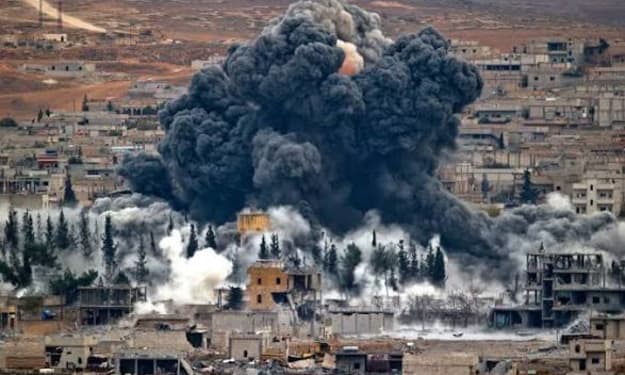
Rising Tensions: U.S.-Iran Conflict Escalates After Leader's Death"
In a dramatic escalation of tensions in the Middle East, Iran’s Supreme Leader Ayatollah Ali Khamenei has been confirmed dead following a large-scale military operation conducted by the United States and Israel. This development marks one of the most serious confrontations between the U.S. and Iran in decades, with region-wide impacts and uncertain global consequences.�
By shaoor afridi2 days ago in Serve


Comments
There are no comments for this story
Be the first to respond and start the conversation.