
Naval Cook Turned The Pearl Harbor Hero
True story of a real WW2 American hero


December 7, 1941 It’s just before 8 am on a quiet Sunday morning at the US naval base in Honolulu, Hawaii. Nearly 100 ships, including 8 battleships, are anchored here at Pearl Harbor.
Aboard the USS West Virginia, 22 year-old third-class mess attendant Dorie Miller is collecting ensign uniforms in preparation to do laundry when suddenly there’s a hull-shaking explosion.
General Quarters sounds. Two torpedoes have slammed into the port side of the West Virginia. The naval base is under attack from the Imperial Japanese Navy Air Service.
Miller abandons the laundry and races down cramped corridors dodging sailors in their skivvies who were woken up by the blast. Everyone’s heading for their assigned battle stations.
The battleship shudders again. When Miller gets to his battle station, the anti-aircraft battery magazine amidships, it’s flooded--inaccessible. The blasts from the torpedoes have severely damaged it.
Seeking reassignment, Miller heads to "Times Square", a central spot on deck where the fore-to-aft and port-to-starboard passageways cross. The ship is starting to list to port.
The top of turret three’s on fire and the air’s rapidly filling with choking, oily black smoke. Because of his physical prowess, Miller is assigned to help carry some injured sailors to safety.
He encounters the ship’s communications officer, Lieutenant Commander Johnson, who tells him that their commanding officer, Captain Mervyn Bennion was severely wounded during the first wave of the Japanese attack when shrapnel pierced his abdomen.
He orders Miller to accompany him to the conning tower on the flag bridge to assist in moving Captain Bennion. Miller and another sailor lift the Capt, but are unable to remove him from the bridge.
They move him onto a cot and carry him from his exposed position on the damaged bridge to a sheltered spot on the deck just aft of the conning tower. Capt. Bennion is still conscious and gives orders for defense as a pharmacist mate with a first aid kit dresses his wound on the fly.
Meanwhil, a second wave of Japanese fighter planes dive and strafe the ships. A massive explosion on the nearby USS Arizona sends chunks of steel flying into the air. Shrapnel as big as 5 inches rains down on the West Virginia.
The air is filled with the hot copper scent of blood and the chemical smell of burning oil. There’s a cacophony of sounds. The crackle of flames, creaking metal, the rat at tat of machine guns as Americans fire at the dive bombing Japanese, yells of fury and groans of pain.
The deck is slippery, awash with oil and water. All hands who are able fight fires, tend to the injured, assist with damage control or man the guns.
Much of the starboard weaponry is still operational so Lieutenant Frederic White orders Miller to help him and Ensign Victor Delano start feeding ammo, which is packaged in 27-foot-long belts, into a pair of Browning .50 caliber anti-aircraft machine guns.
Lieutenant White mans the first gun. In the heat of the moment, Miller jumps behind the second gun and swings it skyward. Seething with white hot fury, he lets loose a hail of deadly bullets at the invading Japanese fighter planes until he runs out of ammo.
By this time, the West Virginia’s quickly sinking, she’s listing hard. However the crew counter-floods several compartments in an effort to keep her upright.. The galley is engulfed in a massive oil fire.
Worse still, the fire’s spreading to the mast structure. Lieutenant Claude Ricketts orders Miller to help move Captain Bennion away from the worst of the smoke.
With great difficulty, Miller and some other sailors tie the Captain to a stretcher and move him up to the navigation bridge. Unfortunately, Captain Bennion soon succumbs to his injuries.
Miller and several other sailors are forced to hunker down as the Japanese fighter planes ramp up their attack. They fire two armor-piercing bombs through the deck of the West Virginia and launch five 18-inch (460 mm) torpedoes into her port side.
When the frenzied attack finally dies down, the lower decks are flooding. Miller hauls injured sailors from the burning water to the quarterdeck. Soon the senior surviving officer gives the call to abandon ship.
Miller is one of the last three men to leave the West Virginia. Though exhausted, he and his shipmates swim a few hundred yards to shore, avoiding strafing from Japanese planes as well as wreckage and patches of flaming oil from damaged battleships.
Ultimately the USS West Virginia was struck by up to nine enemy torpedoes, tearing open her midships and forward hull and wrecking her rudder.
Thanks to the quick work of her crew, she didn’t capsize and instead sank straight down to the harbor bottom in 40 feet (12 m) of shallow water. Of the battleships’ 1,541 crewmembers, 130 perished,including her commanding officer and 52 were wounded.
There is no doubt that Dorie Miller saved several lives on this day. About a week later, on December 13th, Miller reports to the heavy cruiser Indianapolis for duty in the South Pacific.
Initially, by the Navy and in news reports Miller was commended only as “unnamed Negro messman hero”, but of course he was so much more. Doris Miller was born on October 12, 1919, in Waco, Texas to a large sharecropping family.
His mother was so convinced that she was having a girl, that she kept the same name when her son arrived. Dorie may have been a family nickname or a Navy typo that grew into a nickname. Miller dropped out of high school to help support his struggling family.
Unfortunately, he couldn’t find work, so at the age of 19 he joined the US Navy. During this time, the Navy was highly segregated and by regulation black sailors were limited to the messman branch and tasked with menial duties. Still, Miller thrived.
By many accounts, he was well liked and competent at his duties. Tall and strong, he was also the ship’s heavyweight boxing champion. During battle, black sailors’ station was below decks in the “hole” or magazine, where they passed ammunition up to the gunners.
They were not trained for nor allowed to use naval artillery. When Miller instinctively jumped behind the Browning machine gun he courageously risked life and limbs, fighting on behalf of a country that valued him as lesser than.
Recognition from influential black newspapers and pressure from the National Association for the Advancement of Colored People (NAACP) led to further acknowledgement of Miller’s heroic actions.
A campaign was started to grant Miller the Medal of Honor, the United States government's highest and most prestigious military decoration.
While ultimately the campaign failed, President Franklin D. Roosevelt approved awarding Miller the Navy Cross, at the time, the third-highest Navy award for gallantry during combat.
Later, Miller was entitled to the Purple Heart Medal; the American Defense Service Medal, Fleet Clasp; the Asiatic-Pacific Campaign Medal; and the World War II Victory Medal. Far in the future, the Navy will further honor Miller by naming ships after him.
On May 27, 1942, Admiral Chester Nimitz, Commander-in-Chief, Pacific Fleet, presented the Navy Cross to Miller on board the USS Enterprise. Interestingly, Miller’s actions were already having a ripple effect on the US Navy.
Inspired by Miller and under growing political pressure, 4 months after the Pearl Harbor attack the Navy began to offer black recruits better opportunities.
Although black recruits would still attend a segregated bootcamp, they could now train for a wider variety of service roles such as gunner’s mates, quartermasters, radiomen, yeomen and radar operators. After he received the Navy Cross, Miller returned to duty aboard the Indianapolis.
Again, bowing to pressure, the Navy detached Miller and sent him on a War Bond tour with White war heroes from December 1942 to January 1943, making him the first black American allowed on a speaking tour.
Also, he was featured on the 1943 Navy recruiting poster "Above and beyond the call of duty", designed by David Stone Martin. In the summer of 1943 Miller was assigned to the newly constructed escort carrier Liscome Bay and advanced in rating to cook third class.
Sadly on November 24, Liscome Bay was struck by a single torpedo from a Japanese submarine. Shortly thereafter, the ship’s aircraft bomb magazine exploded.
Most of the crew died instantly, and Liscome Bay sank within 23 minutes. From a crew of more than 900, only 272 survived. Unfortunately, Miller was not one of the survivors.
He was listed as “presumed dead” and after 365 days was reported as killed in action. Controversy exists as to how effective Miller’s gunnery was. His actions that day have become the stuff of legend. Some estimate that he shot down as many as 5 planes.
Miller told Navy officials he thought he hit one of the fighters. Officially he was credited with shooting down two Japanese fighters. The number of planes Miller may or may not have shot down doesn’t affect his legacy.
He showed extraordinary courage and devotion under threat of death. His actions are even more worthy of honor considering the oppressive racial stigma under which he performed so heroically.
Doris Miller’s heroism helped to undo the Navy’s policy of racial segregation and prejudice. He also became an important symbol for black Americans in their struggle for desegregation and equal opportunity in the other armed forces and throughout American society.
About the Creator
Sabiha UH
SABIHA is dedicated to providing expert advice, trusted resources, and information about relationships.
Israel Attacking On Iran
Israel has carried out major air and missile strikes on Iranian targets. Explosions were reported in Tehran and other areas. Israeli leaders say they attacked to stop Iran’s military and missile capabilities before Iran could launch its own large attack.
By shaoor afridi6 days ago in Serve
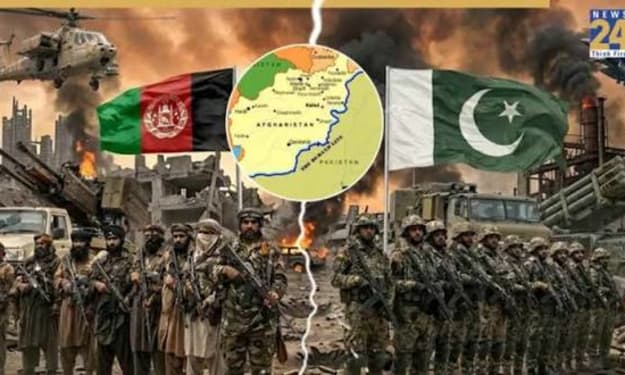
Non Stop War Between Pakistan And Afghanistan
The situation between Pakistan and Afghanistan has suddenly gotten much worse. In late February 2026, Pakistan said it is now in what it calls an “open war” with Afghanistan. Pakistan’s military carried out airstrikes on several major Afghan cities, including the capital Kabul and places like Kandahar and Paktia. This has caused fighting to grow significantly between the two neighbors. �
By shaoor afridi7 days ago in Serve
The Piggy Project
I’ve had so many names in this life I lose track of which ones were ever really mine and which ones I wore because someone needed me to. Some were handed to me before I had words to refuse them, before I knew what they meant, before I knew I could say no. Most weren’t meant to hurt. That doesn’t mean they didn’t leave marks. Marks that told me who I belong to, who I am by way of who claims me, recognizes me in the good and bad, who walks beside me.
By Fatal Serendipity2 days ago in Confessions



Comments
There are no comments for this story
Be the first to respond and start the conversation.