
India and Pakistan: Bridging the Divide Towards Lasting Peace
Exploring the India-Pakistan Conflict: Causes, Public Role, and Practical Steps Toward Lasting Peace in South Asia
Introduction
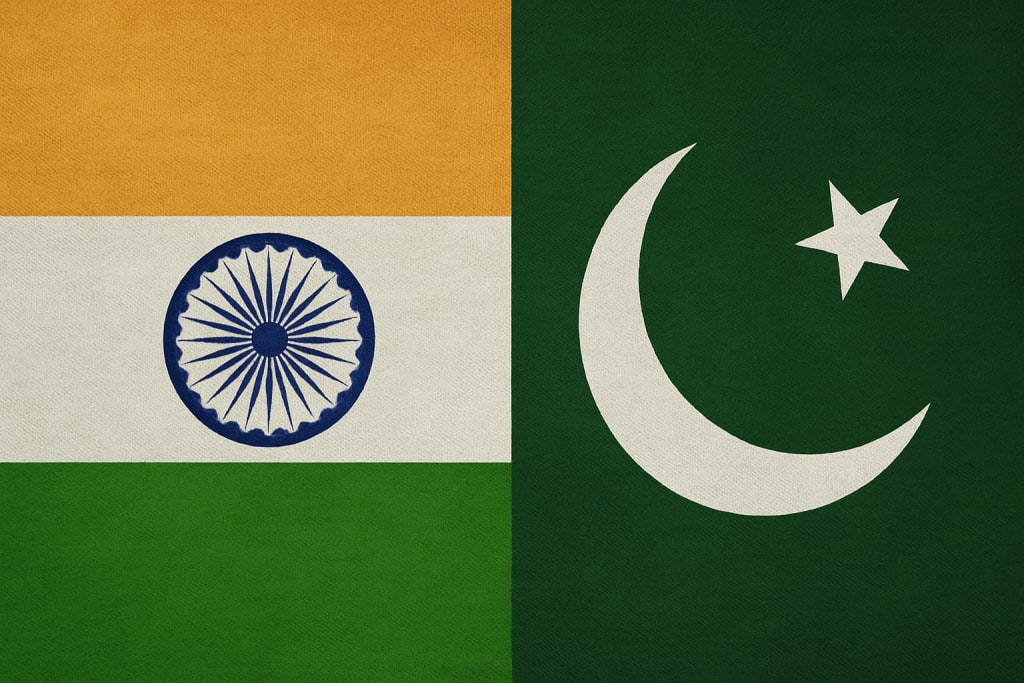
India and Pakistan, two neighboring nations born out of the same history, have been entangled in a complex and often hostile relationship since their partition in 1947. With three full-scale wars, numerous skirmishes, and constant diplomatic standoffs, the subcontinent remains one of the most volatile regions in the world. As of 2025, the situation between India and Pakistan continues to be marked by military tension, political mistrust, and socio-cultural disconnection. Yet, despite decades of conflict, there remains a strong desire among the people of both countries for peace, understanding, and cooperation.
This article explores the current tensions between India and Pakistan, the underlying causes, and offers a framework for peaceful engagement. It also examines how civil society, media, youth, and cross-border platforms can be effective tools in breaking the cycle of animosity.
---
Current Tensions: 2025 Overview
India and Pakistan's recent tensions stem from a mix of territorial disputes, particularly over Kashmir, cross-border militancy, political rhetoric, and lack of sustained diplomatic engagement.
Kashmir Conflict: The heart of the India-Pakistan conflict remains the disputed region of Jammu and Kashmir. Since the abrogation of Article 370 by India in 2019, which revoked the special status of Jammu and Kashmir, Pakistan has maintained a strong diplomatic opposition. Cross-border shelling and ceasefire violations continue sporadically, despite agreements.
Diplomatic Standstill: Diplomatic relations remain strained, with high commissioners often being recalled and talks frequently stalled due to political developments or incidents of violence.
Cross-Border Militancy: Incidents of alleged militant infiltration, particularly in Kashmir, continue to escalate mistrust. India accuses Pakistan of harboring and supporting terrorist networks, while Pakistan denies these allegations and counters with accusations of human rights violations by Indian forces in Kashmir.
Social Media and Nationalism: Digital platforms often amplify hate, misinformation, and jingoistic content, making public discourse increasingly polarized. Hyper-nationalism in both countries fuels the fire, leaving little room for dialogue.
---
The Path to Peace: Diplomatic and Political Steps
1. Resumption of Bilateral Dialogue: Both countries need to move beyond preconditions and initiate unconditional diplomatic dialogue. A structured, multi-level dialogue framework addressing all bilateral issues—especially Kashmir, trade, water sharing, and cross-border terrorism—is essential.
2. Third-Party Mediation: While India has traditionally rejected international mediation, a neutral facilitator like the United Nations or countries like Norway, Switzerland, or even regional players like UAE can help break diplomatic deadlocks.
3. Military Confidence-Building Measures (CBMs): Regular meetings between Directors-General of Military Operations (DGMO), hotline usage, and people-to-people border exchanges such as cross-border trade and pilgrimage initiatives can build trust at the operational level.
4. Joint Anti-Terror Task Forces: Collaborative intelligence-sharing and a joint task force to combat terrorism could help address India's concerns and prove Pakistan’s intent to curb militancy.
---
The Role of Media: From Propaganda to Peacebuilding
Media has an enormous influence on shaping public opinion and national narratives. In both countries, mainstream television and digital platforms are often guilty of sensationalism, nationalism, and demonizing the other side.
1. Responsible Journalism: Media houses should avoid inflammatory headlines, unverified claims, and war-mongering. Cross-border collaboration between journalists, media training programs, and fact-checking alliances can counter misinformation and build balanced narratives.
2. Peace Journalism Initiatives: Newspapers and news channels should allocate space for peace stories—shared histories, cultural similarities, and stories of friendship across borders. Organizations like Aman ki Asha (Hope for Peace) by Jang Group (Pakistan) and The Times of India previously demonstrated how such efforts can foster goodwill.
3. Regulation of Social Media: Tech companies must be pressured to take down hate speech, fake news, and propaganda quickly. Governments should collaborate with social media platforms to promote verified content and curb toxic nationalism.
---
Public Engagement: The People's Peace Movement
People of India and Pakistan share common languages, cuisines, music, and traditions. Public support for peace is growing, particularly among youth.
1. Student and Youth Exchanges: Scholarship programs, academic partnerships, and youth forums should be established to allow students from both nations to study and interact with each other. Firsthand experiences foster empathy and break stereotypes.
2. Cultural Diplomacy: Art, cinema, literature, and sports can play a pivotal role. Joint film festivals, book fairs, concerts, and cricket matches—especially with neutral venues—can humanize the "enemy."
3. Cross-Border Marriages and Humanitarian Exchanges: Families separated during partition or due to visa policies should be given opportunities to reconnect. Humanitarian visas for medical treatment, religious pilgrimage, and family visits must be simplified.
4. Grassroots Peace Organizations: NGOs working on peacebuilding should receive recognition and support. Initiatives like the Pakistan-India People's Forum for Peace and Democracy (PIPFPD) have long advocated for mutual understanding and deserve institutional backing.
---
Educational Reforms: Shaping Minds for Peace
Much of the animosity between India and Pakistan is rooted in historical narratives passed down through generations.
1. Curriculum Revision: History textbooks should be revised to present an unbiased account of the subcontinent’s partition and post-independence developments. Emphasizing shared history and mutual struggles under colonial rule can foster a sense of connected identity.
2. Peace Education Programs: Schools and universities should include modules on peace, conflict resolution, tolerance, and empathy. Exchange of educational content and online peace classrooms can be effective.
3. Language Learning: Promoting Hindi/Urdu learning across the border can reduce the linguistic barrier and enhance communication.
---
Role of Religious and Community Leaders
Religion has often been manipulated to serve political ends, yet faith leaders also have the power to guide societies towards peace.
1. Interfaith Dialogues: Religious scholars from both sides should initiate public discussions promoting love, tolerance, and coexistence, highlighting shared spiritual traditions.
2. Condemnation of Extremism: Clerics must unequivocally denounce terrorism and hate ideologies in sermons, social media, and public addresses.
---
Technology and Track-II Diplomacy
1. Online Collaboration Platforms: Virtual platforms like Zoom, Clubhouse, or even Facebook groups allow for dialogue among citizens. Writers, poets, artists, and thinkers from both countries can participate in online forums for discussion and creativity.
2. Track-II Diplomacy: This involves unofficial dialogues between retired diplomats, military officials, scholars, and journalists. These backchannel communications can ease tensions and offer practical suggestions to official authorities.
---
Challenges Ahead
While all of the above strategies are promising, there are undeniable challenges:
Political Will: Both governments often prioritize short-term political gains over long-term peace.
Terrorism and Proxy Warfare: Rogue elements may try to derail peace efforts through provocations.
Public Polarization: Populism thrives on creating an "enemy" to unite domestic voters.
Media Censorship and Surveillance: Free media and civil society activism face constraints in both nations.
---
Conclusion: A Shared Destiny
India and Pakistan may be divided by borders and ideologies, but they are united by history, geography, and destiny. Peace is not just a moral imperative but a necessity for the future prosperity of South Asia. Only through mutual understanding, open dialogue, and sustained engagement can the region move toward lasting harmony.
The people of India and Pakistan—armed with hope, culture, and shared humanity—must lead this transformation. Peace is possible, and its seeds lie not only in grand political gestures but also in the small acts of kindness, conversations, and connections across the divide.
About the Creator
Keep reading
More stories from Ikram Ullah and writers in Serve and other communities.
Trump’s Citizenship Threats: Fear and Uncertainty for Millions of Naturalised Americans
In a move stirring controversy across political and legal circles, United States President Donald Trump has once again ignited a fierce debate over the security of American citizenship. His recent threats to revoke the citizenship of some high-profile naturalised Americans—including billionaire tech entrepreneur Elon Musk and New York mayoral candidate Zohran Mamdani—have triggered anxiety among millions of immigrants who have made the U.S. their permanent home.
By Ikram Ullah8 months ago in Serve
War Between Pakistan And Afghanistan
Tension Escalates Sharply at the Pakistan-Afghanistan Border What’s happening now? Tensions between Pakistan and Afghanistan have suddenly escalated into heavy fighting along their shared border, known as the Durand Line. Both sides are accusing each other of attacks, and military clashes have intensified in recent days. 
By shaoor afridi2 days ago in Serve
Israel Attacking On Iran
Israel has carried out major air and missile strikes on Iranian targets. Explosions were reported in Tehran and other areas. Israeli leaders say they attacked to stop Iran’s military and missile capabilities before Iran could launch its own large attack.
By shaoor afridiabout 5 hours ago in Serve

Comments
There are no comments for this story
Be the first to respond and start the conversation.