
If I Am Poor: What I think
"Exploring the Emotional, Psychological, and Social Dimensions of Poverty, and What It Teaches Us About True Riches"

If I Am Poor: What I think
Poverty is often viewed through a lens of hardship, struggle, and deprivation. It's a condition affecting millions of people in the world today, but it's something none of us may relate to unless we experience it ourselves. If I look through the eyes of what it is like to be poor, I would not only consider the lack of material resources but also the aspects of life that are intangible and yet plumb those experiences of poverty.
The Burden of Material Poverty
At its core, not having enough money or access to the most basic items means being poor. A lack of financial security makes even the simplest things, shelter, a constant source of worry. And behind it all lies an anxiety - the question that lingers every day: How am I going to survive? Where will my next meal be?
Being poor is being caught in the cycle of survival, with endless, everyday decisions between things that others might take for granted—such as choosing between paying for electricity or buying groceries. Freedom to choose how one wants to spend one's time, talents, or money is not so easily given when one has to weigh every decision against keeping the basic needs of having a roof over your head, money in the bank, and food on the table.
The Psychological and Emotional Cost
Besides the material losses, poverty inflicts a psychological burden. Poverty can affect the sense of self-respect of a human being. Success and wealth have been wedded in most cultures; therefore, poverty becomes a source of feeling worthless or shameful. The persistent strain of economic insecurity may cause anxiety, stress, and even depression. I would feel alienated from my environment because my social setting was living in a world different from mine, a world where money is easy and sure.
There is also frustration over being denied access to opportunities. Opportunities for education, healthcare, and personal improvement may seem unattainable in poverty. The possibilities of finding dreams, creating a business, or taking a trip simply may appear unattainable when survival issues are foremost.
The Effects on Relationships
Poverty can also affect interpersonal relations. There is a lack of material means, of course, but also a social stigma attached to it. There can be embarrassment over not being able to contribute when there is a gathering to attend, or at least being supportive of friends and family the way others might expect. Sometimes, people in poverty suffer from alienation from those who might have more means, entailing social isolation or a communication breakdown.
On the other hand, poverty gives birth to deep feelings of solidarity and empathy. There is something bonding between people as they experience hardships; it transcends mere material wealth. People are taught to help one another survive in hardship because they rely on one another's support in times of trouble.
A Different View on Wealth
If I was in a poor background, then my view of wealth would change. I would not regard wealth as the epitome of success or happiness. Instead, I would realize that material possessions would not be such strong indicators of a happy life. While security in the pocket may feel good, intangible things like love, friendships, health, and having a purpose will be the true indications of wealth.
Strangely, poverty would perhaps be teaching me resilience and creativity. Without the cushion of financial resources, I would find ways to creatively solve problems and make the most out of what I have. People in poverty are usually resourceful, learning how to stretch limited resources and finding value in things that others might overlook.
Hope for the Future
Despite these adversities, being poor does not have to be a synonym of hopelessness. It can even be an impelling force for change. People in poverty often work enormously to bring about a change for their situation, mainly because they have a burning desire very deep inside them to create a better life for themselves and more so for their families. Determination to get out of the cycle can be a source of innovation, ambition, and then new ideas.
The road to success might be hard without wealth, but it doesn't necessarily mean impossible. A hunger for a better life might give even the most despondent individual enough motivation to move out of his situation. And of course, the right kind of support—whether that means education, mentorship, or social services—will always open doors and create room for change. Poverty is a condition, not an identity. No person is defined by their financial status; everybody can grow, regardless of whatever condition they are in.
Conclusion
If I were poor, then poverty would not mean just a lack of money but a struggle with stability, self-worth, and opportunity. The way I saw the world, with whom I wanted to spend my time, and how I went about life would differ. But even in poverty, there is room for hope, resilience, and change. Poverty may be a hard, isolating thing, but it's something that challenges and grows individuals intensely in ways that can make for an entirely different kind of wealth, one of experience, strength, and overcoming of hardship.
In the end, the experience of poverty is not about a missing thing but also something that can be gathered through endurance, people, and the quest for something beyond material accomplishment.
About the Creator
Keep reading
More stories from Kajal Singh and writers in Serve and other communities.
How to Attract Money Spiritually: 8 Law of Attraction Tips for Manifesting Wealth and Abundance
How to Attract Money Spiritually: 8 Law of Attraction Tips for Manifesting Wealth and Abundance In today’s fast-paced world, the pursuit of financial success, prosperity, and abundance often feels like a constant obsession. Whether you're seeking to improve your financial situation, manifest wealth, or experience the freedom of financial independence, the Law of Attraction offers a powerful toolset to help you align your energy with the flow of abundance.
By Kajal Singhabout a year ago in Motivation
Israel Attacking On Iran
Israel has carried out major air and missile strikes on Iranian targets. Explosions were reported in Tehran and other areas. Israeli leaders say they attacked to stop Iran’s military and missile capabilities before Iran could launch its own large attack.
By shaoor afridiabout an hour ago in Serve
Non Stop War Between Pakistan And Afghanistan
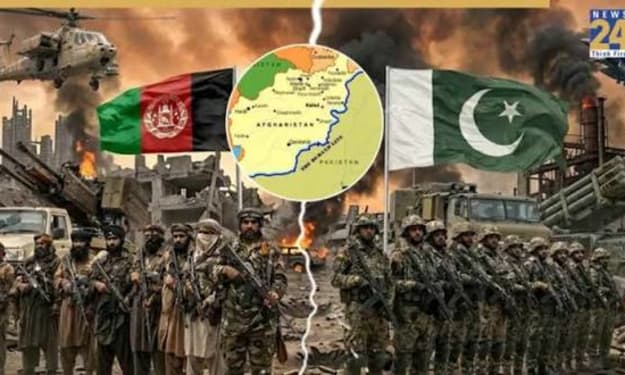
The situation between Pakistan and Afghanistan has suddenly gotten much worse. In late February 2026, Pakistan said it is now in what it calls an “open war” with Afghanistan. Pakistan’s military carried out airstrikes on several major Afghan cities, including the capital Kabul and places like Kandahar and Paktia. This has caused fighting to grow significantly between the two neighbors. �
By shaoor afridiabout 15 hours ago in Serve



Comments
There are no comments for this story
Be the first to respond and start the conversation.