
How Are Defence Models Used in Government and Contractor Presentations?
Why physical models remain essential tools for communication, persuasion, and clarity in high-stakes defence presentations.
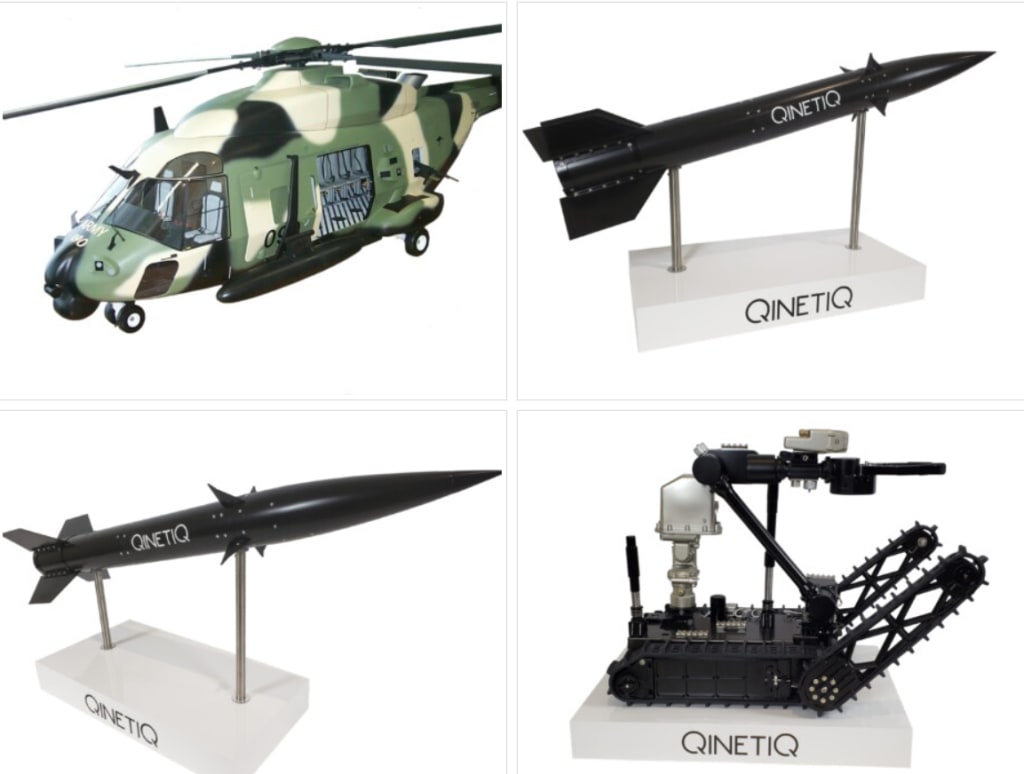
In today’s defence industry, where billions of dollars hinge on innovation, clarity, and trust, the ability to communicate complex ideas effectively is just as important as the engineering behind them. While digital tools like simulations, PowerPoints and CAD renderings certainly have their place, physical defence models continue to play a vital role in presentations—particularly those delivered to government stakeholders and major contractors.
But why is that the case? What value do physical models bring to high-level presentations, where decision-makers are often time-poor and highly focused?
Let’s explore the ways defence models are used as practical, persuasive tools in both government and contractor presentations—and why they still matter in an increasingly digital age.
1. Simplifying Complex Systems
At the heart of every defence pitch is complexity—layered systems, integrated technologies, modular upgrades, and tactical use-cases. Whether you're pitching a new reconnaissance drone or an entire mobile command unit, conveying that information in a way that makes immediate sense is crucial.
Physical models do what flat diagrams and technical specs can’t: they show the full picture. Stakeholders can visualise the system’s size, structure, and components in a way that’s intuitive and memorable.
This is especially important when presenting to government officials or procurement officers who may not come from a technical background. A detailed, scaled model can bridge that knowledge gap, allowing everyone in the room to understand what’s being proposed.
2. Demonstrating Modularity and Flexibility
Many defence systems today are designed with adaptability in mind—they can be reconfigured, upgraded, or scaled to meet mission-specific requirements. Physical models are an excellent way to demonstrate this in action.
For example, a model of an armoured vehicle might show swappable turrets or removable mission pods. A naval vessel model might include optional sensor systems or deck layouts. In these cases, the physicality of the model helps reinforce the message: this platform is versatile.
Contractors often use these features to stand out in competitive procurement environments. Showing, rather than just telling, a government client how a platform can be tailored to meet their operational needs builds immediate confidence.
3. Enhancing Storytelling and Strategic Messaging
Defence presentations are not just about specs—they’re about narratives. A good presentation doesn’t just explain how a system works; it explains why it matters in a strategic context.
Models allow presenters to stage scenarios. You might present a scale diorama showing a coastal defence system, a base under protection, or a joint operation between land, air and sea forces. This storytelling approach is far more engaging than reading out bullet points on a slide.
For government departments evaluating capability gaps or for contractors assessing integration potential, these models illustrate how solutions function in the real world, not just on paper.
4. Establishing Credibility and Craftsmanship
Bringing a high-quality, detailed defence model into a meeting sends a strong signal: we’re serious about this solution. It suggests your company has invested time, thought, and resources into understanding both the technology and the client’s needs.
In some ways, the model is a stand-in for your own brand and commitment to excellence. If your model is inaccurate, flimsy, or poorly presented, it raises questions about the product behind it. Conversely, a precise, well-crafted model inspires trust.
Model-making specialists like Austek Models, based in Australia, understand the level of detail and accuracy required for these presentations. Their custom-made defence models reflect not only the technology, but also the professionalism of the team behind it.
5. Aiding Procurement Decisions
In defence procurement, especially at the government level, there’s a lot at stake. Decisions often involve large budgets, long-term partnerships, and political scrutiny. A physical model helps make those decisions more tangible.
A scale model allows evaluators to better understand the physical footprint of a system—how it might fit into existing facilities, whether it’s deployable by current transport systems, or how personnel might interact with it.
For large and complex procurements (e.g., shipbuilding programs, missile defence systems, joint strike capabilities), models also assist in side-by-side comparisons. When several contractors are offering competing systems, physical models provide a level playing field for assessment.
6. Supporting Collaborative Development
It’s not just about the pitch. Defence models are often used throughout the development and consultation process. Contractors may bring models into design review meetings or workshops with government departments, using them as tools to gather feedback or explain refinements.
This hands-on approach helps teams co-develop solutions more effectively. It creates a shared visual reference point and allows diverse stakeholders—engineers, strategists, procurement officers—to speak the same language.
Physical models also work well in workshops involving cross-agency collaboration, where different parts of the defence ecosystem (land, air, maritime, cyber) must coordinate their efforts. A unified model can help everyone understand their part in the broader picture.
7. Leaving a Lasting Impression
Once a meeting ends, digital presentations are quickly forgotten. But a physical defence model—or even a smaller version gifted to the client—can leave a lasting impression. It serves as a reminder of the proposal and reinforces the credibility of the presenting organisation.
Many contractors commission scaled-down replicas specifically for this purpose, offering them as takeaways after major presentations. These aren’t throwaway promo items—they’re valuable desk pieces that keep your brand and your solution top of mind long after the meeting has ended.
Final Thoughts: Still Relevant, Still Powerful
In a defence sector increasingly reliant on virtual tools, artificial intelligence, and advanced simulations, physical defence models might seem old-school—but they’re anything but outdated.
Used strategically, defence models remain one of the most effective communication tools available to defence companies and government contractors. They clarify, persuade, and connect. They help technical teams align with non-technical stakeholders, and they reinforce the professionalism of any proposal.
Whether you're pitching a new capability to the Australian Defence Force, showcasing interoperability to a prime contractor, or working with international partners—a physical model can make all the difference.
About the Creator
Keep reading
More stories from Austek Models and writers in Serve and other communities.
The Art of Precision: Why an Architectural Model Maker is Essential for Your Project
Why Architectural Models Still Matter in the Digital Age In a world dominated by 3D renders and virtual reality, you might wonder whether traditional architectural model making still has a place. The answer? Absolutely! While digital tools provide impressive visualisations, nothing compares to the tangible experience of a physical model. Whether you're a developer, architect, or investor, an expertly crafted model bridges the gap between concept and reality, providing a level of clarity that screens simply can't replicate.
By Austek Modelsabout a year ago in Journal
The Impact of World War I: Global Changes and Costs
World War I, often called the Great War, was a conflict that reshaped the political, social, and economic landscape of the 20th century. Beginning in 1914 with the assassination of Archduke Franz Ferdinand of Austria-Hungary, the war quickly escalated due to complex alliances, rising nationalism, and militarism in Europe. Nations including Germany, Austria-Hungary, Britain, France, Russia, and eventually the United States were drawn into a conflict that would last four brutal years and leave an indelible mark on the world.
By shaoor afridi5 days ago in Serve
Rising Tensions: The Current State of Iran-U.S. Relations and Global Implications
Relations between Iran and the United States have been tense for decades, shaped by political rivalry, military confrontations, and deep ideological differences. In 2026, these tensions have escalated again, drawing global attention and raising concerns about regional stability and international security. The situation involves military actions, economic sanctions, and disputes over nuclear development, all of which could have major consequences for the world.
By shaoor afridi3 days ago in Serve



Comments
There are no comments for this story
Be the first to respond and start the conversation.