
He turned his Father's local bakery into Billions!
Story of Ferrero Rocher

This is the story of Michaela Ferrero. He was born in 1889 in Piedmont, Northwest Italy, an area known for its border with Switzerland and the picturesque Alps in the background.
Michaela grew up in the small town of Alba, situated between Turin and Genoa in the southern part of Piedmont. Alba is famous for its prestigious vineyards, rich Roman history, and architectural sites dating back to the 12th century.
It was in Alba that Michaela's father, Pietro, started a humble bakery with a grand vision. Trained as a pastry chef, Pietro became obsessed with finding the perfect balance of cocoa and hazelnuts, which were readily available locally.
This quest led to the creation of his own version of "zanduya," a thick, dark, chocolatey paste that became synonymous with the region, making Piedmont famous for chocolate. Pietro marketed his recipe as "pasta zanduya," and this creamy spread quickly became a regional delight, eventually becoming a nationwide best-seller.
In 1946, together with his brother Giovanni, Pietro formed the company Ferrero to expand the business from a small pastry shop and chocolatier into a large company.
Interestingly, Pietro's most significant business decision was not made in his shop, but when his wife, Pietra, gave birth to their only child, Michele, in 1925. Michele grew up in Alba, a small rural town with limited activity at the time. However, by the end of his career, he would transform the town into a regional destination and the powerhouse of a global empire.
Michele learned the trade by closely following his father, but tragedy struck when his father passed away at a young age of 51, leaving the business in the hands of his brother Giovanni and a grieving Michele. Less than a decade later, Giovanni also passed away, leaving Michele heartbroken and in charge of a rapidly growing business.
Pietro Ferrero's products were unique, and the ingredients he used became his signature. Hazelnuts provided a more affordable substitute for chocolate, which was difficult to import, especially during wartime when Italy was cut off from the rest of Europe. Pietro's ingenuity led him to establish a company, a workshop, and acquire a factory to ramp up production. Little did he know how his legacy would be transformed after his son took over the company.
Michele started his leadership with a bold move. Instead of using the chocolate bar or as a filling, his genius move was to create a chocolate spread called "Super Crema," which was launched in 1949, two years after Michele assumed control. It instantly became a hit and made chocolate an everyday indulgence for the average Italian. Super Crema was packaged in a jar, alongside other spreads used on bread.
Michele understood that advertising and marketing could create demand, and within a decade, Ferrero had opened three new factories, two of which were outside Italy. The German market played a crucial role in Ferrero's success, as old missile factories were converted into candy manufacturers.
In 1964, Michele made another defining move. He changed the name of Super Crema to Nutella, combining the English word "nut" with an Italian diminutive associated with other food products like mozzarella, portabella, and citronella.
However, it wasn't just a simple rebranding. Michele inherited his father's obsession with finding the perfect balance of ingredients, and Nutella was launched with a different recipe, which remains top-secret to this day. The original recipe was reportedly translated into Arabic and locked in an Egyptian vault.
Over the years, Ferrero expanded its product range, introducing various Kinder products such as the Kinder Surprise egg-shaped chocolate with a small toy inside, Kinder Bueno wafer sticks, Kinder Maxi King ice creams, and many more.
Each product targeted a specific demographic, with Ferrero Rocher representing decadence and prosperity, Kinder aimed at children, and Nutella being a versatile, all-purpose product.
Michele's marketing genius allowed him to maintain a luxurious image for the company while launching different products for various markets, each with its own distinct brand. Ferrero remained politically neutral and rarely engaged in sponsorship deals.
Michele's connection to his roots remained strong as well. He funded the expansion of bus lines to bring workers from the countryside and supported various social programs, ensuring a local population of workers embedded in the community.
In 1979, just a few years after releasing Ferrero Rocher, Michele unveiled his masterpiece. Inspired by a pilgrimage to Roche de mesopiel in southern France, where a saint once reported a vision of the Virgin Mary, Michele took the name "Roche '' and coined the name Ferrero Rocher for his new chocolate.
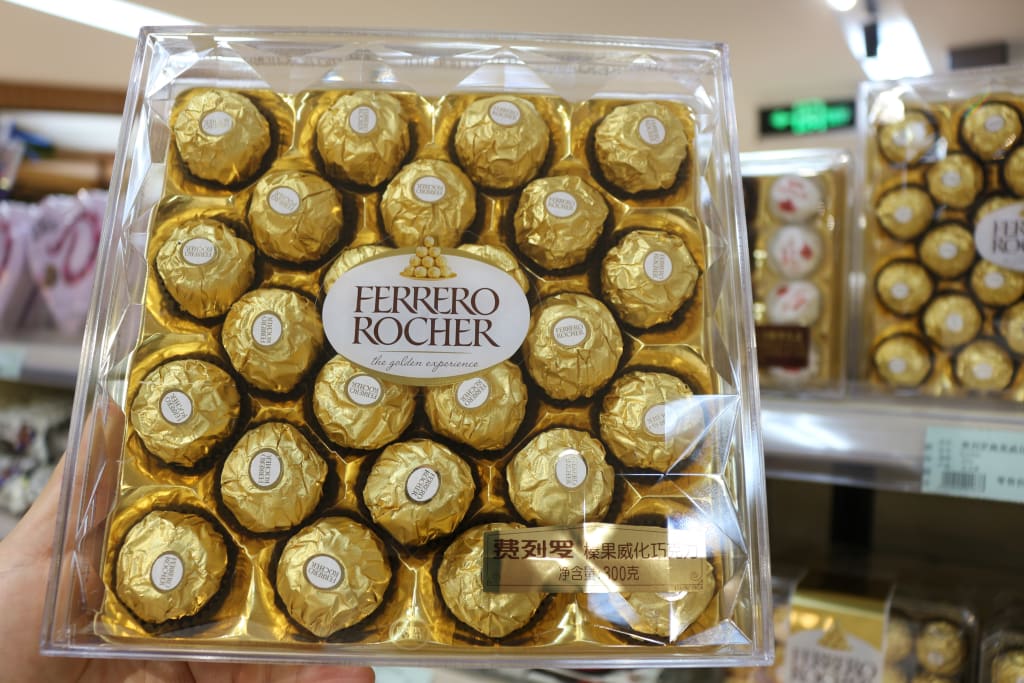
The profound meaning behind the chocolate was matched by its exquisite composition. Ferrero Rocher consisted of three layers: a whole crunchy hazelnut dipped in Nutella, wrapped in a wafer shell, and topped with chocolate and roasted hazelnut pieces. However, it was the packaging that became equally famous.
Each piece was wrapped in gold foil, glued to a paper cup, and stamped with the brand name. This distinctive packaging created an association with wealth and decadence. Ferrero Rocher became a staple of celebrations, with over half of its sales occurring in the last three months of the year, leading up to Christmas and New Year's Eve.
Michele continued to globalize both sales and production, expanding Ferrero's products to the rest of the world. He diversified the sourcing of raw materials and built eight factories across five continents, along with sales offices. Today, Ferrero is the largest buyer of hazelnuts globally, consuming around 25 percent of the entire global production.
Michele Ferrero's impact on his hometown of Alba is particularly significant. What was once a small agricultural community has now transformed, with one-fifth of the population employed by Ferrero. While the headquarters of the global empire remains in Turin, Michele's legacy lives on.
After his passing in 2015, his sons Giovanni and Pietro took over the company in 2019. The Ferrero group boasts over $11 billion in annual revenue and further solidified its position in the global food market by acquiring $2.8 billion worth of businesses from Nestle, its largest competitor.
The Ferrero company has remained in the family, and Michele's vision continues to thrive. His contributions to the chocolate industry and his commitment to his roots are evident. He left behind a lasting legacy, not only as the king of chocolate but also as a compassionate leader who cared for his employees and his community.
About the Creator
Putinsnappy” Dead or Alive?
1. Who Is “Putinsnappy”? First, it’s important to explain the name “Putinsnappy.” Searches show that @MrPutinSnappy is a social media or parody account name (likely on platforms like X/Twitter) that presents commentary about world politics and Russia. It is not an official account of the Russian president, nor does it have any authoritative standing. �
By shaoor afridi7 days ago in Serve
The Impact of World War I: Global Changes and Costs
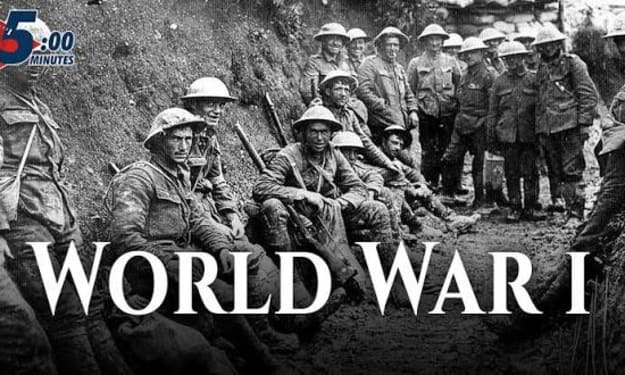
World War I, often called the Great War, was a conflict that reshaped the political, social, and economic landscape of the 20th century. Beginning in 1914 with the assassination of Archduke Franz Ferdinand of Austria-Hungary, the war quickly escalated due to complex alliances, rising nationalism, and militarism in Europe. Nations including Germany, Austria-Hungary, Britain, France, Russia, and eventually the United States were drawn into a conflict that would last four brutal years and leave an indelible mark on the world.
By shaoor afridi3 days ago in Serve


Comments
There are no comments for this story
Be the first to respond and start the conversation.