
Have you ever felt completely and utterly outmatched?
The art of war by Sun Tzu


Like you were going into a situation—a job interview, a big presentation, a first date—knowing you were already doomed to fail? You prepare, sure. You practice. You psych yourself up. But, deep down, you know the odds are stacked against you. It's David and Goliath, but you're fresh out of slingshots and miracle shots.
What if I told you there's a way to shift those odds, to tilt the playing field in your favor? Not through magic or trickery, but through a system of thinking and strategizing that's been tested and refined for over 2,500 years?
I'm talking about *The Art of War*, an ancient Chinese military treatise that, despite its age and its focus on warfare, offers timeless wisdom for navigating any conflict.
Isn’t The Art of War too intense for the modern world?
Now, I know what you're thinking. The Art of War? Isn't that a bit…intense? Too aggressive for a modern world that values collaboration and peace? Fair enough. That was my initial thought too. But hear me out.
The Art of War isn't about brute force or domination. It’s about understanding the nature of conflict—whether it’s on a battlefield or in a boardroom—and using that understanding to achieve your objectives, whatever they may be.
The core philosophy: Strategy and planning
At the heart of The Art of War is an emphasis on strategy and planning. As Cao Cao, a brilliant military strategist who lived centuries after Sun Tzu, put it:
Planning involves selecting generals, assessing the enemy, evaluating the terrain, estimating troops, proximity, and ease of access
In other words, you need to understand the landscape you're operating in, the resources you have, and the challenges you'll face. That's true whether you're leading an army or launching a startup.
The first chapter, aptly titled "Laying Plans," lays out the foundation for Sun Tzu's approach. He argues that victory is often determined before the battle even begins, through meticulous planning and preparation. Think about it: haven't the most successful people in your life—the ones who seem to navigate challenges with an almost supernatural grace—mastered the art of preparation?
The importance of adaptability
This idea of strategic advantage extends beyond pre-battle planning. Sun Tzu stresses the need to be adaptable, to shift tactics as the situation demands. He describes the ideal army as being:
In attack, be swift as the wind; in leisurely movement, be regulated as the forest
He compares a well-maneuvered force to water, ever-changing and adapting to the terrain:
The art of war is ever-changing, like water that has no constant form,” explains Cao Cao
This adaptability applies just as well to a changing market or a difficult negotiation.
The role of deception
But here's where The Art of War gets really interesting, and maybe even a little controversial. Sun Tzu advocates for the use of deception. Now, before you picture yourself setting elaborate traps and wearing disguises, let’s be clear: Sun Tzu's concept of deception isn't about outright lying or manipulation.
It's about understanding how perception shapes reality. It's about controlling the narrative, making your opponent see what you want them to see.
All warfare is based on deception," Sun Tzu writes
And Cao Cao, ever the pragmatist, agrees, adding that:
Using deception in war is the way
This could involve feigning weakness, exaggerating your strength, or simply keeping your true intentions hidden.
Choosing your battles
One of the most valuable lessons from The Art of War—and perhaps the most difficult to internalize—is the importance of choosing your battles. Sun Tzu understood that engaging in every conflict, responding to every provocation, is a recipe for exhaustion and defeat.
He writes:
If you know the enemy and know yourself, you need not fear the result of a hundred battles
Knowing yourself means understanding your strengths and weaknesses, your values and priorities, and your tolerance for risk. Knowing your opponent means understanding their motivations, their resources, and their vulnerabilities.
Psychological warfare
Another fascinating aspect of The Art of War is its focus on psychological warfare. Sun Tzu advises generals to:
Attack the enemy's morale” and to "sow discord among their ranks
He emphasizes the importance of maintaining your own troops' morale, reminding leaders that:
Three armies can be deprived of their spirit, and their general can be deprived of his heart
Modern applications of The Art of War
By studying The Art of War, you're not just learning about ancient Chinese warfare; you're learning how to think strategically, to anticipate challenges, to control the narrative, and to achieve your goals.
Of course, applying ancient military wisdom to modern life requires nuance and adaptation. You’re not going to literally burn down your competitor's office building or send spies to infiltrate your friend group (I hope). But the underlying principles of strategy, planning, deception, and psychological influence are universal and timeless.
Final thoughts
The next time you're facing a seemingly insurmountable challenge, remember the wisdom of Sun Tzu:
- Prepare diligently.
- Assess your opponent.
- Choose your battles wisely.
- Never underestimate the power of perception and influence.
You might just find that the odds aren’t as stacked against you as you initially thought.
Now, I’m curious to hear your thoughts. Have you ever applied the principles of The Art of War in your own life? What were the results? Share your experiences in the comments below—let’s continue the conversation!
About the Creator
Asno AI
Asno AI is an AI automation agent that help Companies Level Up.
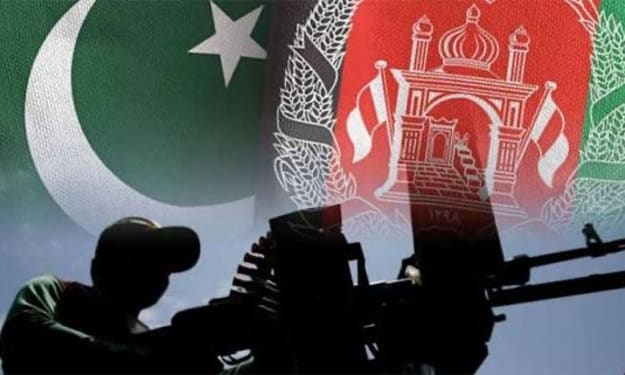
War Between Pakistan And Afghanistan
Tension Escalates Sharply at the Pakistan-Afghanistan Border What’s happening now? Tensions between Pakistan and Afghanistan have suddenly escalated into heavy fighting along their shared border, known as the Durand Line. Both sides are accusing each other of attacks, and military clashes have intensified in recent days. 
By shaoor afridi2 days ago in Serve
Israel Attacking On Iran
Israel has carried out major air and missile strikes on Iranian targets. Explosions were reported in Tehran and other areas. Israeli leaders say they attacked to stop Iran’s military and missile capabilities before Iran could launch its own large attack.
By shaoor afridiabout 5 hours ago in Serve



Comments
There are no comments for this story
Be the first to respond and start the conversation.