


Beyond Orders: How Germany Built a Military Where Conscience Comes Before Command”
🇩🇪 One of the most remarkable aspects of the modern German Army (Bundeswehr) is its moral foundation: soldiers are not only allowed, but obligated to disobey any order that violates human dignity. It is a principle that sets the Bundeswehr apart from many militaries around the world, and it represents one of the most profound lessons drawn from the tragedies of the twentieth century. In a stark contrast to the old doctrine of “just following orders,” the Bundeswehr was rebuilt after World War II on a philosophy known as Innere Führung, leadership guided by conscience, democracy, and human rights. This principle ensures that soldiers are not simply instruments of the state, but moral individuals whose first duty is to humanity itself.
To understand why this philosophy matters, it is important to look back at history. During World War II, Germany’s military machine became synonymous with blind obedience. Soldiers were conditioned to follow orders unquestioningly, even when those orders led to atrocities against civilians, violations of international law, and crimes against humanity. The defense of “just following orders” became a chilling refrain at the Nuremberg Trials, where high-ranking Nazi officials tried to justify their complicity in war crimes by pointing to a culture of rigid hierarchy and unquestioned command. The world recognized that such a defense could never again be acceptable. From that dark chapter, Germany drew a hard lesson: never again should obedience override conscience.
Thus, when Germany began rebuilding its military in the 1950s, it did so with a radically different approach. The Bundeswehr was not designed to be a force of blind obedience, but one that embodied democratic values. At the heart of this was Innere Führung, a philosophy developed by Wolf Graf von Baudissin and other reformers. This framework emphasized that soldiers are “citizens in uniform”, bound by the same rights, responsibilities, and moral obligations as any other citizen in a democratic society. Soldiers were not to suspend their humanity the moment they donned a uniform. Instead, they were expected to carry their values with them, using conscience and judgment as essential tools of service.
What makes Innere Führung so powerful is its insistence that dignity and democracy are not abstract ideals, but daily responsibilities. Orders that violate human dignity are considered illegal under German military law, and soldiers have both the right and the obligation to refuse them. This transforms the role of a soldier from a passive instrument of power into an active guardian of moral responsibility. It is a recognition that the horrors of the past were made possible not just by the cruelty of leaders, but by the silence and compliance of ordinary people who obeyed without question.
In practice, this philosophy changes everything about how the German military operates. Training is not just about weapons and tactics, it is also about cultivating moral judgment. Soldiers are encouraged to think critically, to question orders when necessary, and to remember that they are accountable not only to their superiors but also to the principles of humanity and the rule of law. This culture creates a different kind of soldier: one who knows that loyalty to the state never excuses betrayal of human rights.
The implications of this approach extend far beyond Germany. In a world where militaries still operate under strict hierarchies, where orders are often carried out without question, the Bundeswehr model offers a powerful alternative. Imagine a world where every army taught its soldiers that conscience comes before command. Imagine conflicts where civilian lives are valued as sacred, where human dignity is protected even in the fog of war, and where soldiers see themselves not just as fighters but as moral actors. Such a world may seem idealistic, but Germany’s example shows that it is possible to reimagine military culture around these principles.
The moral strength of Innere Führung also speaks to civilian life. At its core, it is a reminder that no one is excused from moral responsibility. Whether in uniform or not, each individual has the duty to question injustice, to resist when orders or systems demand cruelty, and to place human dignity above blind compliance. It is a lesson that resonates far beyond the battlefield. In workplaces, governments, and communities, the temptation to say “I was just following orders” or “that’s just the way things are” remains strong. The Bundeswehr model challenges that temptation, reminding us that integrity often requires courage, the courage to say no, even when saying no comes at great cost.
Critics sometimes question whether such a philosophy can hold up in the heat of conflict. After all, armies rely on discipline and quick obedience. If soldiers begin questioning every command, won’t effectiveness break down? Yet Germany’s military experience shows that the opposite can be true. A force that integrates conscience into its structure is one that avoids catastrophic moral failures. It is one that earns legitimacy in the eyes of its citizens and the world. And it is one that, in the long run, can act with greater precision and humanity because its soldiers understand why they fight, not just how to fight.
There are lessons here for the global community as well. International humanitarian law already places obligations on soldiers to refuse illegal orders, such as those involving torture, targeting civilians, or using banned weapons. Yet in many militaries, these obligations remain theoretical. In reality, the pressure to obey is overwhelming, and whistleblowers or dissenters often face punishment. By making the refusal of immoral orders a central part of its doctrine, Germany has demonstrated that such principles can be integrated into military identity rather than treated as inconvenient exceptions.
For teachers, leaders, and ordinary citizens, this story also offers a teaching moment. The rebuilding of the German military after WWII is not only about strategy, it is about moral transformation. It shows that even in the aftermath of great darkness, societies can create systems designed to prevent future atrocities. It shows that values like dignity and democracy are not luxuries, but necessities if peace is to be lasting. And it shows that institutions, when built with moral clarity, can influence not just their own members but the world’s imagination of what is possible.
At its heart, the philosophy of Innere Führung is not about making soldiers weaker, it is about making humanity stronger. A soldier trained to respect dignity is less likely to commit crimes, less likely to spread fear, and more likely to protect the very people they are meant to serve. In a time when conflicts continue to scar the globe, from civilian bombings to systemic human rights abuses, Germany’s example stands as a beacon. It suggests that a better way is possible, one where military might does not come at the expense of morality, but where strength and conscience walk hand in hand.
The Bundeswehr may not be perfect, and no army is immune to mistakes. But the principle it enshrines, that obedience must never override humanity, remains one of the most powerful ideas to emerge from the wreckage of war. It is an idea worth remembering, worth teaching, and worth spreading beyond Germany’s borders. Because if history has shown us anything, it is that silence and blind obedience can enable unimaginable harm. By refusing to repeat that mistake, Germany has shown the world how to embed morality at the very core of power.
A soldier isn’t just a weapon. They are a human being first, a citizen, a moral actor, and a guardian of dignity. Imagine a world where every army recognized that truth. Imagine a future where every order is weighed not only by strategy but by conscience. That is the vision of Innere Führung, and it is a vision the world urgently needs. 🙏🏻❤️
About the Creator
Lifehub
Some stories fade, but some stay forever, shaping how we feel, think, and see the world. Here, we share the ones that matter most: stories of love, hope, and humanity 💙. Subscribe and be part of a journey that inspires and connects. ✨
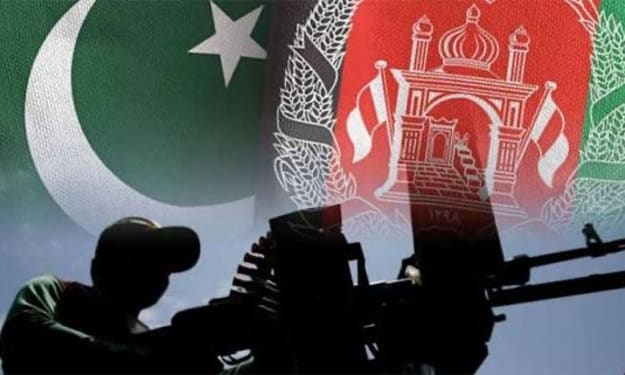
War Between Pakistan And Afghanistan
Tension Escalates Sharply at the Pakistan-Afghanistan Border What’s happening now? Tensions between Pakistan and Afghanistan have suddenly escalated into heavy fighting along their shared border, known as the Durand Line. Both sides are accusing each other of attacks, and military clashes have intensified in recent days. 
By shaoor afridi3 days ago in Serve



Comments
There are no comments for this story
Be the first to respond and start the conversation.