
Adapting to Market Changes: How LPG Dealerships Can Stay Competitive
Discover how LPG dealerships can stay competitive amidst rising costs, inflation, and changing customer needs. Learn effective pricing strategies, operational efficiency tips, and the role of technology to boost profitability and customer satisfaction.
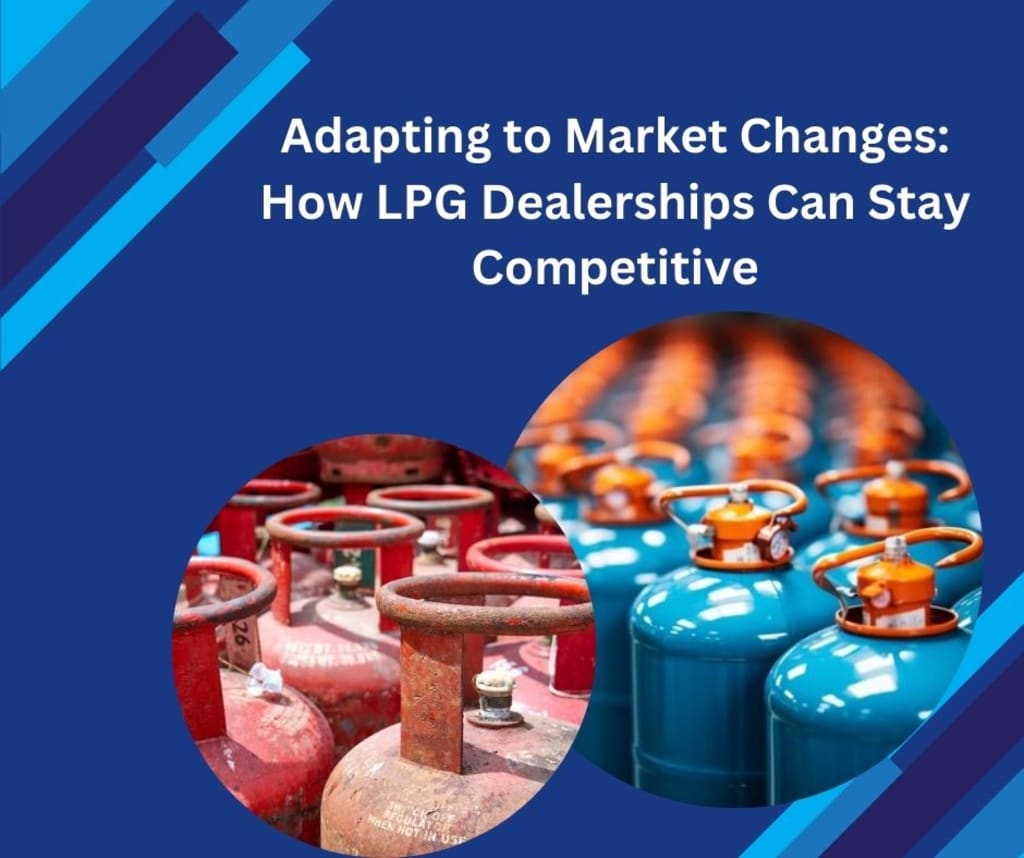
LPG or Liquefied Petroleum Gas industry is undergoing a revolutionary change that is caused by factors such as inflation, increases in raw material cost, and changing customer needs. Consequently, LPG gas dealerships are forced to respond to such changes to develop a competitive advantage. However, doing so is not only a question of mere survival in the present economic environment but rather a question of coming through the environment in a profitable, customer-satisfying, and growing manner as a result of the effective application of the strategies.
Here in this blog, we are going to discuss how LPG dealerships can overcome the problem of change and adopt the right pricing strategy along with better operations and customer-oriented tactics.
The Challenge: Rising Costs and Inflation
As it has been seen, inflation has affected the LPG sector, as has been the case with many other sectors of the economy. This research found that high costs of production for raw materials and transportation have pushed distributors to reconsider their pricing strategies. The pressure to strike a balance between the LPG prices and the profits to be made via the company is now proving to be increasingly difficult for the LPG dealerships.
The customers are becoming so price conscious and despite there being a good demand for LPG, it becomes a challenge to balance the price to meet the market price and at the same time ensure that the company is making some good profits.
Of all the factors that affect profitability in LPG gas dealerships, price is probably the most effective. It has also been revealed that just a 5% change in the price of a product can make the level of profitability triple.
However, the challenge lies in the timing: This is because distributors are rarely able to quickly translate their cost increase through to the customer. Due to this kind of delay in cost recovery, profitability in dealerships is very much at risk because it exposes the dealerships to volatile costs.
Key Strategies for Adapting to Market Changes
These challenges therefore require that LPG dealerships take the following measures to remain relevant in the market. Below are some of the most effective strategies to implement:
1. Price and Value Driver Analysis
LPG distributors must have an insight into what influences the customers’ willingness to pay. Accurate price and value driver assessment enables dealerships to determine the highest price that their buyers are willing to pay thus being in a position to set viable prices for their products while at the same time being able to get the best returns.
The value proposition for residential customers may be in reliability and delivery speed, whereas business-to-business customers may be more concerned with volume discounts or the number of contracts signed. MBA 5051, Understanding these drivers, dealerships can apply a differential pricing strategy that is satisfactory in the market and at the same time considerate in the financial books.
2. Dynamic Pricing and Contract Renewals
Due to inflation and other costs that are inevitable in the market, the establishment must apply different price strategies. This allows them to respond to market fluctuations and thus helps them to pass increased costs more quickly back through the supply chain. Another strategy is to consider the use of flexible pricing contracts which provide the discretion not to charge the same price during contract renewal.
A lot of LPG dealerships use fixed-price contracts, which can be costly, especially during inflationary times. Moving away from fixed price structures or incorporating flexibility where distributors promise higher prices in the near future, aids the distributor in keeping their profits up as costs increase.
3. Equipping Sales Teams with Negotiation Tools
Having a properly armed sales team can be the difference between keeping the prices competitive and not. It is useful to share guidelines with your sales staff that point towards value and flexibility so that you can come to positive agreements for both parties involved – your dealership and the buyer. Based on our findings, this is particularly significant in the area of B2B transactions, as clients are prone to expect volume-based or recurring sales promotions.
4. Enhancing Operational Efficiency
Of course, pricing strategies are important, but working on efficiency factors also plays a role in keeping dealerships competitive. Analysing these processes, dealerships can find more efficient ways of working that will help to minimise costs and offer more affordable prices for their clients without compromising the company’s revenues.
There is a great way of improving efficiency and that is through embracing technology and automating most processes. For example, the route optimization software to cut fuel expenses and shorten delivery time. Likewise, most administrative processes including, invoicing and inventory management can be automated, thus freeing up the resources for other value-additive activities.
5. Leveraging Technology for Better Customer Insights
It is important not to underestimate the fact that the LPG industry is far from being technologically naive, therefore using these tools to get a closer look at the customers is a real revolution. Customer information is valuable in terms of forecasting requirements for the future, as well as for making efficient decisions regarding prices and product portfolios for dealerships.
CRM (Customer Relationship Management) may identify how their customers are likely to behave, and this will assist the dealerships in determining how they market their products and the prices to charge. Likewise, we have predictive analytics, which can predict demand levels and this will enable distributors to change their inventory and pricing models in real time.
6. Discount and Rebate Strategies for B2C and B2B Customers
Discounts and rebates are one of the oldest and most effective ways of customer retention for both B2C and B2B businesses. But, these strategies require extra attention to avoid reducing the profitability of your business. Offering a segmented discount can also be utilised as a way of ensuring that profit is not eroded all while making customers happy.
For instance, you could give B2B customers a certain percentage for ordering in large quantities or agreeing to order the products repeatedly over a set period. Likewise, to the end users, you may offer rebates during certain seasons to compel them to make large orders. Rebates can also be effective in guaranteeing return patronage—offering rebates as per activity or frequency of purchase will guarantee return patronage.
Conclusion
The market for LPG is growing at a fast pace and the dealerships can ill afford to sit back and watch events unfold. Indeed, increased liquidity, better pricing mechanisms, and operational efficiency, coupled with technology infusion, allow LPG gas dealerships to sustain their place in the existing market and further expand in the face of these bearings.
These market changes can be managed with the help of Shivgas or other private LPG companies as your strategic partners. Their knowledge of pricing strategies and customers and operations management will assist the LPG dealers to improve on their operations profitability and competitiveness.
About the Creator
SHIVGAS
One of the leading names in the LPG industry, SHIVGAS had a very humble beginning but today it is regarded as one of the juggernauts of the private LPG industry.
Is Benjamin Netanyahu Dead?
Introduction In the modern digital age, rumors and misinformation can spread quickly across social media and online platforms. One such rumor that occasionally appears online concerns the supposed death of Benjamin Netanyahu, the long-time political leader of Israel. Many people search the internet asking whether the Israeli prime minister has died. However, it is important to examine reliable information and understand the truth behind such claims.
By shaoor afridi5 days ago in Serve
Escalation of the Iran-Israel Conflict: Regional and Global Implications
The conflict between Iran and Israel has entered a dangerous new phase, raising fears of a wider war across the Middle East. Military strikes, retaliatory attacks, and the involvement of international actors have turned the situation into one of the most serious geopolitical crises in recent years. Beyond the battlefield, the conflict is affecting global security, energy markets, and international diplomacy.
By shaoor afridi6 days ago in Serve



Comments
There are no comments for this story
Be the first to respond and start the conversation.