
10 Ways War Has Changed Through History
War is an integral part of humankind's history on Earth. Find out some of the ways war has changed over the years.

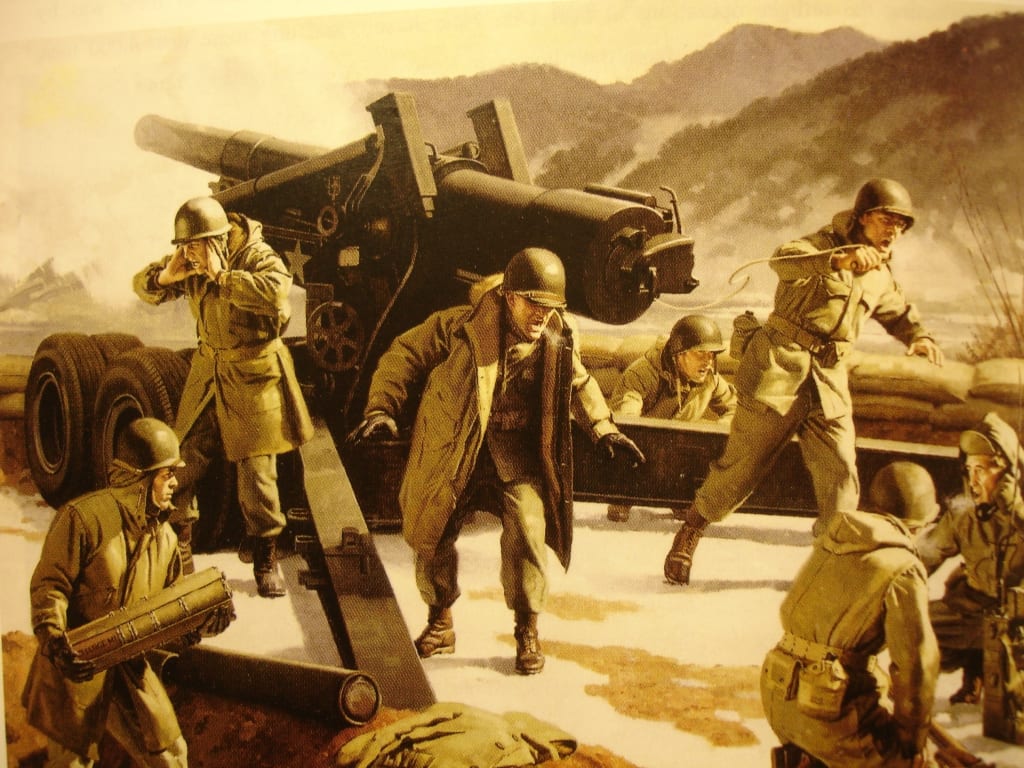
Whether we are considering the present tension in the Middle East, World War I, or the conquest of Alexander the Great, people should understand that war is as much a part of humankind as is needing food and water to survive. Despite your opinions, if Caveman A had beat Caveman B over the head with a rock instead of Caveman B hitting Caveman A with a rock, our entire genealogy could be so wildly different than it is today—you or I might not even be here. These territorial, race, religious, or ideological disputes have paved the way many countries have formed alliances, broke alliances, built their economy, or changed in several different ways. Because humankind has developed in so many drastic ways, the ways war has changed through the years has evolved with it. The differences are staggering too; no longer are we running down our enemy for miles upon miles and stopping the fight at dusk just to pick it up again tomorrow. Read on to find out some of the ways this catastrophic human invention has developed over the span of our existence.
Shields

Immediately after cavemen children lost their parents to other humans or large animals, some of them probably thought to develop a means of protecting themselves. Insert the shield, an apparatus that has stood the test of time for its versatility. Starting off as wood with intricate paintings to curse or bless their wielder as well as strike fear into the hearts of their enemies, these protective devices were eventually reinforced with metal for Greek/Roman/Asian warfare, and then were further modified to withstand a slew of bullets while allowing the wearer to stay active in the fight, peering through a plexiglass slit installed into the device so the fighter could see their adversaries as he plowed forward. Shield bash initiated.
Crossbows
The next thought, historically, was ranged weapons. The application of archers and archery in warfare has its own extensive history, but the game changer here was the creation of the crossbow. Capable of shooting projectiles significantly further than a standard longbow, this deadliest of weapons for its time was still recommended for application through the 17th century, and, like the shield, still has practical use today. From personal experience, I can guarantee that my father's crossbow is dead accurate from 100 yards away, and is significantly easier on the old man's shoulder when he's up in his tree stand.
Ballistas/Catapults
Soon after these apparatuses were utilized, a medieval warrior who had just survived a particularly difficult campaign turned to his friend at the pub and probably said something along the lines of, "You remember those tiny, mechanical bows that killed half our infantry? Let's build one the size of a house." Thus, ballistas were formed. These massive constructs were capable of functioning like a crossbow, sending massive metallic bolts throttling through castle doors and hordes of people. Ballistas set the standard, and off that came the mangonels and trebuchets (under the proverbial umbrella of catapults), capable of hurling massive projectiles, sometimes drenched in tar and lit on fire, great distances to destroy whatever enemies had coming.
Navel Warfare

At one point or another, humankind decided to stop killing their neighbors, but still wanted that old familiar feeling of decimating an enemy. Because of this, ships were built for travel to other places where people could kill enemies who were not just up the road. Immediately after that, these ships were modified to be faster and have more firepower (hello, cannons!) as to be more effective in protecting or destroying these and other water-based war machines.
Guns
How many millions of pages could be written about guns? Guns were developed strictly for the war effort, and have since been the single most effective device used to kill another person. Guns turned other outdated military techniques on their heads, providing soldiers an effective way to stay fairly well away from the fight while taking down enemies from afar. The rudimentary mechanism known as a musket can be attributed to acquisition of most of the United States by new Americans, and have since developed in purely chaotic ways. Now, machine guns and handguns are standard issue equipment for militaries across the world, but the use of shotguns in close-range firefights is massively effective, while the use of sniper rifles puts crossbows to absolute shame, theoretically from a mile and a half away should the two ever meet on the battlefield.
Trench Warfare
World War I saw the implementation of trench warfare, cementing the notion of war as land conquest. If you were to see any success against war machines like tanks in this venture of war, you would have to dig in like a wood-tick and ride out the blood, gore, and guts that were to follow. Strategically constructed and expertly booby-trapped, trench warfare served as on-field implements where soldiers would try to cross "No Man's Land" everyday, fighting for inches at a time.
Aerial Warfare

While people were thinking about how to stay well away from the fight, somebody looked up and had an idea. Whether it be man-carrying kites, hot-air balloons, zeppelins, helicopters, or planes, aerial warfare is an integral way people fight war today. Capable of dropping explosives from above, doing quick reconnaissance, or delivering key equipment to troops on the ground or extracting them relatively easily, aerial warfare has embedded itself deeply into military history. Just do some research about notable aces, such as Douglas Bader.
Chemical Weapons
Smallpox blankets, mustard gas, and nerve agents: chemical weapons were introduced into war for one sole reason. The brutal and horrific ways these chemicals would kill you gained such infamy that after World War I, the Geneva Protocol was put into effect, prohibiting the use of asphyxiating and poisonous gases, as well as bacteriological methods in warfare outright. Despite that fact though, and as unfortunate as it may be, you will occasionally be reminded of these horrors when you are watching the news as the war in Syria continues.
Bombs
Though already skimmed over, bombs played a crucial part in warfare of all kinds. The development of grenades, plastic explosives, bombs, napalm, and missiles has had a wide range of applications through the years. Atrocities brought about by warfare are not easily forgotten, but the absolute devastation brought on by the atomic bomb has been held in contempt and horror even today as Japan still feels the ramifications of its effects. Trust me, you do not want to hear that a tsar bomb has been launched.
Technology

One of the most important ways war has changed throughout humankind is through the development of technology. Each of these elements listed above has been available through the application of developing technology, but this broad spectrum term also includes gas masks, bomb-defusing robots, night-vision googles, kevlar body suits, drones, nuclear energy, and so much more. Military techniques have changed because of new technology. War fought on land, in the ocean, or above the clouds has changed through the use of new technology. Even basic communication in warfare between allies and enemies has changed because of new technology. This element of war has, ultimately, been and will forever be the most important aspect to successful war (for those engaged in it), and only time will tell what new monstrosity awaits on the horizon.
About the Creator
Keep reading
More stories from Ryan Whitaker and writers in Serve and other communities.
10 Reasons Why Your Photoshoots Don't Look Good
Have there been days that you've seamlessly snapped one good selfie after another, after another, after another, and thought, "Damn! I should be a model!" Surely a good lot of you have been curious about the world of modeling. How could you not be, too? Getting paid to be really, really, really ridiculously good looking and going to lavish parties or exotic places just for the views sounds like a life I'd try out if I had eight-pack abs. For the common folk though, myself included, there's a lot of intricacies to being a successful model that we don't understand. I can barely look natural for the annual Christmas card, and these people are doing it for a living? There would be plenty of reasons why my photoshoots don't look good, and I'm sure if you scheduled one with a professional photographer or your hobbyist friend, you'd find that it's not as easy as it looks. Not everyone knows how to do a photo shoot from start to finish, but with these tips, at least you'll have a fighting chance.
By Ryan Whitaker7 years ago in Photography
War Between Pakistan And Afghanistan
Tension Escalates Sharply at the Pakistan-Afghanistan Border What’s happening now? Tensions between Pakistan and Afghanistan have suddenly escalated into heavy fighting along their shared border, known as the Durand Line. Both sides are accusing each other of attacks, and military clashes have intensified in recent days. 
By shaoor afridi3 days ago in Serve
Pearl
1980 something. we all hung out at Pearl and you and i were nothing special, or so i thought. i mean we all danced, drenched in our own sweat, our own saline solution of fear, too many beers, shots, laughter, tears, fucks in the bathroom and i don't know when we began to be afraid. do you?
By ROCK aka Andrea Polla (Simmons)4 days ago in Fiction


Comments
There are no comments for this story
Be the first to respond and start the conversation.