
Tiktok virus
A deep dive into how TikTok infects our minds, hijacks our attention, and reshapes our reality—one swipe at a time.


Imagine a virus—not one that infects your lungs or leaves you bedridden, but one that slips silently into your mind. No fever. No cough. Just a gradual erosion of attention, self-worth, and reality.
This virus doesn’t come from a lab or the wild.
It comes from an app store. And we downloaded it ourselves.
Its name? TikTok
Now, don’t get me wrong. This isn’t a call to delete your account and move to the mountains. TikTok is entertaining, no doubt. It's a digital playground of comedy, creativity, and culture. But in this article, we’re not looking at the platform as an innocent pastime. We’re exploring it as a metaphorical **virus**—one that infects our brains, reshapes society, and quietly rewires how we think, feel, and live.
Stage One: Infection
The infection process is deceptively delightful.
A friend sends you a link: a guy dancing in a dinosaur costume. You laugh. You download the app “just to watch one more.” Three hours later, you’re deep into videos of cats baking cookies, teenagers giving unsolicited life advice, and DIY hacks that never work in real life.
You’re hooked.
TikTok doesn’t ask you to choose what to watch. It decides for you. Its infamous “For You” algorithm tracks every pause, every swipe, and every glance. It learns your cravings before you know you have them. And it feeds you accordingly—relentlessly, endlessly, addictively.
Unlike a traditional virus, TikTok doesn’t need a host to sneeze. It only needs you to scroll.
Stage Two: Symptom Onset – Attention Deficit
Let’s be honest. TikTok is killing your attention span.
Remember when a 10-minute YouTube video felt short? Now, if a clip doesn’t get to the point in 3 seconds, we swipe. We're not consuming content anymore—we're inhaling it like fast food, and our brains are starving for real nutrition.
Studies show that the average attention span has dropped significantly in recent years, and platforms like TikTok are partially to blame. When you're exposed to hundreds of micro-bursts of information every day, your brain adapts—becoming less tolerant of slow, thoughtful, or complex ideas.
Why read a 500-page novel when someone can explain the plot in 15 seconds while dancing in their kitchen?
TikTok turns our mental processing into junk food mode. Quick, cheap, and utterly forgettable.
Stage Three: Psychological Mutation – The Comparison Game
The second major symptom is even more sinister: **self-esteem decay**.
The platform is flooded with impossibly flawless faces, perfect bodies, luxury lifestyles, and “how I made \$10k in one day” content. But behind many of those videos are filters, lighting tricks, editing apps, and sometimes—flat-out lies.
Still, your brain doesn’t always know that. Especially if you're 14. Or even 34.
You start comparing your life, your face, your body, your job, your houseplants—to strangers curated by an algorithm. And slowly, the virus spreads from mind to soul.
Studies link excessive TikTok use to rising anxiety, depression, and body image issues—particularly among teenagers. And platforms like TikTok aren't just passive mirrors. They're **amplifiers of insecurity**, designed to keep you scrolling for validation that never comes.
Stage Four: Societal Spread – Reality Distortion
TikTok is more than just a collection of videos—it's become a lens through which millions now see the world.
And that’s a problem.
Complex topics like mental health, politics, identity, and even science are now being crammed into 30-second videos designed to go viral. The result? Oversimplification. Misinformation. Performative activism.
Everyone becomes an expert. Every issue becomes entertainment.
And because the platform rewards shock, drama, and controversy, truth often takes a back seat to virality. What gets likes isn’t what’s right. It’s what’s **fast, loud, or controversial**.
Society begins to consume world events like they’re TikTok trends. Tragedy becomes a sound bite. Justice becomes a hashtag. And attention becomes currency.
Stage Five: Addiction – The Digital Loop
By now, the virus has you.
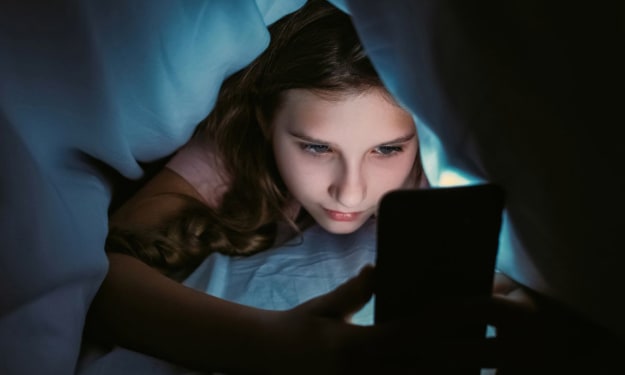
You wake up, check TikTok. Eat lunch, check TikTok. Can’t sleep? TikTok.
It's become the default escape from reality, boredom, anxiety, even happiness.
This isn’t accidental.
TikTok's design is rooted in **dopamine psychology**. Every swipe is a gamble. You never know if the next video will be hilarious, shocking, sexy, or useless. But your brain loves the unpredictability. It’s the same reward loop used in slot machines—now in your pocket.
The addiction isn't to content. It’s to the **possibility of content**.
And so we scroll. Again. And again.
---
The Cure: It’s Not a Delete Button
You can’t uninstall the modern world. TikTok isn’t inherently evil. But like sugar, caffeine, or Netflix, it needs **boundaries**. Otherwise, it becomes a parasite.
Here’s how to vaccinate your mind:
Set time limits. Don’t give your day to an app designed to steal it.
Follow creators who nourish, not numb.
Delete the app for a week. See what happens. Rediscover boredom.
Have conversations in real life. Your brain is hungry for depth.
Remember: You’re seeing someone’s highlight reel—not their reality
Final Thought: You Are Not the Algorithm
TikTok is brilliant. Addictive. Entertaining. But it’s also a psychological Trojan Horse, rewriting the way we think, interact, and exist.
Like any virus, it spreads. It evolves. It adapts.
But unlike a biological virus, we chose this one.
So the next time you ask, “Where did my time go?”
Look down. The virus might still be in your hand.
And maybe—just maybe—it’s time for a digital detox.
About the Creator
Alex Farnando
I grew up in rural Appalachia, surrounded by stories, tradition, and the beauty of mountain life. I share humorous tales, heartfelt stories of love and affection, and compelling historical documentaries.
Keep reading
More stories from Alex Farnando and writers in Psyche and other communities.
The Hour That Changed Everything
It was a mild spring afternoon, and the scent of fresh rain lingered in the air. Trees outside were beginning to bloom, and birds sang melodies that echoed through the open windows. The Mallard home was quiet, heavy with an anticipation that could not yet be named.
By Alex Farnando10 months ago in Psyche
Top tipple tricks
Been thinking a lot about drinking, lately. Not least because of a recent episode of over-indulgence and the inevitable after effects. Some readers may recall the earlier articles I wrote about beating the booze. Here I set out an experiment in techniques for cutting down on my alcohol intake. The experiment was successful, the techniques worked, and I have armed myself with an arsenal of weapons in the war against the demon drink. I have yet to fire the first round however. It's all a question of timing (perhaps procrastination).
By Raymond G. Taylor3 days ago in Psyche



Comments
There are no comments for this story
Be the first to respond and start the conversation.