
The Rise of AI Influencers and Virtual Humans: Fame Without a Face
When Influence No Longer Requires a Human
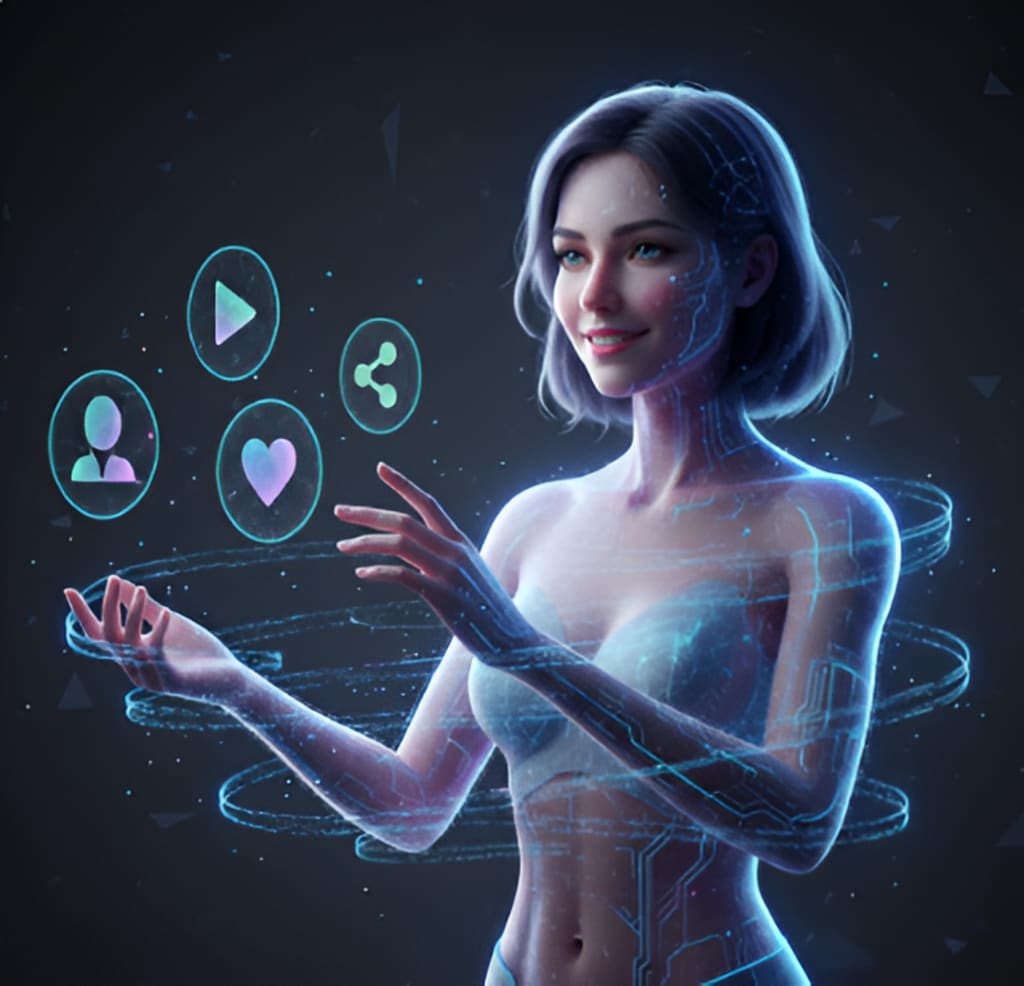
Scroll through Instagram, TikTok, or YouTube long enough and you may encounter a strange realization: some of the most polished, fashionable, and engaging “people” online aren’t people at all. They don’t age, get tired, make public mistakes, or disappear due to scandal. They are AI influencers—virtual humans designed to look relatable, aspirational, and endlessly consistent.
What once sounded like science fiction has quietly become part of mainstream digital culture. Brands collaborate with them. Millions follow them. Some even spark emotional connections with fans. The rise of AI influencers signals more than a novelty trend; it represents a fundamental shift in how influence, identity, and authenticity function in the digital age.
What Are AI Influencers and Virtual Humans?
AI influencers are computer-generated characters powered by a combination of artificial intelligence, 3D modeling, machine learning, and human creative direction. Unlike simple animated characters, many virtual influencers are designed to simulate realistic human behavior—posting lifestyle photos, responding to comments, expressing opinions, and even “aging” through storylines.
Some are fully fictional personas. Others are digital replicas of real people. A growing number exist in a gray area between automation and human control, where AI generates content but humans curate narratives.
What unites them all is this: they occupy the same cultural space as human influencers, competing for attention, trust, and economic value.
Why Brands Are Embracing Virtual Influencers?
From a business perspective, AI influencers solve many problems that human influencers create.
They don’t miss deadlines.
They don’t demand last-minute contract changes.
They don’t get canceled for old tweets or off-brand behavior.
For brands, virtual influencers offer complete creative control. Every post, caption, expression, and interaction can be designed to align perfectly with brand identity. There’s no risk of unpredictability, which is one of the biggest challenges in influencer marketing today.
Additionally, AI influencers can be customized for different markets, languages, and cultures without starting from scratch. One virtual human can simultaneously represent a brand in New York, Tokyo, and Paris—tailored slightly for each audience.
In an economy driven by attention, predictability is valuable.
The Psychology Behind Why People Follow Them
At first glance, it’s easy to assume people wouldn’t connect emotionally with something they know isn’t real. Yet the opposite is happening.
Humans are remarkably skilled at forming emotional bonds with representations. We empathize with fictional characters in books, movies, and games. AI influencers tap into that same psychological mechanism, but with a crucial difference: they interact back.
When a virtual influencer responds to a comment, shares a vulnerable story arc, or takes a stand on an issue, the interaction feels personal—even if users know it’s scripted or AI-assisted.
In some cases, the appeal lies precisely in their artificiality. AI influencers are idealized without being intimidating. They feel safe, consistent, and free from the messiness of real human flaws. In a chaotic online environment, that predictability can feel comforting.
Authenticity in an Artificial World
One of the biggest criticisms of AI influencers is that they undermine authenticity. How can something manufactured claim to be “real”?
But this question exposes a deeper contradiction in influencer culture. Much of what we consider authentic online is already curated, filtered, and strategically presented. Human influencers carefully manage their image, brand partnerships, and personal narratives.
AI influencers simply remove the illusion.
Their authenticity doesn’t come from being human; it comes from narrative consistency. Followers may not believe the influencer is real, but they believe in the character. In many ways, this is similar to professional wrestling, reality television, or even traditional celebrity culture—performance framed as personality.
The discomfort people feel may be less about deception and more about recognizing how constructed influence has always been.
The Labor Question: Who Gets Replaced?
As AI influencers grow more sophisticated, they raise uncomfortable questions about labor and opportunity.
If brands can achieve the same reach and engagement without hiring human creators, what happens to aspiring influencers, models, and content creators? The democratizing promise of social media—anyone can build a platform—begins to erode when perfection can be engineered.
At the same time, new roles are emerging. AI influencers require writers, designers, AI trainers, ethicists, and community managers. Influence doesn’t disappear; it shifts from individual personalities to collaborative systems.
Still, the power imbalance is clear. Corporations with access to advanced AI tools gain an advantage over independent creators, potentially accelerating consolidation in the creator economy.
Ethical Concerns and Transparency
The rise of virtual humans introduces ethical questions that platforms and regulators are only beginning to confront.
Should AI influencers be clearly labeled as non-human?
Is it ethical for them to promote products tied to body image, mental health, or lifestyle aspirations?
Who is responsible if an AI-generated persona spreads misinformation or harmful narratives?
Transparency is key, yet enforcement is inconsistent. Some virtual influencers openly declare their artificial nature, while others blur the line intentionally. As realism improves, distinguishing between human and AI-generated personas may become increasingly difficult.
Without clear standards, audiences risk manipulation—not because AI influencers exist, but because their presence may not be disclosed honestly.
Virtual Humans and the Future of Identity
Beyond marketing, virtual humans hint at a broader transformation in how identity works online.
We already curate versions of ourselves through avatars, filters, and usernames. AI influencers represent the next step: identities that are entirely modular. Personality traits, values, appearance, and even moral stances can be adjusted based on audience response and data analytics.
This raises a provocative question: if identity becomes programmable, what happens to individuality?
In a world of optimized personas, imperfection may become the last marker of humanity. The unpredictability, inconsistency, and emotional complexity that AI struggles to replicate could become more valuable—not less.
Are We Moving Toward AI Celebrities?
AI influencers are not just marketing tools; they are early versions of AI celebrities. As technology improves, virtual humans may host shows, star in films, release music, and interact with fans in real time.
Some already do.
Unlike human celebrities, they can exist indefinitely. They don’t age out of relevance or retire. Their persona can be rebooted endlessly to match cultural trends.
This challenges our traditional understanding of fame. Celebrity has always been tied to human stories—rise, fall, redemption. AI celebrities may offer something different: perpetual relevance without consequence.
Whether that excites or unsettles us depends on how much we value the human experience behind influence.
What the Rise of AI Influencers Really Tells Us
The popularity of AI influencers isn’t just about technology. It reflects deeper cultural shifts.
We live in an era obsessed with control, optimization, and scalability. AI influencers embody all three. They are influence without vulnerability, creativity without exhaustion, fame without risk.
But they also expose a longing. In a digital world flooded with noise, people crave coherence, storytelling, and connection—even if it comes from something artificial.
The real question isn’t whether AI influencers will replace humans. It’s whether we will allow algorithms to define what influence should look like in the first place.
A Future Where Mind Truly Meets Machine
AI influencers and virtual humans sit at the crossroads of creativity and computation. They challenge our assumptions about authenticity, labor, identity, and trust.
They are not inherently good or bad. They are mirrors—reflecting our values, incentives, and blind spots back at us in digital form.
As mind meets machine more visibly than ever, the responsibility falls on humans to decide what kind of influence we want to build—and who, or what, gets to shape it.
Because in the end, the most powerful influence may not belong to machines that look human, but to humans who refuse to become machine-like.
About the Creator
Mind Meets Machine
Mind Meets Machine explores the evolving relationship between human intelligence and artificial intelligence. I write thoughtful, accessible articles on AI, technology, ethics, and the future of work—breaking down complex ideas into Reality
Keep reading
More stories from Mind Meets Machine and writers in Psyche and other communities.
Why Faster Technology Isn’t Always Better
In today’s digital world, speed is often treated as the ultimate measure of progress. Faster processors, instant communication, real-time analytics, and lightning-quick apps promise efficiency, convenience, and innovation. Yet the reality is more nuanced: faster technology isn’t always better. In fact, in many cases, rapid adoption can create challenges for businesses, individuals, and society as a whole.
By Mind Meets Machineabout 19 hours ago in Psyche
From Failure to Momentum: My First Business Journey
From Failure to Momentum: My First Business Journey I am writing this as myself, and I am allowing it to be honest. When people talk about success in business, they often compress the story. They talk about the result, the numbers, the confidence they gained after things worked. What they rarely describe is the long stretch of confusion, doubt, and quiet fear that comes before anything looks like success.
By Ahmed aldeabella2 days ago in Psyche



Comments (1)
Well written, and a great insight and introduction to a topic many are not yet fully aware of.