
The Power of Music
Mindfulness, Love and Relationships


I am certain that I am not alone in saying that music can be exquisitely emotional. Everyone gets enjoyment out of many kinds of music. It is an independent choice for each individual person.
Music can be a way to our hearts.
I know very well just one certain song I heard far back in the October of 1998 that had an impact upon my life that changed me forever.
'To The Moon And Back,' (Savage Garden, published 4th November 1996, by Columbia Records.) has very special meaning and emotion to myself and for my wife.
Courtesy of VEVO/YOUTUBE:
An emotionally powered song, with lyrics for the heart of lovers everywhere.

No. The image is not about any of the lyrics to the song. But the feelings I was having toward this one very pale-faced, short figure, with black long hair (enough to cover her entire face) young woman, So, to start with I could not see her face - but simply the way that she walked. This young person walked with a slow, uncertain, quiet movement wherever she was. She appeared fearful, sad, and not wanting anyone to see her.
I need not further this area as my lovely wife has covered this within another article well worth reading at the link below:
The grounding idea is for 'music therapy' benefits.
As I discussed earlier, music can evoke in us up to 13 different emotional responses.

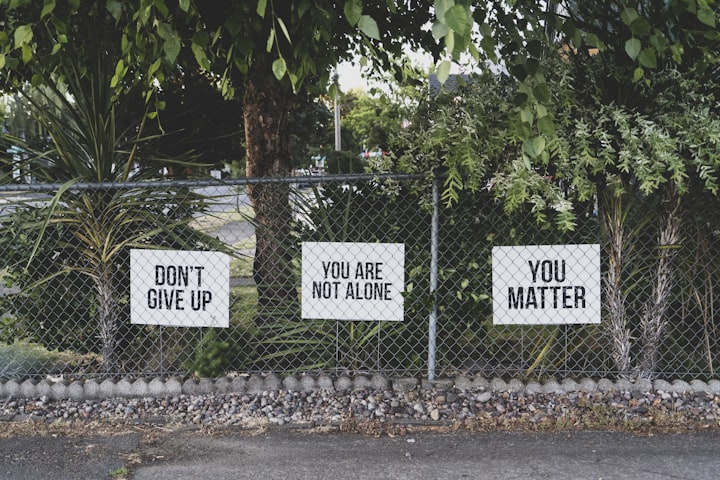
Well, as the image suggests to you, we have now been happily married to one another since 1999, writing this now it is 2021. We are both very happy together, and,
MUSIC KEEPS US STRONG - particularly 'To The Moon & Back,' because that is where we have both been together in our lives - to the moon and back!
If you have read this article, please heart it. If you wish to provide a tip please do so, but remember they are lovely and heartfelt, but not obligatory. More of my articles can be found at:
If you wish to message me then please do so by emailing me at:
About the Creator
Jonathan Townend
I love writing articles & fictional stories. They give me scope to express myself and free my mind. After working as a mental health nurse for 30 years, writing allows an effective emotional release, one which I hope you will join me on.
Keep reading
More stories from Jonathan Townend and writers in Psyche and other communities.
Self Harm & Suicide
Self-harm & Suicide is a very evocative subject to both discuss with others and to write about. But nevertheless, it is a topic that MUST be talked about freely and widely at the same time too - with everyone. Self-harm & Suicide if not talked about, and the person feeling suicidal not feeling that he/she is being heard, can all too easily escalate to attempting suicide themselves. Within 2019 alone, it was recorded that a terrifying total of 5,691 suicides were registered in just England and Wales (source, Office for National Statistics (ONS.)) Which is staggering and very disappointing - as it shows many people are 'falling through the loop,' at NOT being heard.
By Jonathan Townend5 years ago in Psyche
Top tipple tricks
Been thinking a lot about drinking, lately. Not least because of a recent episode of over-indulgence and the inevitable after effects. Some readers may recall the earlier articles I wrote about beating the booze. Here I set out an experiment in techniques for cutting down on my alcohol intake. The experiment was successful, the techniques worked, and I have armed myself with an arsenal of weapons in the war against the demon drink. I have yet to fire the first round however. It's all a question of timing (perhaps procrastination).
By Raymond G. Taylor7 days ago in Psyche
The Psychology and Symbolism of Baby Dreams: What Empirical Research Reveals About One of the Most Common Dream Archetypes
\nWhat does it mean to dream about a baby? According to aggregated data from the International Association for the Study of Dreams (IASD), infant-related dream imagery constitutes one of the five most frequently reported recurring dream themes among adult populations, with prevalence estimates ranging from 15% to 22% across longitudinal dream journaling studies. The interpretive significance of such dreams is determined by three primary variables: the affective tone of the dream experience (positive, anxious, or neutral), the relational proximity between the dreamer and the infant figure (biological offspring, unknown child, or archetypal symbol), and the behavioral context of the dream narrative (birth, caregiving, loss, or discovery).\n
By Enrique Martinez4 days ago in Psyche



Comments
There are no comments for this story
Be the first to respond and start the conversation.