
The Man Who Refused Water
The true story of a man who believed cleanliness would kill him

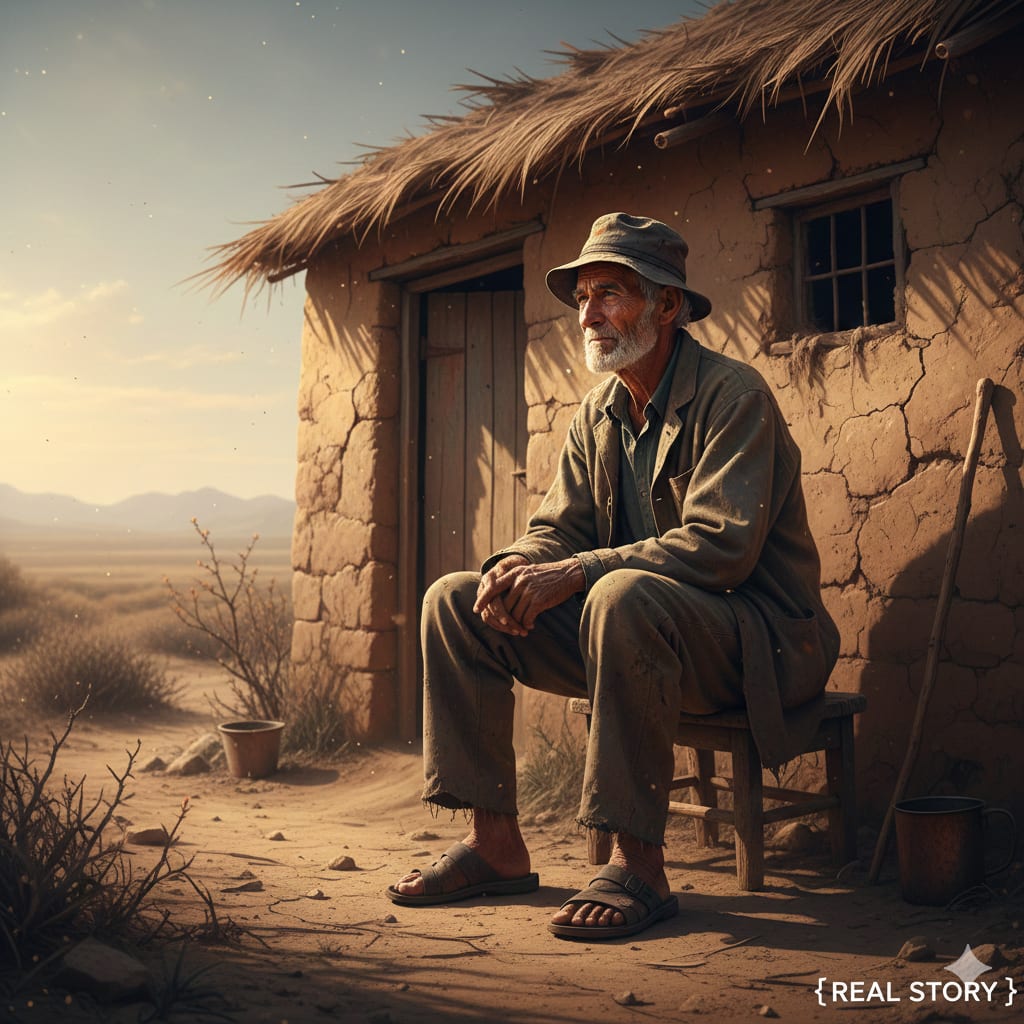
For more than sixty years, a man in Iran lived a life that most people would find impossible to imagine.
He did not bathe.
He did not wash his hands.
He avoided water as if it were poison.
His name was Amou Haji, and his story became known around the world not because of fame or achievement, but because of a belief so deeply rooted that it shaped every moment of his life.
Amou Haji lived in a small village in southern Iran. His home was not a house in the traditional sense. It was a simple, earth-covered shelter, closer to a hole in the ground than a building. He owned very little, needed very little, and trusted almost nothing—especially cleanliness.
Villagers said his fear began after emotional trauma earlier in his life. No one knew the full details. Some believed heartbreak had changed him. Others thought rejection or isolation pushed him away from society. What everyone agreed on was this: Amou Haji believed that bathing would make him sick.
To him, water was not healing.
It was danger.
As years passed, his appearance reflected his choices. His skin was darkened by layers of dirt. His hair was matted and stiff. The smell around him was strong enough that people often noticed his presence before they saw him.
Yet, despite everything, Amou Haji lived.
And not just briefly.
Decades passed. While others aged, fell ill, and disappeared, he remained. Thin, quiet, stubbornly alive.
His daily routine was simple. He wandered the land, sat alone, smoked constantly, and ate foods that most people would refuse. Sometimes he consumed roadkill or food he believed was “old enough” to be safe. Fresh food, like fresh water, made him uncomfortable.
People tried to help him.
They offered soap.
They offered clean clothes.
They offered shelter.
He refused it all.
When villagers attempted to force him to bathe, he became distressed and angry. To him, washing was not kindness—it was a threat. He believed that the moment water touched his skin, illness would follow.
And for many years, that belief seemed unchallenged.
Doctors and journalists who learned about Amou Haji were confused. Modern science teaches hygiene as a foundation of health, yet here was a man who had rejected it entirely and survived far beyond what anyone expected.
Some experts suggested his immune system had adapted. Others believed his isolation protected him from many modern diseases. Still, no one could fully explain how his body endured such conditions for so long.
To the villagers, Amou Haji became something more than a man. He became a symbol—of fear, of stubbornness, of survival, and of the human mind’s power to shape reality.
He was not violent.
He was not cruel.
He simply wanted to be left alone.
Years later, when Amou Haji was already very old, something changed.
Concerned villagers persuaded him—gently, patiently—to do what he had avoided his entire life.
They convinced him to bathe.
It was not forced.
It was not sudden.
It was careful.
After more than half a century, Amou Haji washed.
Shortly afterward, he became ill.
And not long after that, he died.
The news traveled quickly. Headlines around the world described him as “the world’s dirtiest man,” but those who truly understood his story knew that label missed the point.
This was not a story about dirt.
It was a story about belief.
Amou Haji believed, with complete certainty, that bathing would kill him. And in the end, whether by coincidence or consequence, the moment he abandoned that belief, his life ended.
Was it the water?
Was it his age?
Was it the shock to his system?
Or was it something deeper—the collapse of a worldview that had kept him alive for decades?
No one knows.
What remains is a quiet, uncomfortable truth: the human mind is powerful. Fear can become protection. Isolation can become survival. And what seems illogical to one person can be life-saving to another.
Amou Haji did not live by society’s rules. He lived by his own.
And he survived far longer than anyone expected.
About the Creator
shakir hamid
A passionate writer sharing well-researched true stories, real-life events, and thought-provoking content. My work focuses on clarity, depth, and storytelling that keeps readers informed and engaged.
Keep reading
More stories from shakir hamid and writers in Psyche and other communities.
The Call You Don’t Remember Making
The phone rang at 3:11 a.m. Not a notification. Not an alarm. A real call. Omar stared at the screen through half-closed eyes. Unknown Number. He almost ignored it—almost—but something about the timing felt deliberate, like the call had waited for him to wake up before ringing.
By shakir hamid28 days ago in Psyche
Are Humans Born Good or Evil? The Science of Human Nature
Good and evil in human nature have fascinated philosophers, psychologists, and storytellers for centuries. Yet the most intense battlefield is not found in history books—it exists quietly within each of us. Deep inside the human soul lives a constant inner conflict: a tension between selfish impulses and moral responsibility, between ego and conscience. Evil rarely announces itself loudly. Instead, it whispers subtle justifications: “You deserve this.” or “No one will know.” These moments define us more than grand public decisions ever could.
By ABDALLAH ALJUHANI6 days ago in Psyche
A Planetary Alignment will coincide with Mercury Retrograde
Double phenomena in the heavens Some people say in jest that the planets have aligned in their favor when life works the way they desire. Were you aware that there are seasons when things do line up in the heavens? There will be a planetary alignment AKA a planet parade, on February 28, 2026.
By Cheryl E Preston4 days ago in FYI

Comments
There are no comments for this story
Be the first to respond and start the conversation.