
The Dark Side Of Social Media
How Constant Scrolling is Rewiring Our Minds and Stealing Our Focus

The Moment It Hit Me: I'm Addicted
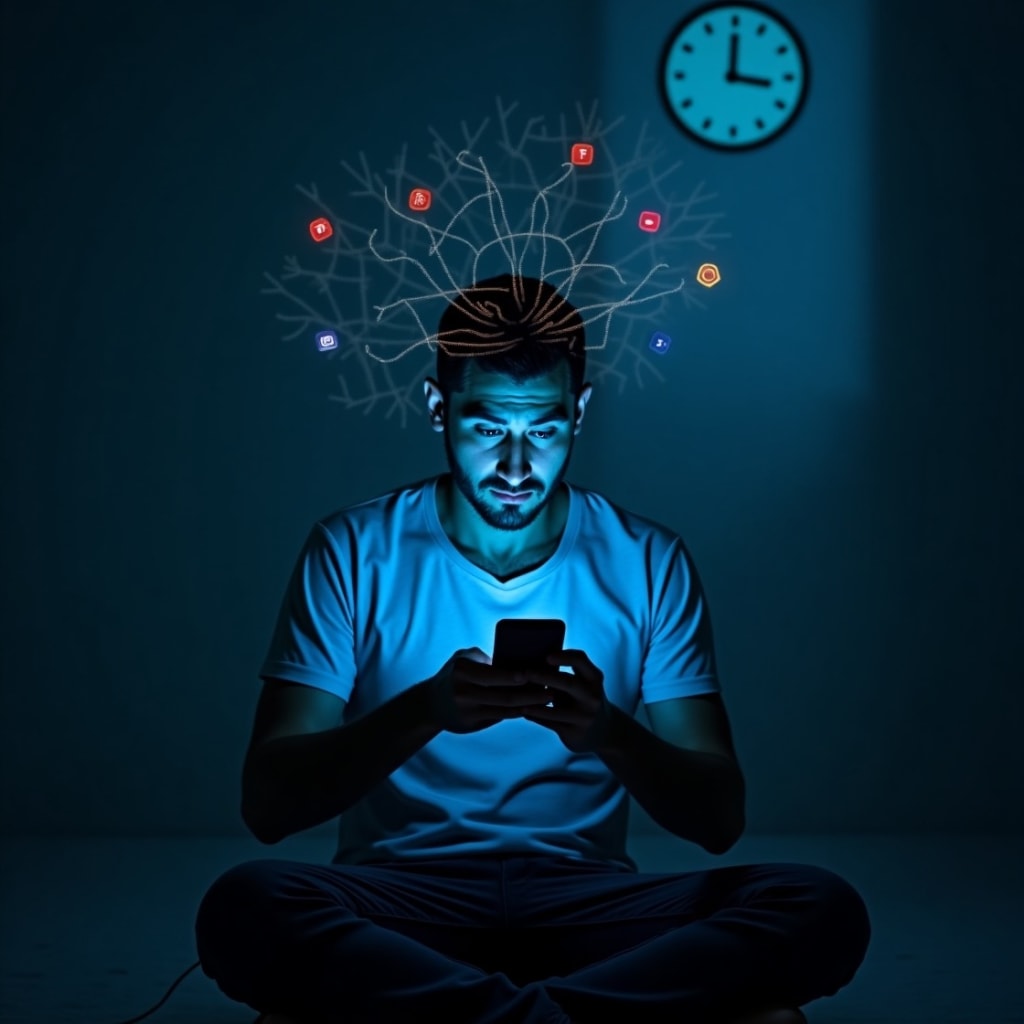
It was supposed to be a chill Saturday afternoon. I grabbed a cup of coffee, sat on the couch, and picked up my phone—just to check Instagram really quick. One friend had posted pictures from his vacation in Bali. I tapped, liked, and then scrolled down. Before I knew it, I’d watched a dozen Reels, read through three strangers' comment wars, looked up guitar covers on YouTube, and somehow ended up on a Reddit thread about productivity hacks… two hours gone. Just like that.
I looked up from my phone, and everything around me felt blurrier, slightly off. I hadn’t done anything productive, hadn’t spoken to anyone, and oddly enough—I didn’t even feel good. That’s when it clicked: it wasn’t just a waste of time anymore. It was something deeper. Social media had hijacked my attention and was slowly rewiring how my brain worked.
The Dopamine Loop: Why Stopping Feels Impossible
What I found out later is that platforms aren’t pandering to laziness—they’re exploiting biology. Every notification, like, or message triggers a release of dopamine—a brain chemical linked to pleasure and reward. But over time, that reward system gets hacked. You start chasing hits for the sake of the hit, not for any true value.
1. The Slot Machine Trick
Social media runs on unpredictable rewards. You might post something and hear crickets—or you might get 300 likes in an hour. This randomness keeps us coming back, the same way gamblers keep pulling the lever. Our brains love the chase, not just the win.
2. Flood of Novelty
Back in the prehistoric world, novelty meant survival. Spotting something new—a fruit, a sound, a trail—could mean food or danger. Today? That same desire is manipulated by infinite streams of content. TikTok, Instagram Reels, YouTube Shorts—quick, punchy, and always something new. I found myself mindlessly scrolling, not even entertained—just wired.
3. Social Validation = Modern Survival
Thousands of years ago, being accepted by your tribe was everything. Rejection could quite literally kill you. In today’s world, likes, follows, and comments play into that ancestral instinct. When a post didn’t perform well, I felt a dip—embarrassed, even anxious. I didn’t realize how deeply my sense of worth had become entangled with digital approval.
The Detox: 30 Days Without Social Media
One evening, after another wasted hour on my phone, I made a decision. Thirty days. No Instagram. No Twitter. No YouTube. No Reddit. Nothing. I wanted to see if I was still “me” without it. I uninstalled everything, logged out from my browser, and turned off notifications. What followed was eye-opening.
Week 1: The Withdrawals Were Real
The first few days were rough. My muscle memory kept pulling my hand to where Instagram once lived on my phone screen. I’d check it, see nothing, and feel… empty. I felt twitchy, anxious, and weirdly uncomfortable with silence. I realized how often I’d used scrolling to avoid discomfort—to dodge boredom, sadness, or even deep thinking.
Week 2: The Fog Started to Clear
Around day 10, something shifted. I could read again—like actually finish chapters without losing focus. I slept better, too. I started hearing birds outside, noticing the breeze from my window. It was surreal how dulled my awareness had become. I texted and called friends instead of replying to stories. And in conversations, I was finally present.
Week 3 & 4: Rediscovering the Real World
By the third week, I stopped missing the apps. My mood stabilized—no more random anxiety over someone else’s success reel. I wasn’t constantly comparing myself or checking to see what I missed. I started painting again, something I hadn’t done in years. I even wrote in a journal, just for myself—not for likes, not for strangers.
The Science Behind It: What Social Media Is Doing to Our Brains
And the scary part? My experience isn’t unique. Neuroscience backs it up:
1.Shrinking Gray Matter: Brain scans now show that heavy social media use is associated with reduced gray matter in areas responsible for emotional regulation, decision-making, and focus.
2.Heightened Amygdala Activity: This is the fear center of our brain. The more social media we consume—especially emotionally charged content—the more reactive and anxious we become.
3.Disrupted Impulse Control: Addiction-related areas are lit up in frequent users. Social media affects the same neural pathways as drugs and alcohol.
The Fallout
1.Shorter Attention Spans: Today’s average adult attention span is just 8 seconds—shorter than a goldfish’s, which clocks in at 9.
2.Worsening Mental Health: Studies show that teens who spend more than 5 hours on social media daily are 70% more likely to experience symptoms of depression.
If that doesn’t raise alarm bells, I don’t know what will.
How I Took Back Control:A personal Blueprint
You don’t have to go off the grid. But you do need a system. Here’s what worked for me and might work for you:
1. Delete, Don’t Just Mute
Muting notifications is step one—but it doesn’t break the loop. I uninstalled apps completely. If I HAD to check something (e.g., work-related), I used a browser-based version—no feeds, no doomscrolling.
2. Replace the Highs
Your brain still craves dopamine. You just need better sources. Regular workouts, cooking new recipes, calling friends, and picking up the guitar gave me something sustainable to look forward to.
3. Embrace JOMO (Joy of Missing Out)
Once I stopped trying to stay updated with everything, I realized how peaceful the “void” was. I didn’t need to know what everyone was doing. I needed to know what I wanted next.
4. Try a Dopamine Fast
Once a week, I do a “digital sabbath”—no screens, no scrolling. I take long walks, sketch, fix things around the house, or just sit in silence. It’s reset therapy for my mind.
Final Reflection: From Prisoner to Pilot
Social media isn’t evil. But let’s not lie—it’s designed to be addictive. Engineers build it to steal our attention, and we hand it over without a fight.
After my detox, I came back with a new mindset. I now use social media intentionally. I scroll with a purpose, time-box my usage, and follow only people who add real value to my mental space. I stopped being a consumer and became a creator again. A thinker. A listener. A guy in control.
Because at the end of the day, your brain is not designed to be overstimulated 24/7. You only get one. Cherish it. Protect it.
THANS FOR READING
About the Creator
Ziafat Ullah
HELLO EVERY ONE THIS IS ME ZIAFAT ULLAH A STUDENT OF POLITICAL SCIENCE UNIVERSITY OF PESHAWAR, KHYBER PAKHTUNKHWA PAKISTAN. I am a writer of stories based on motivition, education, and guidence.
Keep reading
More stories from Ziafat Ullah and writers in Psyche and other communities.
The Five-Minute Miracle: How Chai Changed My Neighborhood
On a blustery Tuesday afternoon, the shrill ring of the doorbell startled me from my reverie. I had been staring at my laptop screen so long that the outside world had faded away. When I opened the door, there was Mr. Ahmed—our silver-haired neighbor from 2A—standing shyly with a battered tray of steaming chai mugs. His cheeks dimpled as he offered me a cup, the spicy-sweet fragrance of cardamom and ginger drifting into my hallway like an invitation.
By Ziafat Ullah8 months ago in Humans
Top tipple tricks
Been thinking a lot about drinking, lately. Not least because of a recent episode of over-indulgence and the inevitable after effects. Some readers may recall the earlier articles I wrote about beating the booze. Here I set out an experiment in techniques for cutting down on my alcohol intake. The experiment was successful, the techniques worked, and I have armed myself with an arsenal of weapons in the war against the demon drink. I have yet to fire the first round however. It's all a question of timing (perhaps procrastination).
By Raymond G. Taylor6 days ago in Psyche
The Quiet Truth About Life That No One Tells You
There is a strange moment in life that many people experience but almost no one talks about. It doesn’t arrive during a celebration. It doesn’t happen while achieving a big goal or receiving praise from others. It usually appears quietly, often when you are alone, when the world slows down just enough for your mind to wander somewhere deeper.
By Noman Khan 2 days ago in Psyche



Comments (1)
You are doing great work for the betterment of society.