
The Curse of Capability: Why the Most Talented People Often Get Stuck
Ever wondered why your most skilled friend is unemployed, or why a sea of options leaves you feeling paralyzed? The answer lies in a fascinating psychological trap known as the Paradox of Choice
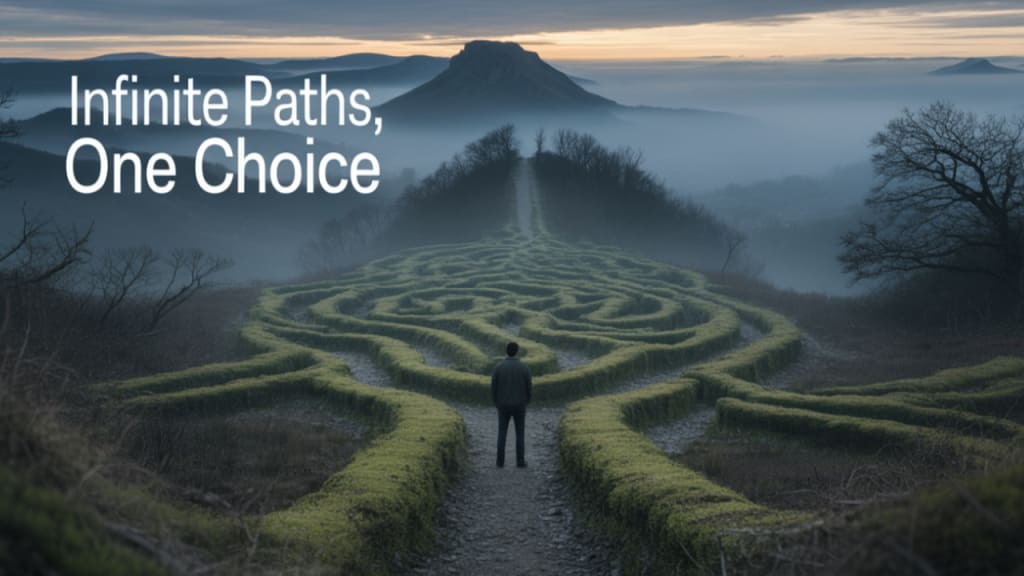
Have you ever noticed that people with multiple talents often seem to be the ones sitting idle? The person with the potential to go from a sales executive to a CEO can’t seem to land a job. The individual who could easily afford a luxury car finds it agonizingly difficult to simply buy a decent motorcycle.
It’s a strange pattern we see everywhere. Many intelligent and knowledgeable people lead lonelier lives than their peers. The more someone knows, the more they might struggle with personal dissatisfaction. The higher a person’s income, the more likely they are to have expenses that sound bafflingly trivial to others.
We also see incredibly attractive people, with a world of potential partners to choose from, settling down with someone who seems, on the surface, quite ordinary. From an outsider’s perspective, it might look like these individuals have somehow failed to live up to their potential.
There’s an old saying that captures this perfectly: “A great beauty finds no husband, a great housewife finds no home.” You almost certainly know people like this. You’ve heard their stories and perhaps dismissed them without a second thought. But have you ever stopped to ask yourself 'why' this happens? What is the root cause of this phenomenon?
Let's try to understand the powerful force at play here.
The Agony of Choosing a Smartphone
Imagine my friend, Alex. He’d worked hard to save up $300 and went to the city to buy the best possible smartphone for his budget. When he entered the massive electronics market, he was stunned. As evening fell, the neon signs of global brands—Apple, Samsung, Pixel, OnePlus, Huawei—lit up one side of the street. On the other, he saw Xiaomi, Vivo, Oppo, Realme, and Motorola. There were at least ten other brands he barely recognized.
With $300, a sum he had painstakingly earned, Alex was determined to get the absolute best value for his money. He could get a phone from almost any brand except for a new Apple iPhone.
But this was where the trouble began. One brand had a superior battery, another boasted a much better camera. A third offered more RAM and storage, while a fourth had the latest processor. The Android versions differed from one device to the next. He couldn't find a single phone that had 'everything'. The perfect choice didn't seem to exist.
After nearly two hours of wandering from store to store, Alex called me in a state of utter confusion. "Hey," he said, "is there any way I can get an iPhone for this price?"
"Sure," I told him, "but you'd have to go to the third floor of the market, find a second-hand shop, and pick a refurbished one. You’ll find a model that fits your budget, but you'll have to negotiate hard."
Thrilled by the idea of owning a prestigious Apple device, he rushed upstairs. But his excitement quickly faded. The used iPhones that fit his budget were in rough shape. The batteries were nearly dead, and the polished exteriors were scratched and faded.
Worse, the camera, processor, and memory were nowhere near as good as the brand-new Android phones he could get for the same price.
After three long hours of agonizing indecision, Alex finally made a choice. He bought an Infinix phone. It was budget-friendly and had some of the best specs on the market at that price point.
But when Alex returned home, he wasn't happy. He was deeply frustrated. He couldn't shake the feeling that in those three hours, he had failed to find the best option. He had to mentally discard so many excellent brands. He thought that if he’d just had a slightly bigger budget, maybe he could have bought a new iPhone. He had freedom and choice, but he felt he had failed to use them properly. On top of it all, he had wasted a huge chunk of his day feeling stressed and overwhelmed, only to end up with a choice he wasn't sure about.
The 6 Burdens of Too Much Choice
While Alex’s story is about a smartphone, we’ve all faced this dilemma in different ways—choosing a career, a movie on Netflix, or even a life partner. This experience repeatedly creates at least six distinct problems for us:
1. Decision Paralysis: When we are faced with too many options, we struggle to choose at all. This over-analysis can lead to what psychologists call 'Analysis Paralysis.' While Alex managed to pick a phone, many people in his situation would have simply given up and bought nothing, overwhelmed by the pressure to make the "right" choice.
2. The Time Sink: Imagine if Alex only had to choose between three phones. He would have made a decision quickly, saving him hours of mental and physical energy. The more options we have, the more time we lose weighing the pros and cons of each.
3. The Specter of Regret: To choose that one Infinix phone, Alex had to reject dozens, maybe even hundreds, of other models. This naturally leads to buyer's remorse. He can't help but wonder, "Was this 'really' the best one? The others weren't all bad!" Later, if he sees a friend with a different phone bought for the same price, he might feel a sharp pang of regret, diminishing the satisfaction he gets from his own choice.
4. The Illusion of Freedom: We believe that more options grant us more freedom. But the reality is often the opposite. Abundant choice offers you technical freedom but imposes a heavy tax in the form of mental effort, stress, and internal conflict.
5. Eroding Confidence: The nagging feeling that "I failed to find the right option" can easily morph into a more damaging belief: "I am not capable of finding the right option." Our self-confidence takes a hit because we blame ourselves for the overwhelming nature of the choice.
6. The FOMO Effect (Fear Of Missing Out): We look at the choices of others and are plagued by insecurity. "Look how great their choice is! Where do I stand in comparison?" This constant social comparison can be a significant source of unhappiness.
Untangling the Option Paradox
What I've been describing is a well-documented psychological concept called the Paradox of Choice.
The paradox gives us the freedom to choose, but this freedom can become so heavy that we no longer feel free. Instead, we become slaves to our own indecision, regret, and exhaustion. The very thing that was meant to make us happy—limitless choice—ends up doing the opposite.
For a Deeper Dive:
This article draws upon the foundational ideas of several key thinkers who have explored this topic:
1. Barry Schwartz, The Paradox of Choice: Why More Is Less (2004): This book is the cornerstone for understanding the option paradox and was instrumental in bringing the concept to public awareness.
2. Alvin Toffler, Future Shock (1970): Toffler was the first to coin the term "overchoice," discussing the psychological stress caused by rapid societal change and an overwhelming number of alternatives.
3. Sheena Iyengar, The Art of Choosing (2010): A research-based analysis of the psychology of choice. Iyengar's famous "jam study" empirically demonstrated that more options often lead to fewer decisions being made.
About the Creator
Keep reading
More stories from Selina Khatun and writers in Psyche and other communities.
Meet Your Sexual Shadow: The Hidden Desires That Secretly Run Your Life
We almost never want to kill ourselves. We want to kill the 'things' that torment us: the despair, the nagging sense of failure, the fear, the insecurity, the relentless inner critic, the envy, and the crushing lack of confidence.
By Selina Khatun 7 months ago in Psyche
From Surviving to Living: When Rest Becomes an Act of Courage
When Survival Becomes a Lifestyle — And You Forget How to Live There is a quiet shift that happens when survival lasts too long. At first, it’s temporary. You tell yourself, “I just need to get through this phase.” Then weeks become months. Months become years. And without realizing it, survival stops being a response — it becomes a lifestyle. You don’t notice the moment it happens. There’s no clear breaking point. Just a gradual narrowing of life. Your goals become smaller. Your dreams become practical. Your emotions become controlled, managed, muted. You stop asking what brings you joy and start asking what is necessary. What is efficient. What is acceptable. And slowly, living turns into managing. The Hidden Cost of Constant Coping When someone lives in survival mode for too long, their nervous system adapts. It learns to stay alert. It learns to expect pressure. It learns that rest is risky and stillness is unsafe. So even when external threats disappear, the body doesn’t get the message. This is why many people feel exhausted without knowing why. Why calm moments feel uncomfortable. Why success doesn’t bring satisfaction. Why peace feels strangely empty. It’s not because something is missing. It’s because your system was never taught how to receive ease. You learned how to endure. Not how to enjoy. Why Letting Go Feels Harder Than Holding On Letting go sounds simple in theory. But for someone who survived by holding everything together, letting go feels like failure. You weren’t rewarded for resting. You were rewarded for coping. For staying strong. For not needing too much. So your identity formed around function, not feeling. This is why slowing down can trigger anxiety. Why saying “I can’t” feels shameful. Why doing less feels like becoming less. Your worth became linked to effort. And effort became constant. Healing Is Not Becoming Softer — It’s Becoming Safer Healing from long-term survival is not about becoming fragile. It’s about becoming safe. Safe enough to pause without panic. Safe enough to feel without rushing to fix. Safe enough to rest without preparing for collapse. This kind of healing doesn’t happen through motivation or discipline. It happens through permission. Permission to stop performing strength. Permission to disappoint expectations — including your own. Permission to exist without proving anything. At first, this feels unnatural. Because survival trained you to believe that safety must be earned. But safety is not earned. It is allowed. Relearning What Living Actually Feels Like Living is not dramatic. It doesn’t always feel exciting or intense. Sometimes, living feels quiet. Neutral. Ordinary. And for someone used to survival, that can feel unsettling. But calm is not emptiness. It is space. Space to notice yourself again. Space to feel preferences instead of obligations. Space to choose, not react. You don’t suddenly become a new person. You simply return to parts of yourself that were postponed. A Different Measure of Progress Progress is often measured by how much you do. How fast you move. How productive you appear. But healing progress looks different. It looks like stopping before burnout instead of after. Like resting before you collapse. Like saying “enough” without explaining yourself. It looks like choosing sustainability over intensity. Truth over performance. Presence over pressure. This kind of progress is quiet. And because it’s quiet, it’s often overlooked. But it is real. A Closing Truth If survival shaped you, it’s not your fault. You adapted the way you had to. But you are not meant to live your entire life in adaptation mode. You are allowed to soften without losing strength. To rest without guilt. To live without constantly preparing for impact. You don’t need to become more. You need to feel safe enough to be. And that shift — from surviving to living — is not weakness. It is the most honest form of courage there is.
By Med Abdeljabbar7 days ago in Psyche
A Dart at Dusk
Seconds ago, the sullen sun set on the two of us… my exuberant furry companion and me. A fresh breeze embraces us, delivering welcome relief from the day’s oppressive heat. His typical stumbling and staggering along — apace with a sloth — has turned into trip-trapping, high-stepping, almost skipping along.
By Angie the Archivist 📚🪶5 days ago in Petlife



Comments
There are no comments for this story
Be the first to respond and start the conversation.