
The Ancient Origins and Evolution of Astrology
The Ancient Origins and Evolution of Astrology: From Mesopotamia to Modern Times

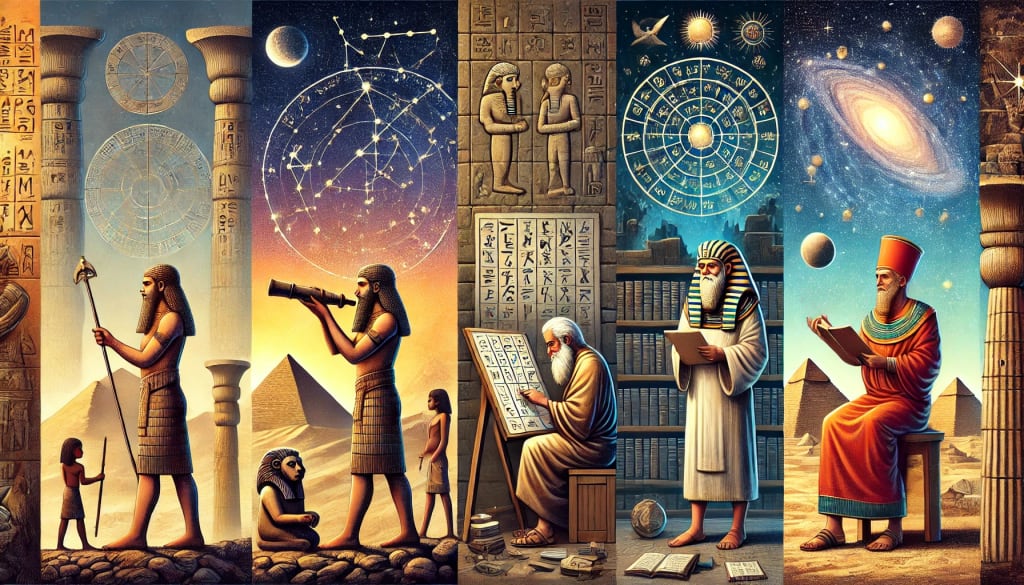
Introduction to Astrology's Beginnings
Astrology, the study of celestial bodies' influence on human affairs and natural phenomena, is a practice that dates back thousands of years. It intertwines with the history of human civilization, reflecting our innate desire to understand the cosmos and its impact on our lives.
The origins of astrology are found in ancient cultures, where early astronomers and priests observed the sky meticulously, seeking patterns and correlations with earthly events.
Early Civilizations and Astrology
The roots of astrology can be traced to Mesopotamia around the 2nd millennium BCE. The Babylonians were among the first to develop a systematic approach to celestial observations, which eventually evolved into what we now recognize as astrology.
They believed that the positions of the planets, the sun, and the moon could predict events on Earth. This practice was closely linked to their religion, where gods were associated with planets, and celestial phenomena were considered divine messages.
In ancient Egypt, astrology also played a significant role. The Egyptians developed a complex system that linked the stars and planets to their gods and used astrological charts to predict the annual flooding of the Nile, which was crucial for their agriculture.
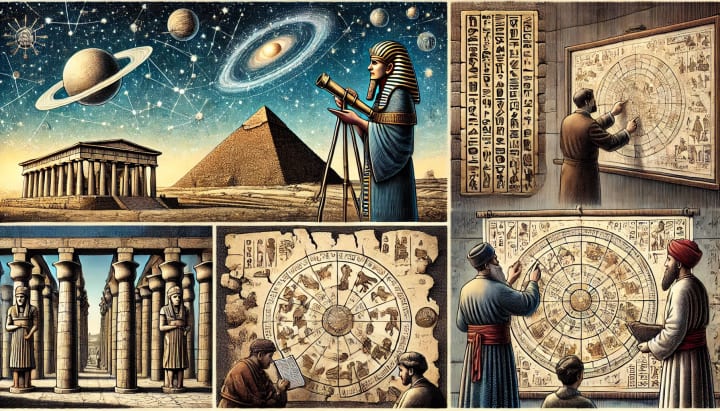
The Influence of Greek Thought
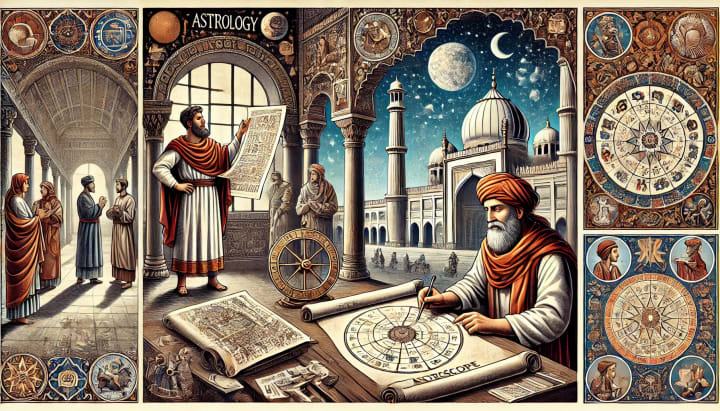
Astrology as we know it today was profoundly shaped by the Greeks. The conquest of Alexander the Great spread Babylonian Astrology throughout the Greek world.
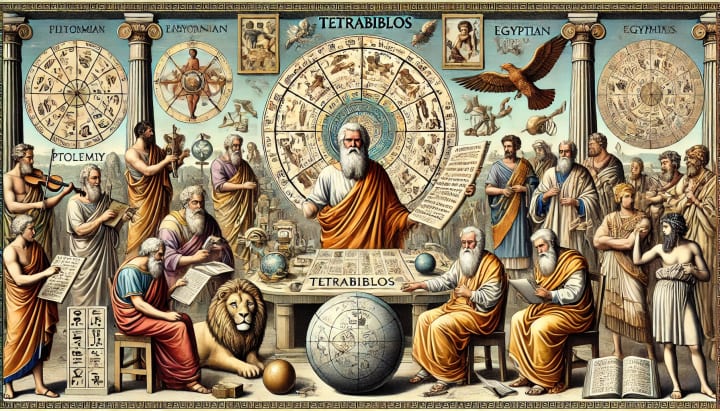
Greek philosophers and scientists like Ptolemy synthesized Babylonian, Egyptian, and Greek traditions into a comprehensive system. Ptolemy's work, the "Tetrabiblos," became a cornerstone of Western astrology, establishing the zodiac signs and the concept of astrological houses.
The Greeks contributed significantly to the mathematical and philosophical foundation of astrology. They believed in a rational universe where celestial bodies influenced earthly events in predictable ways, reflecting their broader quest for understanding the cosmos.
Astrology in the Roman Empire and Beyond
As the Roman Empire expanded, so did the reach of astrology. The Romans were avid practitioners, and astrology permeated various aspects of their daily life, from personal decisions to state affairs. Emperors, including Augustus, consulted astrologers for guidance.
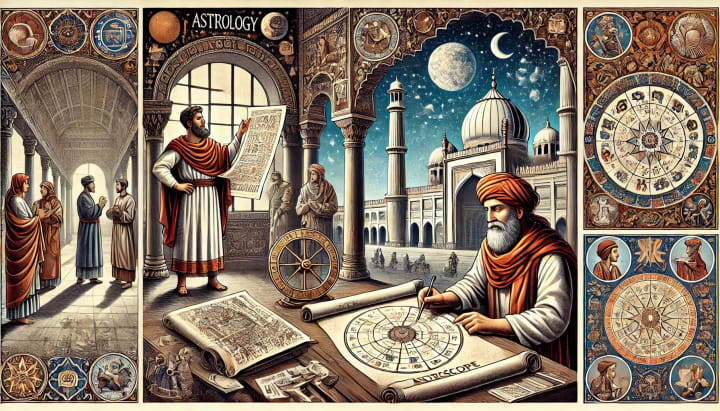
With the fall of the Roman Empire, astrology found a new home in the Islamic world. Islamic scholars preserved and expanded upon Greek and Roman astrological texts, integrating them with their own astronomical knowledge.
This synthesis later returned to Europe during the Middle Ages, fueling a renewed interest in astrology during the Renaissance.
Astrology in the Renaissance and Enlightenment
During the Renaissance, astrology experienced a resurgence as scholars rediscovered classical texts and merged them with new scientific discoveries. Notable figures such as Johannes Kepler and Tycho Brahe, who made significant contributions to astronomy, also practiced astrology.
However, the Enlightenment's emphasis on reason and scientific inquiry began to challenge astrology's legitimacy, relegating it to the fringes of serious scientific study.
Modern Perspectives: Truth or Fiction?
The Scientific Scrutiny of Astrology
In the modern era, astrology has been subjected to rigorous scientific scrutiny. Critics argue that astrology lacks empirical evidence and does not adhere to the scientific method.
Numerous studies have attempted to test astrological claims, often with inconclusive or negative results. The most significant criticism is that astrology's predictions are too vague to be scientifically validated.
Skeptics highlight the lack of a plausible mechanism by which distant celestial bodies could influence human behavior.
Psychological Perspectives and the Placebo Effect
Despite the lack of scientific validation, astrology remains popular. One explanation for this enduring appeal is the psychological comfort it provides. Astrological readings often offer reassurance, guidance, and a sense of order in an uncertain world.
The Barnum effect, a psychological phenomenon where people find personal meaning in vague statements, helps explain why many individuals believe in astrological descriptions.
The placebo effect also plays a role. Believing in astrology and acting on its advice can lead to positive outcomes simply because the individual expects them. This self-fulfilling prophecy reinforces the perception that astrology "works," even if the underlying mechanisms are not scientifically sound.
Cultural and Social Significance
Astrology's significance extends beyond its scientific validity. It is deeply embedded in cultural and social practices around the world. In many societies, astrological traditions are intertwined with religious and spiritual beliefs.
Astrology also plays a role in contemporary popular culture, influencing everything from fashion to personal relationships.
The Personalization and Modern Adaptation of Astrology
In recent years, astrology has adapted to the digital age. Personalized horoscopes and astrological apps have surged in popularity, making astrology more accessible than ever.
This personalization enhances the perceived accuracy of astrological predictions, as users receive tailored readings based on their specific birth details.
The Dual Nature of Astrology
Astrology occupies a unique space between ancient tradition and modern skepticism. Its historical roots highlight humanity's enduring fascination with the cosmos and the desire to find meaning in the stars.
While scientific evidence does not support astrology as a predictive science, its psychological and cultural significance cannot be denied.
Whether viewed as a comforting belief system or an ancient pseudoscience, astrology continues to captivate and influence millions of people worldwide, reflecting our ongoing quest to understand our place in the universe.
About the Creator
Luna Mystica
My name is Luna Mystica, and I am a passionate astrologer, dream interpreter, and moon phase enthusiast dedicated to exploring the mysteries of the cosmos and the human spirit.
Keep reading
More stories from Luna Mystica and writers in Psyche and other communities.
Fired Up for Everyday Life: Navigating Mars in the 6th House Synastry
Astrology has long fascinated humanity with its promises of cosmic connections and insights into our personalities and relationships. One intriguing aspect of astrological compatibility, or synastry, is the placement of Mars in the 6th House.
By Luna Mystica2 years ago in Psyche




Comments