
Quit Your Internet Addiction
Assess your Internet Addiction

“Internet Addiction” refers to excessive Internet use that causes significant psychological and social disturbance along with functional impairment (Sevim 2016).
The Internet if used as a necessity becomes a boon, while if used as addiction is a doom.
Case Study :-
Ravindra, a 22 year old guy was diagnosed with migraine due to huge exposure to the internet. Besides, he is not able to concentrate on his studies. He is not able to perform his daily routine activities well. He often takes leaves from his college. And his performance was also degrading day -by -day.
Ravindra wants to get rid of this internet addiction, which is internally eating him day by day. He is just wasting his time and energy on things which will not help him in future and slowly making him unproductive and unhealthy.
Therapeutic Techniques to get rid off Internet Addiction
Time Management Techniques
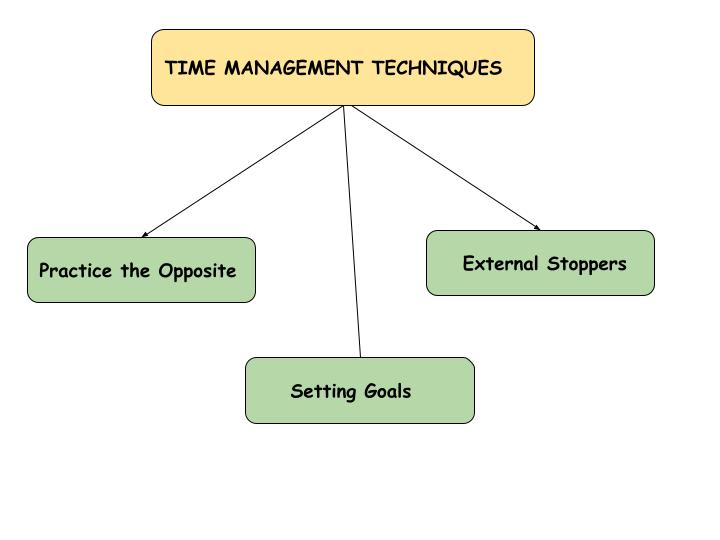
Practice the Opposite →
Ravindra has the habit of checking his social media as the first thing in the morning. Here, he was asked to check his social media only after his breakfast. Sticking to this habit, eventually changes his habit of picking up the mobile phone as soon as he gets up.
External Stoppers →
It was not easy to quit any addiction in one single night. But with continuous resilience and determination, we can achieve anything. For quitting Internet addiction, external stoppers are set to help the individual learn about time, which he is unnecessary spending on the thing, which is of no use to him.
In our case study about Ravindra, he usually left for his college at 8.00 o'clock. He was asked to start using his internet at 7.00 o’clock. So, he will get only 1 hour to browse, as he has to leave at 8 for the college. Putting such external stoppers will make the person aware about the time he is spending on anything.
Setting Goals →
Ravindra was exposed to operant conditioning by setting goals, on which he can browse the internet. He was asked
to use the Internet from 8 to 10 p.m. every weeknight, and 1 to 6 on Saturday and Sunday.
Making a schedule and adhering to it , gives Ravindra a sense of being in control, rather than the internet controlling him.
Abstinence → As Ravindra has no substance abuse, he is strong enough to abstain from the apps which are making him addicted to it.
But, people with substance abuse history may have abstained from addictive nature , as they find another addiction as a substitute of their prior addiction. If one has such a history, he must consult a counsellor for it.
Reminder Cards → Ravindra was made to write 5 major problems he was having due to his unlimited internet browsing.
He was also made to jot down , what are the benefits he would be getting on cutting down internet use or abstaining from a particular application.
He was made to keep these two lists in his pocket and asked to read them from time to time.
Support
It is always advisable, to take help from the counsellors while getting rid of any habit, the person will most likely experience a loss and miss being on-line for frequent periods of time. The support and guidance avoid the vulnerability which he/she is experiencing.
Before wrapping, why not check “What is your Internet Addiction Score ?”
Instructions :
Young’s assessment quiz will help in exploring your Internet addiction level
Instructions :Internet Addiction assessment have 20 questions ,
(1)Read the questions at your pace
(2) Select the option which suits you
(3) Score is displayed accordingly for the option you selected
(4) Attempt all 10 questions and keep on adding scores
(5) Total the scores
(6) Check on which range you fall and see your result
(7) You can select only one option in each question
According to research published by Kaiser Family Foundation , a full 21% of youth are defined as heavy media users who spend more than 16 hours with media a day. Another 63% are defined as moderate users who use media 3-16 hours a day. Youth who fall into the light user category are those who consume less than 3 hours of media a day. Excessive Internet addiction can turn into Internet addiction disorder. So it is also advisable, to follow the techniques and avoid getting addicted. As “Prevention is always better than Cure”
References :
Sevim Karakaş-Çelik, ... Ulaş M. Çamsari, in Neuropathology of Drug Addictions and Substance Misuse, 2016
Alexander, B.K., & Scheweighofer, A. R. (1988). Defining "Addiction". Canadian Psychology, 29, 151-162.
American Psychiatric Association. (1995). Diagnostic and Statistical Manual of Mental Disorders. (4th ed.) Washington, DC: Author
Beck, A.T., Wright, F.D., Newman, C.F., & Liese, B.S. (1993). Cognitive therapy of substance abuse. New York, NY: Guilford Press.
Brady, K. (April 21, 1997). Dropout rise a net result of computers. The Buffalo News, p. A1.
Griffiths, M. (1995). Technological addictions. Clinical Psychology Forum. 76, 14 - 19.
Young, K. S. (1996). Internet addiction: The emergence of a new clinical disorder. Paper presented at the 104th annual meeting of the American Psychological Association, August 11, 1996. Toronto, Canada.
About the Creator
Honey
I am storyteller.
My expertise :
(1) Psychology
(2) Software Engineering
(3) Project Management
What is Your Mindset : Boon or Doom
The view you adopt for yourself profoundly affects the way you lead your life. — Dr. Carol Susan Dweck Cheenu was an intelligent student. She was the achiever in her school and graduation. Later ,she joined a big firm. But, she was troubled getting good promotions there, because she thinks she was a scholar in her studies and has intelligence as an innate characteristic . She does not believe in learning all through life, but believes in enjoying life while working and earning money.
By Honey4 years ago in Motivation
Top tipple tricks
Been thinking a lot about drinking, lately. Not least because of a recent episode of over-indulgence and the inevitable after effects. Some readers may recall the earlier articles I wrote about beating the booze. Here I set out an experiment in techniques for cutting down on my alcohol intake. The experiment was successful, the techniques worked, and I have armed myself with an arsenal of weapons in the war against the demon drink. I have yet to fire the first round however. It's all a question of timing (perhaps procrastination).
By Raymond G. Taylor3 days ago in Psyche




Comments
There are no comments for this story
Be the first to respond and start the conversation.