
Prisoner of Memories
When the past refuses to let go, the
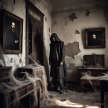

Dr. Eliza Hart, a renowned psychologist in downtown Boston, had spent years helping others escape the prisons of their pasts. Yet, she herself remained silently shackled by memories she had long buried under the weight of logic and reason.
Her office was a soft blend of warm tones, calming lights, and shelves filled with books on trauma, healing, and human behavior. Patients left feeling understood, perhaps even a little lighter. But Eliza — she carried a secret darkness, one she never spoke of.
One cold November morning, a new patient walked in. His name was Caleb Moore. Thirty-three, tall, quiet, and distant. His file read: “Recurring nightmares, memory lapses, emotional withdrawal.” But what stood out most was his reason for coming: "I don’t know who I am anymore."
From the very first session, something about Caleb unsettled her. The way he looked around the room, the way he hesitated before speaking, and especially the way he described his dreams — always a house on fire, a child screaming, a locked door he couldn't open. His trauma was severe, buried deep. But so was something else. Something familiar.
Week after week, they dove deeper. Caleb spoke of feeling disconnected from reality, as if part of him was missing. He would freeze during certain memories — like the sound of a piano or the scent of lavender. Eliza noted the triggers, guided him gently, all while suppressing a strange sense of déjà vu.
One session, Caleb brought an old photo. A burned corner, faded colors. It showed a woman holding a little girl — and in the background, a boy who looked eerily like Caleb. The woman’s face was partially visible. Eliza's hands trembled.
That was her mother.
And the girl — was her.
Her heart pounded in disbelief. How could this be? She hadn’t seen that photo in decades. It had vanished the night of the fire.
The memories returned like a flood — the flames, the screaming, her baby brother banging on the door, the smoke, the guilt. She was only ten. She’d escaped. He didn’t.
Or so she thought.
Tears welled up in her eyes, but she composed herself. She couldn’t tell Caleb — not yet. She needed to be sure.
In the following sessions, she carefully tested the memories, asking subtle questions. Caleb recalled a fire in a rural home, a sister he could never quite see, a name he always forgot… “Ellie.”
Eliza broke down that night.
He was Caleb Hart — her brother. Somehow, he had survived. Adopted by another family, his memories fractured by trauma.
She now faced the greatest ethical dilemma of her career — should she tell him the truth? Or continue the treatment, slowly guiding him to remember on his own?
She chose compassion over control.
The next week, she handed him the same photograph — uncut, unburned, the original. On the back, she had written:
> “We were never meant to be strangers.
Your sister, Eliza.”
Caleb stared at it for minutes. Silence filled the room. Then came a whisper:
> “Ellie?”
He looked at her — really looked — and something in his eyes lit up. A crack in the prison wall. A sliver of recognition.
He broke down. So did she.
They embraced like siblings reuniting after lifetimes apart — because in many ways, they were.
In the weeks that followed, Caleb’s mind began to rebuild. Memory by memory, he pieced together the life that had been taken from him. Eliza helped not just as a therapist, but as family. They grieved, healed, and learned how to live again — not as victims, but survivors.
The mind, she now believed, was a fragile yet miraculous thing. It hides what we cannot bear. But sometimes, the very person who needs healing… is the one holding the key to someone else’s cage.
---
Moral:
Some memories imprison us. But in remembering, there is also the power to break free.
Would you
About the Creator
Keep reading
More stories from Movies Channel and writers in Psyche and other communities.
"My Mother’s Last Message… Arrived Two Days After Her Death"
When my mother passed away, the world slowed down. It wasn’t sudden — she had been fighting cancer for over a year. Her final days were quiet, spent mostly in sleep. I held her hand the evening she took her last breath, whispering prayers through my tears. She squeezed my fingers one last time, and then… nothing.
By Movies Channel8 months ago in Psyche
I Was Never Highly Functional
The Myth of Being “Normal” I would like you to understand that highly functional individuals of any kind don’t exist. I couldn’t look people in the eyes when I was a child. Even saying “good morning” was difficult for me. The person was already behind me by the time I could reply. I felt like my voice wouldn’t come out. But people think that we need to be normal and act the way they expect us to.
By Nadia Cardoso2 days ago in Psyche
Veil of Subconscious Awakening
Images slide behind my eyelids like film cadres, bursting with meanings. In one moment, I’m speeding down the highway, making the speedometer swing wildly like a frantic pendulum. The next moment, I’m plunging from a falling plane, slowly crashing earthward. At home, I meet black cat’s green, googly eyes staring at me from the cavernous hollowness of the kitchen. When I turn for a moment, it disappears, and all I can see is a pair of blue suede shoes set up against the wall. I pick them up and put them on. When I glimpse at them again, they’ve become black as night, making me blink and flinch.
By Moon Desert6 days ago in Fiction



Comments
There are no comments for this story
Be the first to respond and start the conversation.